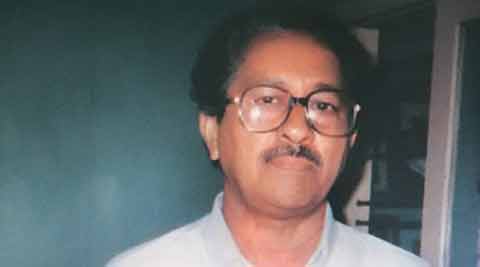

The Hindutva activists in Kozhikode who forced academic M.M. Basheer to stop writing on the Ramayana argued that there could be no criticism of Lord Ram (even by Valmiki) and that Basheer, being a non-Hindu, should not write on a “Hindu text”. They reveal a colossal ignorance of the Ramayana tradition in Malayalam. Their success in silencing a well-respected teacher and critic indicates the emergence of a new hate politics in Kerala.
The Ramayana tradition in Malayalam, as in most Indian languages, includes numerous retellings and interpretations of the Rama katha across genres. Some of these are soaked in bhakti, while a few others offer different points of view, including criticism of Rama and his ethical universe. The tradition has been richer and more complex for the diverse readings. Basheer was not the first, or the only, non-Hindu to write on the Ramayana — Basheer himself has written nearly 50 essays on the epic.


[related-post]
Despite Ezhuthachhan’s overwhelming influence, many writers were drawn to the Rama katha and sought to narrate it in their own voice. Academic R.S. Varmaji once counted 197 independent Ramayana-based texts, 19 translations and 24 prose versions in Malayalam. The Ramayana tradition is alive in the numerous performance traditions in Kerala, ranging from Koodiyattam and Kathakali to shadow puppetry. In the Adivasi versions, the Rama katha plays out in the landscape of Wayanad, the hill district of Kerala, and the storytellers believe that Rama and Sita were their ancestors and the Ramayana sites were in their backyard. Valmiki, they suspect, could have borrowed from the Adivasi lore. The Mappila Ramayanam situates the Rama katha in the context of Malabar’s Muslim social milieu.
In the 20th century, modern writers were inspired to explore the silences in the Rama katha. The recognition of individual rights, the emergence of social reform movements and political upheavals influenced their interpretations.
The Ramayana also existed as an ethical text and, unsurprisingly, writers started to question the moral universe of Rama, the lord and king. The first major writer to explore the omissions of Rama was Kumaran Asan, a disciple of Sree Narayana Guru, and arguably the most important Malayalam poet of the 20th century. In Chinthavishtayaya Sita (Sita immersed in reflection), Sita reflects on her life and her ruminations expose Rama as a prisoner of an inhuman and unjust raj dharma. In the 1940s, critic Kuttikrishna Marar wrote his celebrated essay, “Valmeekiyude Raman”, in which he questions the ideal of Rama and his treatment of Sita. C.N. Sreekantan Nair’s great Ramayana trilogy provided a radical political reading for the stage. His Kanchanasita (1958) is a powerful indictment of the “brahminical” political order of Ayodhya. C.N.’s Rama tells Hanuman that he is “a protector, a king”, not a human being, “just a bridge built by the human race to cross over the great sea of time… That bridge should not shake… not move this way and that…”, only to be advised by Hanuman that “this statecraft which breaks and smashes relationships of the soul is an eternal curse to this earth”. Sarah Joseph’s feminist reconstructions of the Ramayana take forward the radical Ramayana tradition that Asan launched.
The open nature of the Ramayana tradition and the diversity within prevents the Rama katha from being turned into an unchallenged moral tale of nation-building. For every political construction of Rama, a counter-narrative can be found within the tradition. This aspect of the Ramayana tradition is a challenge to political mobilisations that wish to build a singular political ideal called Rama, and imprison him in time and place. The attempt to restrict the Ramayana tradition to one text and squeeze it within a particular religious community and limit Rama to a preconceived image is a political project. This being the context of the attack on Basheer, the silence of Kerala’s political and cultural mainstream is deafening.
amrith.lal@expressindia.com


