
Opinion Mothers who love, mothers who kill
That motherhood can be exhilarating and exhausting at the same time is something we seldom let slip. In our society, most mothers are overworked, underpaid, and burdened by the cult of the sacrificing and loving mother
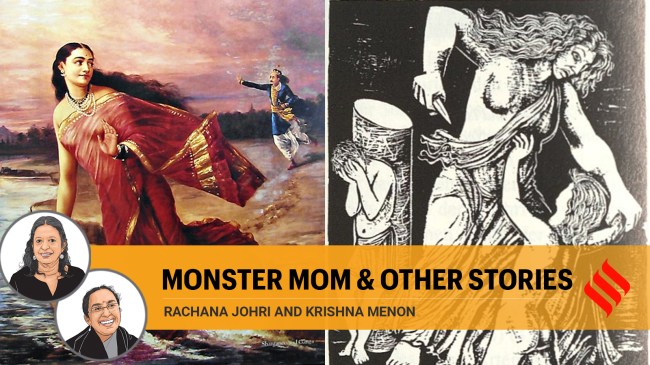 Ganga submerged her sons while Medea killed her children, according to mythology texts (Wikimedia Commons)


The killing of children by their families is a tragic but frequent event witnessed throughout the world. In India, these murders take various forms including femicide, female infanticide, killing of children with disabilities, “honour” killings, and so on. Statistics show that fathers are more likely to kill their children than mothers. Yet, when mothers kill children, it arouses dread and disbelief. Recently, television news channels in India let their creativity run amock when some of them described the 39-year-old mother from Bengaluru (startup founder and CEO of an AI company) who is alleged to have killed her four-year-old son, as “monster mom”. While it is too early to understand the circumstances surrounding the tragic event, it may be worthwhile to use this moment to reflect upon the deeply problematic expectations of mothers.
Maternal filicide, or child murder by mothers, has occurred throughout history. Research conducted across the world suggests that when a young child is murdered, the perpetrator is most likely to be the parent or stepparent. Myths and legends globally testify to the tragic phenomenon of a distraught mother killing her children. Euripides writes of Medea killing her two sons as revenge against her husband who marries another woman. Closer home, we read of Ganga submerging seven sons. Maternal filicide could be attributed to motivations ranging from intense love (she believes death to be in the child’s best interest) to an acute state of disturbance, long term abuse of the child, perception of the child as a hindrance or for revenge against the spouse.

Much of the discussion on mothers who have killed their children tends to focus on the contrast between the violent acts and the societal expectations of femininity and motherhood, reducing it to a simple dichotomy between good versus bad mothers. The ribu movement of Japan, in the 1970s, tried to understand this phenomenon in the context of the re-construction of Japanese society and challenged the hegemonic discourses of mothers who kill their children as either “bad” or “mad”. The isolation of Japanese women in their roles as mothers and wives when husbands devoted all their energy to building corporations triggered sharp criticism. At a time when captains of industry in India are calling for almost interminable working hours, this experience of Japan should be a warning for us.
Serious and engaged research on motherhood in India has established that many women in our society are struggling in their roles as mothers. This is compounded by the difficulties of being in unequal marriages without love, and of providing care without ever receiving it. Undoubtedly, the experience of caring and nurturing can be a beautiful one, but the institutionalisation of mothering with its lofty expectations and standards makes it arduous, especially under adverse social and psychological circumstances.
It is easy to monsterise and pathologise mothers who kill their children, as this helps retain the impossible but shared ideals of the maternal role in society. There is a widespread expectation that every woman should be married and have children. Women without children are considered to be barren, referred to with derogatory words such as “banjh” in Hindi. This pushes many women to prioritise motherhood over other pursuits. The assumption of a naturally existing maternal instinct contrasts with the labour involved in caring for a child. Women, especially mothers, are expected to be stirred to selfless love and sacrifice. This contrasts with the recognition in both psychological and feminist literature that recognises the difficult process of becoming a mother, one that can often feel disorienting and exhausting.
The celebrated paediatrician and psychoanalyst Donald Winnicott, writing in 1949, made a rather startling observation when he wrote that “mother hates her infant from the word go”. After all, the baby “treats her as scum, an unpaid servant”. Writing as a mother of four children, Adrienne Rich, author of the groundbreaking feminist text, Of Woman Born (1976) wrote, “My children cause me the most exquisite suffering of which I have any experience. It is the suffering of ambivalence: the murderous alternation between bitter resentment and raw-edged nerves, and blissful gratification and tenderness.” Both writers create space for mothers to experience fatigue and despair in the task of mothering without the self recrimination and shame that often leads them towards self condemnation.
Becoming a mother is seen as a quick fix solution to a range of challenges — physiological, psychological and marital. Such an understanding of motherhood is oblivious to the social circumstances of mothering, i.e., financial difficulties, unemployment, violent or unhappy marriage, complete responsibility of child care in the absence of safe and reliable childcare facilities, poor healthcare and almost non-existent mental health services.
That motherhood can be exhilarating and exhausting at the same time is an awkward little secret that we seldom let slip. In our society, most mothers are overworked, underpaid, and burdened by the cult of the sacrificing and loving mother. And yet, the fact is that our mothers work very hard with sadly little help from the world around them. The murder of children by their mothers is not only about individual mothers and children, but about how our society understands and facilitates mothering and child care.
Johri is visiting professor of Psychology, BML Munjal University and Menon is professor of Gender Studies, Ambedkar University, Delhi

 Share
Share


