
Opinion From the Opinions Editor: India needs a well thought out trade strategy, but first it needs a China strategy
China’s centrality to the global production system is a reality that cannot be wished away
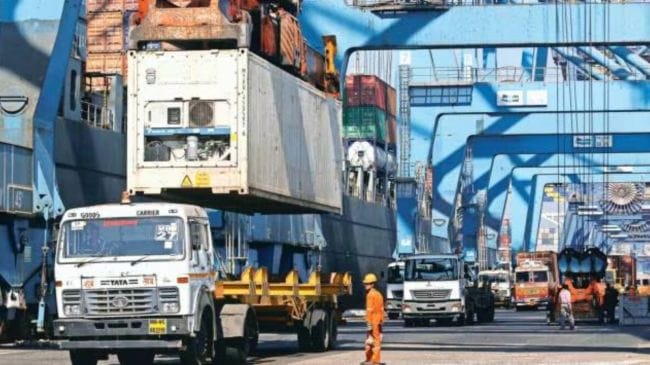 A trade deal has been struck with the UK, and talks are proceeding with the US and the EU, with many of the issues that have previously held back these agreements being either resolved or sidestepped.



Dear Express Reader
Over the past 11 years, the Narendra Modi government has taken several steps to shore up the economic momentum, and put the country on a higher growth trajectory. But, despite its efforts to ensure macroeconomic stability, revive private sector investments and boost household consumption, growth has been less than spectacular. Between 2014-15 and 2024-25, the economy grew at an average of just 6.2 per cent. Now, in its third term, whether pushed by Donald Trump’s tariff war or the imperatives of growth, the government is making a determined effort to sew up trade agreements, hoping they will help embed the country into global supply chains, catalyse exports, and push up growth.

A trade deal has been struck with the UK, and talks are proceeding with the US and the EU, with many of the issues that have previously held back these agreements being either resolved or sidestepped. These agreements will ensure greater market access and bring down tariffs, improving competitiveness of exports. But the question is: Will these trade deals be enough? Can they alone facilitate India’s deep integration with global supply chains? Can the country emerge as a major production hub without integrating more closely with the supply chains that run through South and East Asia which form a vital part of global production systems?
The case of Apple is instructive. The dramatic scaling up of the Apple ecosystem in the country — the company has recently said that iPhones sold in the US market will be mostly sourced from India — is a remarkable development. It is a consequence of both the government’s production linked incentive scheme and the firm wanting to diversify its production bases away from China.
Now, Apple provides a supplier list — a list that represents 98 per cent of the company’s direct spend for materials, manufacturing and assembly of its products worldwide. This would include suppliers not only those involved in the production of the iPhone but also in other Apple products. As per this list, in 2023, 156 of the company’s suppliers had manufacturing locations in China, 42 suppliers were located in Japan, 35 in Vietnam and 33 in South Korea, and 14 in India.
Two years later the numbers would have changed slightly — as per a recent report there are now more than 20 component suppliers in India — but, they would still point towards the centrality of South and East Asia, and China in particular, to the global production system — a fact that cannot be ignored. If India wants to be a part of the production chain of other Apple products and grab a greater share of the value addition in the production process, it would need the smooth flow of components/materials into the country and more component manufacturers to be located here. And therein lies India’s conundrum. What is India’s China strategy? Should the country also be a part of RCEP (Regional Comprehensive Economic Partnership) and CPTPP (Comprehensive and Progressive Agreement for Trans-Pacific Partnership)?
In 2019, India chose not to be part of RCEP — the trade agreement that spans China, Japan, South Korea, Australia, New Zealand and the 10 ASEAN member states (Brunei, Cambodia, Indonesia, Laos, Malaysia, Myanmar, Philippines, Singapore, Thailand, and Vietnam). The decision to not join was in large part attributed to concerns over China. But the trade relationship with China has only deepened since. And that is the reality, contrary to the desire of reducing the dependence on China. In 2018-19, before India withdrew from RCEP, its trade deficit with China stood at $53.5 billion. By 2024-25, it had surged to $99.2 billion, without RCEP. India, though, is not alone. Even as the US has tried to reduce its reliance on China, its deficit with the country, though it has declined in recent years, stood at a staggering $295 billion in 2024. And this does not account for rerouting of exports through other countries.
But, it’s not just about companies like Apple. The issue around rare earth minerals — used in a range of sectors such as smartphones, TVs, EV cars, solar panels and jet engines — underlines China’s centrality to the global production system. This reality cannot be wished away. China accounts for 90 per cent of global processing of rare earths. With the country placing restrictions on its exports, EV manufacturers in India have reportedly sought the government’s intervention in the matter. If these supplies continue to be restricted, India’s EV push, and thus its efforts in shifting towards a cleaner vehicle fleet, risk being affected. And that won’t be the only sector that is likely to be impacted. There are some reports which suggest that the government has raised the issue of export curbs on rare earth minerals and magnets with China. But it’s not just India. Even the US has been affected. In fact, one of the key aspects of the US-China agreement that was announced by Donald Trump is the upfront export of full magnets, and any necessary rare earths by China.
It is difficult to see companies move their production to India on the scale that is needed for the country to emerge as a manufacturing powerhouse unless they can be sure of stable trade relations, of supply chains working smoothly, of the seamless movement of components/personnel from other jurisdictions. India needs a well thought out trade strategy. The lack of clarity partly explains the sluggish pace of investments in the country by domestic as well as foreign firms — both of whom seem to be more inclined to invest in other jurisdictions presumably because the risk-return matrix is not as favourable in India. A clear strategy should give these firms the confidence needed to invest in the country.
Take care,
Ishan

 Share
Share


