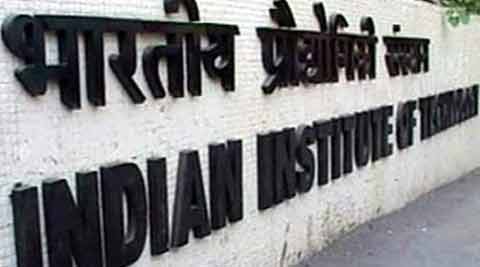
Since the 1990S, Brand IIT has grown enormously and India’s middle class has become keener that their children study at these institutions.
But school education has been in adequate to prepare students for the IIT joint entrance examination. So the coaching culture has grown. Students are subjected to a rigorous routine at coaching centres. Those who succeed and enter the hallowed portals of the IITs feel like they have arrived at the final destination of their career, little realising that they are at the starting line.


Even when some IITs go out of their way to help such students, psychological barrier stake time to overcome. And though counselling services are available, it is taboo among students to use them. There is another significant aspect: relative grading, which has been practised at the IITs for 50 years. However, this system assumes that the sample is large and homogeneous.
Unfortunately, over the years, the sample has become heterogeneous. In some IITs, grades are monitored by a committee.
In others, the instructor’s freedom is absolute. Students have complained about some harsh grading norms enforced by instructors. But the world of testing has moved on considerably. Experts on testing could suggest several aspects where the IITs could improve — the field of psychometry is one such area. The time has come for the IITs to take a hard look at their approach to testing and bring reforms.
Besides testing, the teaching approach also needs to be re-evaluated. The present system evolved when the size of classes was small and the student body, homogeneous. Both these aspects have changed. Teaching is teamwork. A teacher is assisted by teaching associates, assistants and tutors. This team is effective only when it works in unison.
When a class is large, the responsibility of the team is greater. The training and orientation of the team is important. In US universities, the student body is quite heterogeneous.
Even so, students enjoy easy access to faculty and teaching assistants, so they don’t feel there is a lack of communication. The IITs should also look at technology as a game-changer for the teaching-learning paradigm. Students may, for instance, want to watch lectures on YouTube. Today, the digital infrastructure of an academic institution is as important as the physical infrastructure.
When a young student enters an IIT, she looks towards the faculty for personal guidance. Unfortunately, the size of the student body has become so large that close interaction is becoming difficult. The IITs could create a cadre of young doctoral students who can serve as academic associates. Such young persons would play a crucial role in the academic as well as psychological worlds of students.
It must be mentioned categorically that unless postgraduate education at the IITs is of a high standard and improved considerably, progress at the undergraduate level will be difficult. All international universities first strengthen their postgraduate education and then go on to improve undergraduate training. Unfortunately, in India, the and others have not understood this.
The regulatory regime has also become outdated. The academic senate has created rules and regulations that are neither in tune with international best practice nor in response to genuine student feedback. In fact, when a large number of students fail a course, some introspection is needed on the part of teachers as well as academic regulators.


