
Opinion Here’s how extreme heat is undermining food security and public health across the world
As temperatures rise across India and South Asia, heatwaves are triggering crop failures, humanitarian disasters, and a growing crisis of heat-related illness
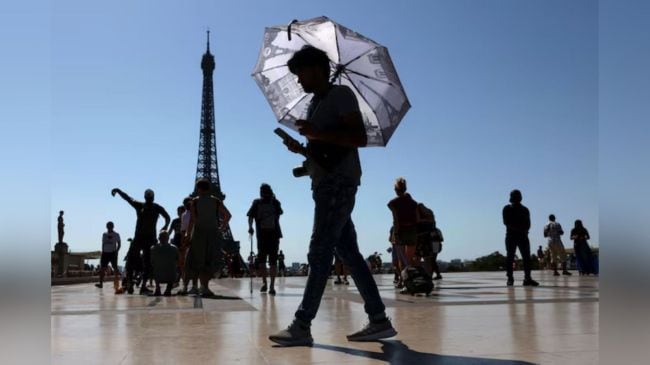 Heatwaves are associated with higher rates of irritability, aggression, and even suicidal ideation (File photo)
Written by Chirag Dhara and V Ramana Dhara
In February 2022, shockwaves from the Russian invasion of Ukraine reverberated throughout the world. With Ukraine, one of the world’s major wheat exporters, under siege, the spectre of a global food shortage emerged. As wheat prices surged, India prepared to step in to fill the gap in wheat supply. However, India’s plan to help plug the food crisis was derailed by the extraordinary heat that the subcontinent experienced that summer.

In March and April 2022, the Indian subcontinent experienced extraordinary heatwaves, with temperatures soaring well above 40°C across north India, desiccating the ripening wheat crop. In May, barely weeks after India pledged to help fill the gap in the global wheat-supply, the government abruptly banned wheat exports to meet domestic demand.
In short, the geopolitical crisis in Europe was compounded by the meteorological crisis in South Asia. Fortunately, in this case, “solidarity lanes” hastily organised by the European Union were able to move Ukrainian grain by road, rail and river, preventing wheat markets from collapsing. However, the consequences of the 2022 heatwave precipitated yet another extraordinary chain of events.
As the 2022 summer heatwaves scorched South Asia, it also accelerated the melting of glaciers high in the Himalayas. The Indus River swelled with glacial meltwater. By August, this meltwater, combined with record-breaking monsoon rainfall, submerged a third of Pakistan and swept away homes, crops, livestock, schools, and clinics. Over 1,700 people died, 8 million were displaced, and damages exceeded $30 billion in Pakistan, creating one of the world’s worst humanitarian disasters.
Recent research has since revealed that the atmospheric circulation that drove the extreme rainfall over Pakistan simultaneously triggered record-breaking heat and severe drought over China’s Yangtze River Valley, drying up riverbeds, cutting hydropower production, and reducing crop yields.
The chain of events in 2022 offers a sobering lesson. Climate change does not merely cause discrete “extreme weather events” but interacts via profound, non-intuitive pathways with existing pressures as the previous example demonstrates. And these interactions are precipitating a crisis of human health.
The direct physiological effects of extreme heat are well documented. Human beings maintain a narrow core body temperature, around 37°C. Under hot ambient conditions, the body cools itself by sweating. However, under high temperature and humidity conditions, this mechanism can falter. If the body fails to maintain its core temperature, the body experiences a spectrum of heat-related illnesses ranging from heat exhaustion to heat stroke.
A recent climate-change update for India led by one of us found that India’s average temperature has risen by nearly 0.9°C since the early 20th century. More pertinently, the hottest day of the year has warmed by as much as 2°C over western India since the 1950s, including parts of Gujarat and Rajasthan. Our assessment projects that the hottest days and hottest nights of the year in India will warm on average by an additional 1.3-1.5 °C in the next 2-3 decades. While a 1-2oC rise may appear modest, every additional degree is consequential when the body is already operating under extreme baseline heat stress.
The projected warming of the hottest nights in India poses additional health risks, as cooler night temperatures traditionally help the body recover from daytime heat. Without respite, people endure continuous thermal stress, compounding dehydration, heat exhaustion, and risk of heat stroke, particularly for those in poorly ventilated homes or without access to fans and water.
The indirect pathways of harm are equally devastating. When wheat crops wilt, food prices rise. Nutritional deficiencies cascade through vulnerable populations. The poor, who spend the largest share of their income on food, bear the heaviest burden.
We have entered an era of compound, cascading, and connected crises. Unless urgent and effective adaptation measures are instituted, these changes in climate will lead to even more devastating impacts on the Subcontinent than we have witnessed so far. Older frameworks in which climate, health, food, and security are treated as separate policy silos are profoundly inadequate. We need a fundamental reorientation toward systems thinking, and anticipatory governance.
Heat-related illnesses can affect nearly every organ system. In addition to heat stroke, extreme heat disrupts the body’s ability to regulate temperature, which can result in heat exhaustion, muscle cramps, heat syncope (fainting), and heat rash. Prolonged exposure to high temperatures may also worsen existing medical conditions, including cardiovascular, respiratory, and kidney diseases, by putting extra stress on these systems. People with pre-existing heart or lung problems are at greater risk during heatwaves as their bodies struggle more to cope with added stress and dehydration. High heat compromises kidney function, especially in those with limited access to water, and can lead to acute kidney injury or worsen chronic kidney disease.
Mental health is impacted as well. Heatwaves are associated with higher rates of irritability, aggression, and even suicidal ideation, partly due to sleep disruption and the physiological stress of sustained heat. For those working or sleeping in unventilated and overcrowded environments, the physiological and psychological stress can be compounded.
Measures for improved healthcare
• Training healthcare workers in diagnosing and treating heat-related illnesses, such as heat stroke, dehydration, and aggravation of chronic disease due to heat stress.
• Upgrading primary healthcare infrastructure to provide cooling spaces, ensure hydration, and rapidly diagnose complications from heatwaves. Evidence from India and global guidance points to simple, community-based interventions integrated with low-cost primary health care and early warning systems as especially effective.
Early warning plus community outreach
• Simple colour-coded heat alerts linked to primary care and municipal services, with thresholds based on local temperature–mortality data, have reduced deaths in Ahmedabad and similar cities.
• When a heat alert is issued, health workers and community volunteers can do door-to-door outreach in slums, warning about dangerous days, advising on hydration, and signs of heat stroke.
Low-cost cooling and hydration
• Temporary or mobile “cooling spaces” (rooms in clinics, schools, community halls, shaded tents, or buses with fans and water) in or near slums provide short periods of cooling for high-risk people (elderly, pregnant women, outdoor workers) at very low cost.
• Water tanker delivery and public drinking water points in dense settlements during heat alerts, coupled with messages to avoid alcohol and sugary drinks, reduce dehydration and heat stress.
Slum-focused housing measures
• Cool-roof programmes using white paint, reflective coatings, or inexpensive insulating materials on tin and concrete roofs can lower indoor temperatures by several degrees and have been integrated into heat action plans in Indian cities.
• Expanding shade with low-cost structures (tarps, cloth, or pergolas) over common areas, queues, and clinic waiting rooms reduces direct solar exposure.
Primary care protocols and triage
• Training primary healthcare workers and community health volunteers to recognise heat exhaustion and heat stroke early, measure vital signs, start rapid cooling (wet cloths, fanning, oral rehydration), and referring severe cases quickly reduces morbidity and mortality.
• Pre-positioning basic supplies at slum clinics before heat season —oral rehydration salts, IV fluids, thermometer, blood pressure cuff, ice packs, fans — enables quick treatment when cases surge.
Targeting the most vulnerable
• Using slum health registers to identify high-risk individuals (elderly, people with heart, lung, or kidney disease, pregnant women, infants, outdoor workers) and conducting proactive checks during heat alerts lowers the risk of fatal events.
• Adjusting work and school hours so outdoor labour and children’s activities avoid peak afternoon heat, coordinated through local governments and primary care networks, has been used effectively in Indian heat action-plans.
• Instituting early warning systems for heatwaves that provide locally relevant and targeted messaging reflecting occupational, gender, and health vulnerabilities.
Interventions from other developing countries
• In Cuba, the health system emphasises strong community-level surveillance, with local health workers tracking vulnerable individuals (elderly, children) during climate extremes and ensuring rapid access to cooling and hydration. This “primary care brigade” is activated in disasters to support the most affected segments.
• Sri Lanka has piloted “early warning plus outreach”, where meteorological alerts for high heat or flood risk are supplemented by neighbourhood health workers who deliver tailored health messages and supplies directly to vulnerable households, including oral rehydration salts, mosquito nets, and water purification tablets.
• Other examples include local adaptation programmes to monitor health impacts, enable household-level cooling solutions, and integrate climate resilience training for doctors and nurses.
Efforts focused on integrating climate prediction into healthcare, tailored community health messaging, and upgrading infrastructure (cooling centres, access to clean water and electricity) offer immediate and proven ways to mitigate some impacts of heat-related health crises, especially for vulnerable populations. These approaches have been validated in resource-constrained settings in Cuba and Sri Lanka and are increasingly relevant for South Asia’s future.
Dhara is a climate scientist, and Dhara is an environmental and occupational health physician

 Share
Share


