
Opinion Can Germany’s ‘firewall’ hold against its far-right? It’s a tough call
The next government, likely a coalition, faces a difficult task. They must tackle deep-rooted economic problems and navigate the tricky terrain of immigration policy and national identity
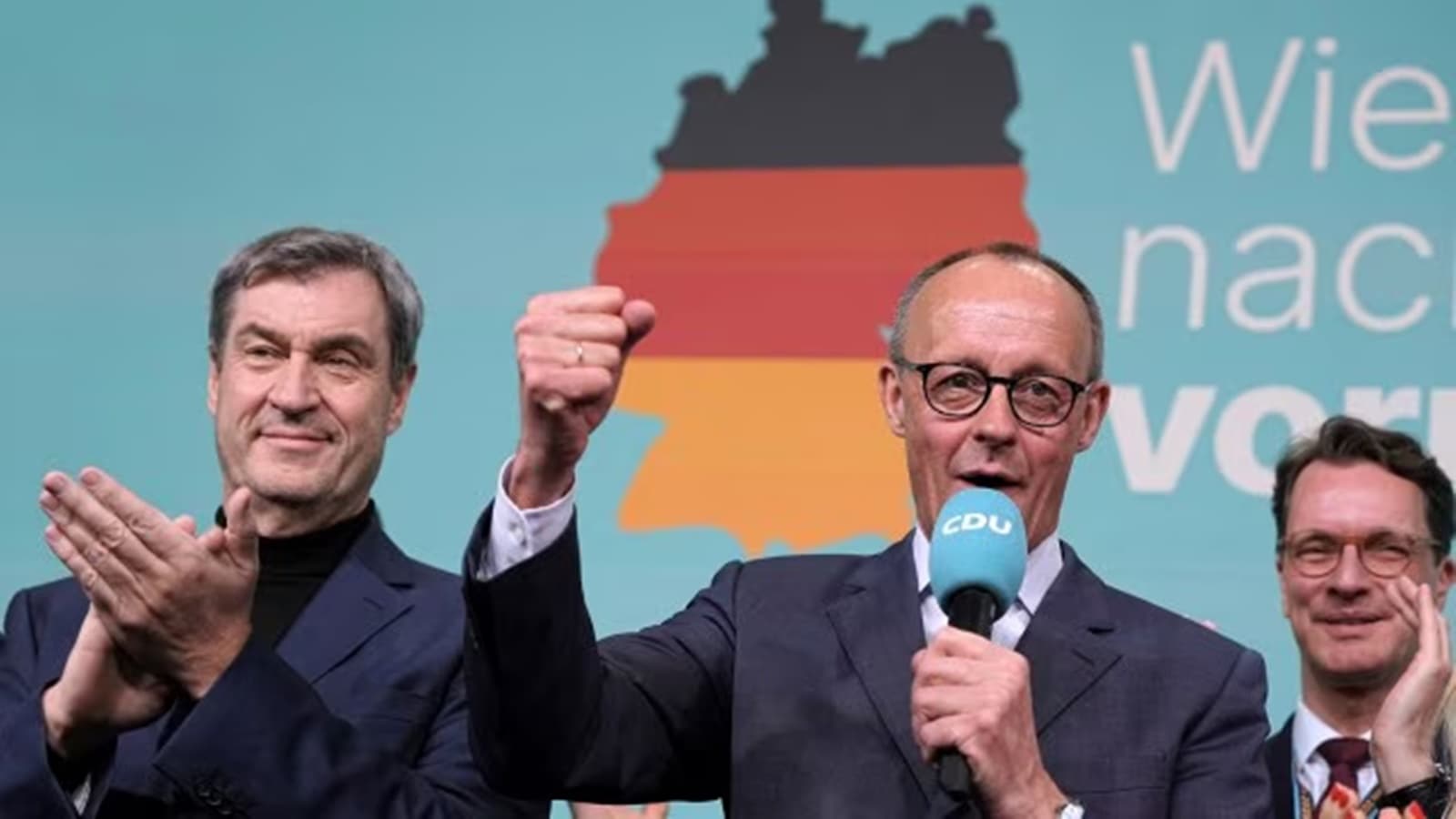 The latest federal election results signal a major shift: The far-right Alternative für Deutschland (AfD) has secured around 20 per cent of the vote, positioning itself as the main opposition force.

When I arrived in Germany in 2018, Angela Merkel’s open border policy was already showing political cracks. Just a year earlier, in 2017, she had defended that policy without hesitation, confident in a vision of a welcoming, liberal Germany. Fast forward to 2025, and the political scene has changed significantly.
Today, Friedrich Merz, her successor at the helm of the centre-right Christian Democratic Union (CDU), finds himself scrambling to justify his recent acceptance of far-right votes on immigration controls — a move that has ignited intense debates about the country’s future direction.

The latest federal election results signal a major shift: The far-right Alternative für Deutschland (AfD) has secured around 20 per cent of the vote, positioning itself as the main opposition force. In many other EU countries, far-right parties have either governed or wielded significant influence, yet Germany had remained a major exception, thanks in part to the constitutional “firewall” embedded in the Grundgesetz. Originally designed in the aftermath of a dark past to keep extremism at bay, this safeguard now appears to be under serious strain.
What makes the AfD’s rise particularly alarming is not just the numbers but the nature of its agenda. While parties like France’s National Rally or Italy’s Brothers of Italy have somewhat moderated their language to appeal to a broader electorate, AfD leaders persist with extreme neo-Nazi rhetoric. They openly question Germany’s commitment to Holocaust remembrance, advocate mass deportations, and promote so-called “remigration policies that remind some of the country’s most troubling chapters. This isn’t a party easing into mainstream politics; it is steadily pushing the boundaries of acceptable discourse.
Merz’s decision to court far-right voters by backing tougher immigration measures was clearly a tactical bet aimed at consolidating support. Although the CDU emerged as the largest party, the political gains were minimal at best. Instead, this strategy has raised a worrying question among citizens: Has this concession inadvertently given the AfD a larger platform, setting the stage for an even more radical shift to the right in German politics?
Beyond these ideological battles, Germany’s export-driven economy faces its own set of deep-seated challenges. The latest DIHK Economic Surveys (Fall 2024 and February 2025) warn that the third consequent year of slowdown risks hardening into a structural slump rather than a mere dip. Ever since Russia invaded Ukraine, high energy costs have squeezed industries that once powered Germany’s economic engine.
According to the DIHK, only about a quarter of companies now rate their current situation as “good,” while roughly the same number consider it “poor”. One-third even expect their prospects to worsen. Moreover, stiff competition from China, a sluggish pace of digital transformation, shortages of skilled labour, and notorious bureaucratic inertia have all contributed to a growing sense of economic malaise.
Additionally, the strict “debt brake” policy — an austerity measure originally designed to ensure fiscal responsibility — now acts as a barrier to much-needed public investment in infrastructure and innovation, further stifling growth.
This structural decline is further underscored by the critique in Wolfgang Münchau’s ‘Kaput: The End of the German Miracle‘. He argues that decades of neo-mercantilist policies, characterised by strong ties between political and industrial elites, have left Germany overly reliant on traditional sectors such as automotive manufacturing while neglecting the critical need for digital transformation and innovation. As a result, the country has developed risky dependencies: Relying on Russia for cheap gas and viewing China as both a market and a competitor. Without decisive reforms, what currently seems like a cyclical downturn could transform into a long-lasting decline.
The recent IFO business climate index underscores that this economic slowdown is particularly acute in eastern Germany, where industrial decline has left deep scars. Voters in these regions have grown increasingly disillusioned with what they see as decades of neglect by traditional parties. For many, the AfD’s strong critique of the political establishment and its promise to take decisive action represent a welcome, if risky, alternative. Economic hardship and political frustration, it seems, have proven to be a potent mix for populist messages.
Amid these challenges, Germany’s civil society is not standing idly by. Across cities, massive demonstrations have taken place, with hundreds of thousands of citizens including business leaders and cultural figures to religious groups taking to the streets to protest against right-wing extremism. Their unified message is clear: While the economic and social challenges are real, the solution cannot come at the cost of the democratic principles that have defined Germany since World War II.
Looking ahead, the next government, likely a coalition, faces a difficult task. They must tackle deep-rooted economic problems and navigate the tricky terrain of immigration policy and national identity. As economic challenges and anxieties mount, the struggle to balance reform with continuity will define not only the future of German politics but perhaps that of Europe as a whole. Mainstream parties need to reconnect with voters who feel abandoned, without resorting to the extreme measures that the AfD champions.
For now, the democratic firewall may hold, but far-right political pressure and economic woes continue to test its limits.
The writer is a researcher located in Stuttgart, Germany. Views are personal

 Share
Share


