
Opinion Dinjith Ayyathan’s film Eko doesn’t play by the rules. And it’s a good thing
With no big stars and no easy answers, Eko delivers a deeply immersive cinematic puzzle that shows why Malayalam cinema continues to captivate India
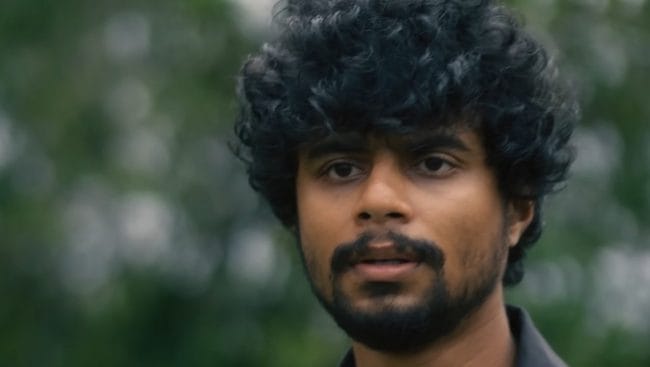 Sandeep Pradeep in Eko. (Screenshot: YouTube/Muzik247)



Malayalam film Eko has been a point of discussion in cinephile groups since its release. When I went to see the film at a Pune theatre, I was amazed by it. Eko repeatedly reminded me that there is no substitute for competent storytelling in cinema. These stories could take myriad shapes and forms. Eko doesn’t feature any big stars and is supported by a wonderful ensemble cast, with the promising young actor Sandeep Pradeep playing an important role. The biggest asset of the film is the story and the way it is told. Unique experiments with narrative are one of the hallmarks of new-age Malayalam cinema. Amongst other factors, storytelling seems to have played a key role in endearing these films to a pan-India audience, especially at a time when mainstream Hindi cinema is significantly diminished on that front.
What is the film about, you wonder? Eko makes the answer to such a question difficult owing to the nature of its storytelling — layered, languid and taking time to unravel. Throughout the first half, you are left thinking what all of this might lead to. It takes us back in time, exploring Kerala’s maritime relations with Malaysia, evokes local legends and the lush geography of the state, which is not a prop but a supporting character in the story. Understanding the landscape is integral to the film. You are still left waiting for an event to occur around which the film may pivot, but Eko defies all such expectations. You watch on because you are captivated by its immersive storytelling and want to know where this might lead. Eko can be categorised as a thriller which doesn’t look, sound, act or feel like one.

A large part of the film revolves around the disappearance of a character called Kuriyachan, a trader of sorts, lover of dogs and alleged doer of many dubious deeds. But as an audience, you know there’s more to the film than just that one event. It is a very interesting way to craft a thriller where you see the genre being gradually stripped of its conventions. The film is not just trying to solve a mere case of disappearance, there are entangled histories of the region and other characters equally important to the plot, even if not directly related to the disappearance. It would be unfair to not mention the incredible collaboration between the film’s director Dinjith Ayyathan and writer-cinematographer Bahul Ramesh. They also made Kishkindha Kaandam (2024), one of the most remarkable films in recent Malayalam cinema.
One could argue that Eko begins to unravel after the interval when some of the questions from the first half get partially resolved. The bigger puzzle of the disappearance may have been solved by the end but there are numerous minor questions around various characters, their motivations, and backstories running through your head. You realise these are worthy questions too, that perhaps the lack of clarity is intentional. The film is over but it hasn’t left you. In this age of shrinking attention spans, isn’t that an admirable achievement?
Eko also features a remarkable ending the audience is unprepared for. The expectations of retributive justice remain at bay. I wasn’t even sure about the end until the lights came on. There are many instances when Eko catches you off guard, restoring the joy of being surprised by cinema. That is the triumph of its storytelling and that too in a mainstream format.
The writer teaches literature and film at FLAME University, Pune

 Share
Share


