
Opinion Derek O’Brien writes: Notes from a very short Parliament session
It was heartening to see J P Nadda, the Leader of the House in the Rajya Sabha, ‘yield’ twice during his speech to allow an Opposition MP to intervene
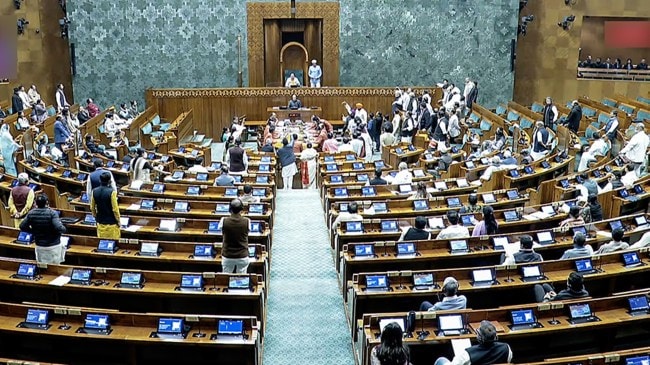 Here are a few notes from my parliamentary diary.


As you read this, the shortest Winter Session in Indian parliamentary history will be coming to a close. Here are a few notes from my parliamentary diary.
All-party meeting: It is customary for the government to host an all-party meeting a day before each session starts. Floor leaders from 36 political parties attended. Every party, except the BJP, made interventions outlining “key issues we want discussed”. The five ministers present at the meeting welcomed all representatives at 11 am. At 1:30 pm, they politely thanked everyone present and said goodbye. So what did the government say at the meeting? Famous words: “We will get back to you.”

New MPs in the House: It was good to see Omar Abdullah, Chief Minister of Jammu and Kashmir, sitting in the visitors’ gallery of the Rajya Sabha. He was there to watch the three new MPs from his party being sworn in. Big moment for the J&K National Conference. All three gentlemen were sharply dressed, two of them in suits.
Felicitations to the Chairman: On the first day of the session, the new Rajya Sabha Chairman, C P Radhakrishnan, was welcomed by MPs across all parties. Some used the opportunity of these speeches to gently make a few political points. This columnist didn’t miss the chance either. The new Chairman was urged to address these issues: (a) Increase the number of sittings of the House; the first Lok Sabha sat for 45 days. Now, it’s just a 15-day session. (b) Admit more notices in the Rajya Sabha for discussion; 110 notices were admitted for discussion between 2009 and 2016. We are down to a dismal 36 between 2017 and 2024. (c) Scrutinise more bills; in the 15th Lok Sabha (2009-14), seven out of 10 bills were scrutinised by parliamentary committees. In the 16th (2014-2019) and 17th Lok Sabha (2019-2024), this number fell to three and two respectively.
Dog fuss: An MP from an opposition party drove into the precincts of the Parliament building with a dog in her car. What’s the big deal? Some over-the-top television channels played this up as if a national security breach had been created. Sigh.
Innovative protests: The standard operating procedure is for MPs to stage their protests at Makar Dwar, the area outside the main entrance to Parliament. The All India Trinamool Congress (AITC) tweaked this. Protests were held at different locations through the week: From the base of Gandhiji’s statue (now tucked far away from the action of the main building) to the lawns of Vijay Chowk and to the steps leading up to the old Parliament building. However, to protest the Prime Minister referring to Bankim Chandra Chattopadhyay as “Bankim-da”, the AITC chose an unusual location. MPs from the party sat silently for 10 minutes in the hallowed Central Hall, holding posters of the writer of the national song, and the writer of the national anthem, Rabindranath Tagore. Powerful imagery being used to drive home a point.
Cricketers in the House: Former cricket World Cup winners, and now Lok Sabha MPs, Kirti Azad and Yusuf Pathan, have a good attendance record. But we haven’t spotted Harbhajan Singh, Rajya Sabha MP from AAP, on the pitch in Parliament this session. Is the off-spinner trying to break Sachin Tendulkar’s record for poor attendance in Parliament?
No Calling Attention Motion: This is an important parliamentary device when a member of the Opposition can draw the attention of a minister on a specific subject. This gives the Opposition an opportunity to initiate a short debate on an important issue and hold the government accountable. Once again, not a single Calling Attention Motion was accepted in either House.
Lesson from Nadda: By convention, when a minister is speaking and a member of the Opposition wants to interject, the minister pauses and sits down — “yields” — so that the MP can make a point. It was heartening to see J P Nadda, the Leader of the House in the Rajya Sabha, “yield” twice during his speech to allow an opposition MP to intervene. Good parliamentary practice. Home Minister Amit Shah might want to take a leaf out of Nadda’s book.
Meeting students: Your columnist had the opportunity of meeting a group of students in Parliament, who had travelled from Tamil Nadu and Jharkhand. Being a tour guide to the students was so much fun. Swathed in history, Central Hall turned out to be their favourite. One of the students got so emotional about the experience that she teared up. More young people should come to Central Hall to experience a very special space, now turned into a quasi-museum.
P.S: In April this year, the Proclamation of President’s Rule in Manipur was discussed at 1:00 am. Last night, the “Murder of MGNREGA Bill” was discussed until 2:00 AM. Love for the nocturnal has its devious reasons.
The writer is MP and leader, All India Trinamool Congress Parliamentary Party

 Share
Share


