Journalism of Courage
 4 min read



While the Gujarat chief minister and his supporters have not tired themselves of claiming that the situation in the state has been made normal enough to hold school examinations the reality, of course, is very different. Defence Minister George Fernandes, who is also the convenor of the NDA, after an on-the-spot survey and meetings with leaders and ordinary people, has clearly stated that the people want the army to stay longer even though the army chief felt that the troops could be withdrawn. The need for the army to stay on, therefore, is psychological rather than operational. And if that is the ground reality, then the army must stay longer. But this throws up the real issue: people8217;s lack of faith and confidence in the state machinery of internal governance. The evidence in support of the loss of faith is enormous; and the reasons for the failure of the instruments are many and well-known. Politicisation, polarisation and the inefficiency of the administration and police forces have led to an almost compulsive desire to avoid taking decisions and administer to all sections of the people impartially.
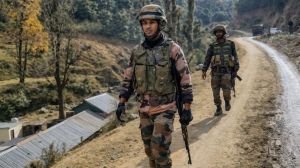
We need to remind ourselves that the military is the ultimate instrument of the state and must not be used often. But it has been performing the task of the police for over 45 years in the Northeast and 18 years in the Northwest with frequent deployments thrown into its routine in the rest of the country. At one stage the army chief had complained publicly that one-third of his force was tied up in 8216;8216;internal security8217;8217; an euphemism for law enforcement. Surely, at the minimum, this is a detraction from their primary duty, which is to defend the country against external aggression. And, in the worse case, given the increasing erosion of professionalism even in the higher echelons of the armed forces due to politicisation, the impact on the country8217;s stability and integrity could be severe. It is also curious that we have not heard anything about the million-strong central police forces helping to re-establish normalcy in Gujarat. At a time when the defence forces are fully deployed on the borders, this appears to be a case of criminal neglect. And, curiously, it is the defence minister rather than the home minister who is attending to these issues!
The country has a police force a little more than three-times the size of the army. Logically there should be no reason whatsoever for the army8217;s deployment in internal security. The men and women in the civil administration are also Indians hailing from the same stock from where the defence forces come from. Then, why is it that they fail? And why is it that increasingly the people have dramatically less faith in their willingness or ability to ensure the well-being and security of our citizens? The answer is stark and simple: recruitment and training of the police and civil services. The Sidhu scandal in Punjab indicates the depth of degradation in the selection of future administrators. If Gujarat could only help us to focus on reforming the recruitment of law enforcement agencies by making them immune to political patronage and to revamp the training to make the police and administrative services efficient and non-partisan, we would have learnt at least one lesson from these recent riots.