Journalism of Courage
 4 min read


Senior officials of the World Trade Organisation member countries gathered in New Delhi on Thursday for a two-day mini-ministerial meeting. Rituparna Bhuyan takes a look at the issues on the table.
amp;149;n What is the informal meeting of trade ministers in New Delhi about?
The initiative has been taken by India in an attempt to give the stalled Doha talks some momentum. More than 35 trade ministers have been invited to the summit but they represent interests of about 100 nations that are members of the World Trade Organisation WTO. Negotiations on the WTOs Doha Development Round,that aims to liberalise global trade by reducing import tariffs and barriers associated with exports and imports of goods and services,have been going on since late 2001.
amp;149;n What are the recent developments?
The last time trade ministers met under the WTO umbrella to discuss the Doha Round,was at Geneva in July 2008. The talks failed over significant differences on a number of issues,including developing and poor countries attempts to protect their marginal farmers interests,subsidies given by developed countries to multi-national corporations engaged in cotton farming as well as market access norms on industrial goods. The global media went to town painting Indias strong negotiating stance as the reason behind the failure. To re-start dialogue,the WTO released a series of papers in December 2008 to clarify the progress in talks till date. But the state of suspended animation continued,especially with the global financial crisis unravelling.
amp;149;n So what has changed now?
After Lehman Brothers collapsed in September 2008,taking down with it global financial and credit markets,political heads of countries met at various forums to discuss measures to mitigate its impact. These include the G-20 summit Washington,November 15,2008 and London,April 2,2009; Cairns Group Bali,Indonesia,June 7-9,2009; World Trade Ministers Paris,June 24-25,2009; G-8 plus meeting,LAquila,July 8-10,2009; and APEC Trade Ministers Singapore,July 21-22,2009. In two of these meetings,it was decided that the Doha Round should be concluded by December 2010. A recurring topic of hot debate was the protectionist streak exhibited by many developed nations after September 2008 and it was unanimously agreed that such measures would worsen the crisis.
amp;149;n Why is India hosting this meeting?
In June 2009,Commerce Minister Anand Sharma floated the idea of a New Delhi ministerial meeting at the Cairns Group meeting in Bali. Subsequently,it was decided that all key stakeholders in the Doha Round would be invited.
Indias agenda is simple. At a time when talks are deadlocked,organising an informal meeting on the Doha Round projects the country as a pro-active participant in multi-lateral talks rather than a thorn in the flesh as the global media had suggested in 2008.
amp;149;n Does this mean India may be more amenable now to agreeing with developed nations on contentious issues like market access and farm subsidies?
No,India maintains that development is at the core of the Doha Round,which means that interests of the poor and marginal farmers as well as smallscale industry should be protected. Moreover,as the convener of the meeting,India will chair the Delhi Summit and has made it clear that no specifics will be discussed on contentious issues. The focus will be on finding a common ground on a process that is to be followed to take the Doha Round forward. Key questions that will be deliberated upon are: Should timelines be set to take the process forward? How can the negotiations be intensified? What issues should be deliberated on and their order of priority?
amp;149;n What happens next?
India will release a statement at the end of the meeting. WTO members may or may not fully agree with the statement,but surely,it will lead to some momentum in the Doha negotiations,as no country would like to be accused of slowing the talks. But there are some large and significant gaps in the negotiating tables. When trade diplomats meet at Geneva,it would require a Herculean effort to bridge those gaps and ensure that talks do not just continue to choke and sputter.

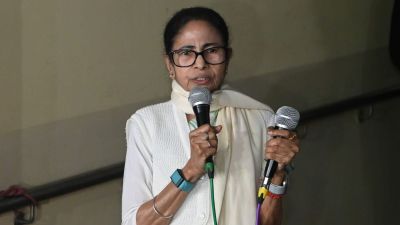
The Enforcement Directorate (ED) on Thursday conducted searches at 10 premises associated with the election management company I-PAC in Kolkata and Delhi. The company, founded by election-strategist-turned-politician Prashant Kishor, is currently managing election campaigns of the Mamata Banerjee-led Trinamool Congress. West Bengal will go to elections this year.