4 min read

Journalism of Courage



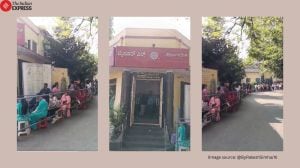
A battered,decades-old Bedford truck pulled off the road. Gold miners crawled out of its mud-splattered cab,sauntered into Peter Rajmenjans diner and asked if he had any bush hog for sale. The only wild meat I have left today is deer, replied Rajmenjan,55,whose establishment lies at the 58-mile marker on the main road cutting through the Guyanese jungle.
Over plates of deer curry,travellers chatted in Caribbean-accented English or murmured in indigenous languages like Macushi,Arawak and Wapishana. Around them,the forest buzzed with mosquitoes. The siren moan of howler monkeys could be heard in the distance.
Then they climbed back into their Bedfords and continued their journey on one of South Americas most remarkable roads. It runs more than 300 miles,from Georgetown,the sleepy capital of this former British colony,to Lethem,a boomtown on the border with Brazil.
The status of this muddy road represents nothing less than the future of Guyana itself. Investors from Brazil,the regions rising power,want to pave the road and dredge a deepwater port near Georgetown,giving northern Brazil a modern artery to export its goods to the Caribbean and North America.
For Guyana,which has just 753,000 people in a country about the size of Britain population 61 million,the project holds both risk and reward. Many here liken the debate over the road to a battle for the identity of Guyana.
The road is a physical manifestation of these two poles. At one end are echoes of the nations colonial past,like cricket pitches and hackney carriages taxis. There are Hindu temples,for the many Guyanese descended from labourers from the Indian subcontinent.
At the other end of the road,on the border with Brazil,every other conversation seems to be in Portuguese. Chinese merchants sell goods to traders,businessmen broker deals to lure Brazilian rice farmers and signs welcome Brazilians and their robust currency,the real,to this outback.
Between these two worlds lies a frontier: thick rainforest and empty savannas.
Environmentalists are especially concerned about the roads potential impact on forests that are home to animals like river otters,the 400-pound arapaima fish,even jaguars. Studies show that more than two million acres of rainforest could be affected if the road is paved.
Those arguing for the road to be paved acknowledge some upheaval will occur. But they also say the road could ease Guyanas poverty,a legacy of isolationist economic policies. Forty-four years after Guyana gained independence,the country remains the poorest in South America,with a per capita income lower than Bolivias.
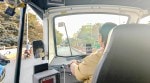
Only about 100 vehicles a week make the trip all the way to Lethem,taking anywhere from 12 hours to two days to complete it,depending on weather conditions. The muddy,pot-holed road might seem atrocious today but it used to be worse before the early 1990s.
Samuel Hinds,Guyanas prime minister,said it was Henry Ford who originally had the idea of cutting a road through Guyanas forest in the 1920s. Some Guyanese argue that Ford was searching for a way to export cultivated rubber from Fordlândia,his failed outpost of capitalism on a tributary of the Amazon River in Brazil.
Companies in Brazil still want the road improved,and many Guyanese consider it a foregone conclusion that it will be. Still,the Brazilians may have to wait.
Sleeping with a big neighbour,200 times your size,you know they might not intend it,but if they roll over it could be the end of you, said Hinds,reflecting concerns in Guyana over being swallowed up by its southern neighbour.
That road is going to end our way of life, said Justin de Freitas,35,who worked as a porter along the road before returning to Dadanawa,a sprawling cattle ranch where he grew up. Dadanawas vacqueros,or cowboys,are still Wapishana Indians clad in jaguar pelts who ride their horses for days over the empty savanna.
Nothing, he said,will be the same around here once its paved.8221;