3 min read

Journalism of Courage



The story of Ved Mehtas vast body of memoirs is well-known. But the republication of Daddyji,the first book in his Continents of Exile series 12 volumes,and hopefully still counting,comes as a reminder of his staggering achievement.
To reread Daddyji,first published in the Seventies,today is to find in Mehta a unique,though in no way unlikely,social historian of 20th century India. Mehta,1934 born,was left blind at the age of three by cerebrospinal meningitis. The family he was born into was in many ways typical of those times. His father,a high-ranking public health official in the colonial government in west Punjab,came from a family and was married into another making their way into newly opened opportunities. Education was their vehicle of progress,and when Mehta lost his sight,he was bundled off,alone,to a school for the blind in Bombay,and later a special school in Arkansas,US.
It may be diversionary here to inquire whether Mehtas life-long pursuit of detail that rendered his writing so graphic and that made him one of New Yorker magazines most celebrated writers as a staffer for three decades was a consequence of his childhood circumstances. But in assembling volume upon volume of his life stories,stories of generations of his family as they found their way from the smaller towns and villages of Punjab to the opportunities of Lahore and after 1947 into newly made lives in independent India and also overseas,he conveyed the essence of a century defined worldwide by movement,by exile,migration and travel.
Daddyji is the story of the Mehta clans journey from village to city,but primarily of his father Daddyjis primary education amid the newly forming canal economies of Punjab and then at Lahore and London and his subsequent inclusion in the colonial bureaucracy,with all its frills like entry into almost-British-only club and tennis games with the bosses. It is a story made fuller by the minutiae of family life,the births and marriages,the expectations and ambitions that drove and disappointed the larger family. But Daddyji and its companion volume Mamaji,about Mehtas mother,are works of biography and Mehtas fastidiousness in maintaining a biographers distance is evident when he refers to himself in the third person,even noting down an aside to the reader to explain this oddity,that these are really not his stories.
That is also perhaps because Mehta is mindful that he is reconstructing live stories with the tools of a reporter. And it is in this reconstruction that the two books help provide the social context to works of history on canal colonies,like Imran Alis The Punjab Under Imperialism,and in a way anticipate fiction like Vikram Seths.

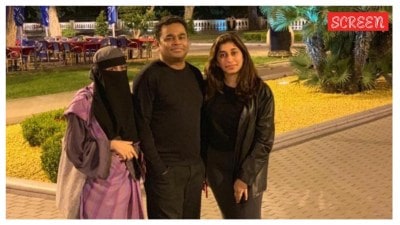
AR Rahman has been under fire after his interview last week, during which he noted how less work has been coming to him due to a power shift within the Hindi film industry in recent years and said it could also be due to the “communal thing”. Now, Rahman’s daughters Khatija and Raheema have come out in their father’s support.