7 min read

Journalism of Courage



Its 6 am. The library at the Nehru Institute of Mountaineering NIM in Uttarkashi is open at least three hours ahead of schedule. Senior instructor Jagmohan Singh Rawat is at one of the tables,flipping through Paths of Glory,the Jeffery Archer novel on legendary mountaineer George Mallory. Rawat knows mountains better than most others but he thinks his students could do with an inspirational story. They should know about mountaineers like Sir Mallory and Sir Edmund Hillary. Though Mallory died during his climb up the Everest in 1924,we recommend his story to our students, he says,stopping to scribble notes in his diary.
Rawat has started early today. It is the second day of a 15-day adventure course run by the Ministry of Defence and 50-odd girls from schools and colleges across the country are staying on the campus. Rawat shuts the Archer novel,collects his diary and heads home. He has about two hours before the training starts.
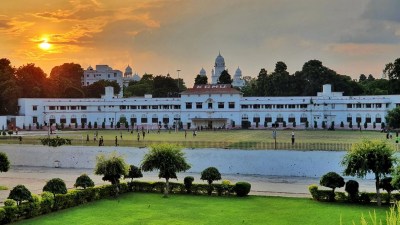
Rawat stays on the NIM campus,in one of the staff quarters named after mountain ranges such as Shivling,Kedarnath,etc. The NIM campus is located in the Ladari Reserve forest. With its dense pine trees and a campus that overlooks the Bhagirathi river and the town of Uttarkashi,it makes for a beautiful setting. Set up in 1965,NIM is considered one of the best mountaineering institutes in the country.
An army of monkeys is out on a morning stroll and Rawat blows an ear-piercing whistle to disperse them. The trainees will be out any time and they wouldnt want these monkeys around, he says.
After a quick shower and an early breakfast,Rawat makes his way towards the lecture hall,a 200-metre walk from his quarters. The students have already assembled in the hall and at 10 am,Rawat begins his lecture on knots and bends of ropes used for mountaineering.
Rawat ties his fingers up in impossible knots,unraveling them just as easily,as he talks about the different ways in which the ropes can be knotted. The students are brimming with questions and Rawat tells them to first hear him out. After his lecture,he throws the floor open to questions. Now you can ask me as many questions as you want to. Ropes are our first line of defence and its the most important part of the training.
After the 45-minute lecture,the students get a 30-minute tea break and they head to the NIM canteen. Rawat has to work on the next module,the obstacle course. By the time the girls return from their break,the setting is ready: students have to walk on a log that has been laid across a 20-metre pond. The girls giggle nervously. Dont worry,here we go, Rawat says,walking across the pond and coming back just as effortlessly. He waves towards the first girl,asking her to try.
Its very important that we take the fear out of these trainees. The sooner they forget about their fear,the better it is for them. Mountaineering is not just about physical fitness,its also about mental strength, says Rawat.
Growing up in the nearby Bonga village in the lap of the Himalayas,like most youngsters in the region,Rawat knew the mountains would sustain him. He effortlessly took to the mountains,trekking and rock climbing,till he did a basic and advance course from NIM. In 1993,he joined NIM as a trainer and his first trek was to Gangotri and Tapovan. Since then,Rawat has been part of at least one trekking expedition from the institute every year.
While the adventure courses are for school and college students,we have basic and advance courses for mountaineers,apart from special climbing and skiing courses. We usually take our mountaineering students to peaks such as Draupadi ka Danda and Mt Rudragiara for expeditions. But the important thing is patience. Its not about bravado. I was part of the Indian team that climbed Mt Everest from the North Ridge side from Tibet and its relatively tough because unlike on the Nepal side,there are no sherpas,pre-set ropes and ladders. When we reached South Col a sharp pass between Mt Everest and Mt Lhotse,I realised I was dehydrated and was not in a condition to continue. I did not go any further, he says.
Its time for the after-lunch session and the trainees have been told to assemble in an open ground. Rawat and four more instructors bring a Zorbing ballwhich is a huge plastic,transparent ball. Two girls volunteer for the ride,they step in and Rawat and his fellow instructors push the Zorbing. The rest of the trainees cheer and Rawat says encouragingly,Aapki bi baari aayegi You will all get a chance.
This is followed by a tent-pegging session,where the instructors give a demo on how to put up tents and other basic techniques such as digging a pit around the tent and putting stones on the canopy. Next is a session where trainees have to climb a 10-foot-high artificial electronic wall.
Most of the batches at NIM are almost full these days. Arunima Sinha,who this year became the first woman amputee to scale the Everest,also trained here. The courage she displayed motivated all of us. This year,we got two mountaineers from Russia and Portugal to come here for the basic and advance course and they climbed Mt Everest in May this year, says Rawat in between sessions.
With this year marking 60 years of the first conquest of the Everest,every ones lining up to climb the summit. But there are risks,Rawat warns. The trainees should know the importance of grip. Once I was on a trekking expedition with IAS trainees to the Kedarnath Dome peak and we slipped. Five of us were supported by the ropes and we hung on precariously. I held my rope and slowly pulled each one of the trainees to safety.
The evening session has Rawat and his fellow instructors telling the trainees about the various medical emergencies that could crop up during an expedition. Three months ago,when an NCC team was training here,a student suffered from frostbite and did not tell us. Its very important to know about frostbite, Rawat tells his students.
The days training ends at
5 pm and Rawat heads towards his quarters. We have to go for a week to nearby Thekla for rock-climbing lessons, he tells his wife. And then,he turns around to say,Mountains are our gods and we owe whatever we have to these peaks.