3 min read

Journalism of Courage



President Pratibha Patil paid homage to Mahatma Gandhis memory at big markers in South Africa. But another Gandhi heritage trail around Durban,where Indian immigrants first arrived in 1860,can throw up many surprises about the Mahatmas connection to South Africa,a trail made not of large palaces but of moments that saw people being converted,ideas evolving and long conversations taking place.
Old Courthouse
On Aliwal Road. This is where Gandhi first faced discrimination in South Africa,much before the well-documented being-thrown-out-of-a- train incident in Pietermaritzburg. Historians say that Gandhi was forced to remove his turban at the courthouse where he practised it was not allowed but he defiantly refused. It was perhaps the first incident that forced the barrister to think beyond his job and take stock of how the relationship in colonial South Africa was between the native and the ruler.
Dada Abdullahs grave
It was at Abdullah Shah or Dada Abdullahs urging that Gandhi set sail for South Africa from Gujarat in the first place,as he needed a barrister to provide him legal assistance. This ended up providing the barrister the opportunities that set him on the road to politics which,in turn,eventually turned him into a Mahatma. One cannot overstate the role of Dada Abdullah.
The road uphill
From Gandhis house in Phoenix to John Dubes. This 2km road,says first African National Congress president John Dubes daughter,Lulu,active as ever,was travelled by her father and Gandhi to meet,sometimes several times a day,to thrash out ideas,to share concerns and to work out a plan of action to take on the worlds then mightiest empire. Says Kidar Gobin,great-grandson of Gandhi,son of Ela Gandhi,and who spent many years in Phoenix as a child,There was a clear blue stream here that connected where Gandhi lived to John Dubes house,along with Isaiah Shambe,the preacher-activist,almost linking all three people as they engaged in a free flow of ideas.
Uhlange High School
This Durban school,adjacent to John Dubes house,is the place where Mandela had his last underground meeting before he was picked up and jailed for 27 years. This was also where Mandela cast his first vote,in 1994 after the end of apartheid. As he voted he said, I thought of Oliver Thambo. Chris Hani,Chief Luthuli and Bram Fischer8230; I thought of our great African heroes who made great sacrifices so that millions of South Africans could be voting8230; I did not go into that voting station alone on 27th April,I went in with all of them8230; After that,he went to the gravestone of John Dube and said,I have come to report,Mr President,that South Africa is now free.
Bunnie chow
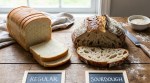
It is a very popular,signature dish,almost a living symbol of the Indian-South African connection. The Bunnie chow comprises a large chunk of a bread loaf,like pao in pao-bhaji,with a curry in the middle and dhania leaves on top,which nourished Indian immigrants as they made South Africa their home as workers,shopkeepers,barristers and
revolutionaries.