Journalism of Courage
 11 min read


A dark herd creeps across a grassy plain,wades a shallow lagoon and clambers to safety. Filmed from the air on April 20th,this was a scene Sri Lankas government had been dreaming of: the start of a mass breakout from the Tamil Tigers last sanctuary by,it claims,over 100,000 refugeesperhaps two-thirds of those being held hostage there. Having inspired the exodus,by breaching a sandy embankment around this refuge,a few kilometres of beach in north-eastern Sri Lanka,the army has encircled the surviving Tigers.
According to its private estimate,the Tigers may be reduced to 1,000 hardened fighters,plus a few thousand recently impressed refugees. The army believes Velupillai Prabhakaran,the Tiger chief,and his senior henchmen are among themas was also claimed this week by a spokesman for the Liberation Tigers of Tamil Eelam LTTE,as the rebels are properly known,after the Eelam,or Tamil homeland,for which they have waged a 26-year war. To bag these men,the last prize of a brutal two-year offensive,the army claims to be using stealthy tactics,with deep-penetration commandos and snipers. It has a history of over-egging its battlefield triumphs. But the government of President Mahinda Rajapaksa seems genuinely to believe that one of Asias oldest wars could be over within days.
That would be momentous,and the island-nations Sinhalese majority will rush to celebrate itand perhaps also give Mr Rajapaksa victory in an important regional election,in Western Province,on April 25th. Sri Lankas long war has probably cost over 100,000 lives,including 30,000 in the past two years.
Coinciding with a period of high economic growth outside the war-zone,in the west and south,the conflict has come to seem an increasingly anachronistic blot on a hopeful country. By rallying Sinhalese,who make up around three-quarters of the population,to support an all-out campaign against the Tigers,which his steely defence chief and brother,Gotabhaya Rajapaksa,and General Sarath Fonseka,the army commander,have ably delivered,Mr Rajapaksa has almost erased this stain. Nor should Mr Prabhakaran and his crew be mourned. A well-organised and vicious terrorist group,expert in brainwashing and suicide-blasting,the LTTE has maintained its fiefwhich until late 2006 extended over almost a third of the countryby murder and fear. Moreover,having sabotaged a peace initiative of the previous government,and helped it lose an election by imposing a boycott on Tamil voters under its sway,Mr Prabhakaran has had the war he was asking for.
Yet,among Tamils,who may represent 18 per cent of Sri Lankas population,including a community descended from 19th-century Indian immigrants which has played little part in the war,Mr Rajapaksas impending declaration of victory will be largely derided. And the congratulations of many foreign governments,especially Western ones,will be muted. The main reason is that the governments apparent victory has come at an appalling cost. Hillary Clinton,Americas secretary of state,said this week that the entire world was disappointed that in its efforts to end the war,it was causing such untold suffering.
In its rush to exterminate the Tigerspartly in justified fear of their skill at manipulating foreign opinionthe army has shown a cruel disregard for Tamil civilians crowding the battlefield. Earlier this month the UN estimated that since early January,when the Tigers fled their northern capital,Kilinochchi,driving perhaps 200,000 civilians before them,some 4,500 had been killed and 12,000 wounded. The International Committee of the Red Cross,which has evacuated over 10,000 wounded civilians and their relatives from the no-fire zone,said on April 20th that hundreds more had been killed or wounded since the army made its breach.
Most appear to have been victims of shellfire inside the Tigers last refuge,though the government designated it a no-fire zone and claims to have shelled it only when civilians would not be harmed. It accuses the Tigers of bombarding the zone,to bolster international demands for a humanitarian ceasefire. But entrapped civilians,including doctors manning a makeshift hospital on the northern tip of the zone,say the army is to blame; and human-rights researchers believe them. More broadly,the governments campaign has been marked by gross disregard for the rule of law,especially as it applies to Tamils. The defection in 2004 of a senior LTTE commander known as Karuna,now minister for national integration and reconciliation,enabled the army to capture the east rapidly,by mid-2007. Unfazed by the crimes allegedly committed by its proxy,including the forcible recruitment of children and many murders,the government has partly emulated them. In the east and elsewhere,especially Colombo,the countrys main city,it is alleged to have abducted and killed hundreds of young Tamils. Nor are Sinhalese entirely safe,especially journalists. Several have been mysteriously assassinated,and the rest terrorised. Reporters Without Borders,an NGO,considers Sri Lanka more hostile for journalists than any other democracy.
Asked whether he could not have prosecuted a just war more justly,Gotabhaya Rajapaksa,the defence chief,says the government had no choice but to use extraordinary tactics against a monstrous foe. Mr Rajapaksa denied they included extra-judicial killing. But he admitted that many Tamils had been detained and interrogated for extended periods. Most,he claimed,were operating as LTTE agents under false identities. You cant expect all the normal things that happen in a normal society because the LTTE are not like that.
The American example
If this recalls the defence of water-boarding and other brutalities offered by Americas former government,it should. A former Sri Lankan army colonel,Gotabhaya Rajapaksa is also an American citizen; and the government has often likened its war against the LTTE to Americas zero-tolerance of Islamist terrorists. To an extent,America and its Western allies have encouraged the comparison,by proscribing the Tigers as a terrorist group. Yet the Western powers,which face no threat from the LTTE and whose politicians are susceptible to skilful lobbying by the expatriate Sri Lankan Tamils who bankroll it,have extended their sympathy only so far. They have lambasted the government for its human-rights abuses and,in the case of the EU,Sri Lankas biggest export market,threatened to cancel preferential trade terms. Making matters worse,the government has used such criticism,levelled,it claims,by Tiger-hugging imperialists,to stir up Sinhalese nationalism. This has hardened domestic support for the war,but alienated Sri Lankas foreign allies.
As a result,Sri Lanka,one of Asias oldest democracies,has been driven to seek other friends: Pakistan,its main arms-supplier; Iran,which has been providing 70 per cent of its oil supply on tick; and Libya,from which it expects a soft loan of 500m to arrive soon. That cash would be welcome,but insufficient to avert a looming solvency crisis. The governments profligacy,including defence spending that has ballooned as the armys strength has been doubled within three years,to 200,000,has depleted the countrys foreign-currency reserves,which now cover barely six weeks of imports. The president,who is also the finance minister,this week dispatched emissaries to the IMF to negotiate terms for a 1.9 billion loan.
Undoing the damage its campaign has done to Sri Lankas economy,reputation and democratic institutions will take years. But the governments abuses against Tamils may prove even costlier. Annihilating the LTTE will work only if,as the government claims,they do not represent the aspirations of their marginalised community. But its ethnically-guided control measures,in Gotabhaya Rajapaksas phrase,have suggested to many innocent Tamils that the government considers them terrorists. The internment of almost every resident of Mr Prabhakarans former northern fief,including some 70,000 before this weeks flood,provides a relatively mild,yet pressing,example of this.
Given that many of these people have grown up under the LTTE,the government obviously must vet them. It also reasonably notes that their mine-strewn paddy-fields may be unsafe for some time. Yet the governments original plan,to keep this population penned up for a year or more,was outrageous. In a rare concession to its critics,the government has somewhat relented: it now aims to resettle 20 per cent of the interns by the end of this month and 80 per cent by the end of the year. Yet to members of a proud minority,almost without exception,such blundering confirms the government as just the sort of diehard Sinhalese overlord that drove the LTTE to take up arms in the first place. And indeed,some members of Mr Rajapaksas regime,including General Fonseka,are avowed Sinhalese chauvinists. So even moderate Tamils,their ranks severely thinned by LTTE assassins,say they will be worse off without Mr Prabhakaran as their champion. Echoing the LTTEs propagandists,a retired Tamil judge,an otherwise sensible pundit,accuses the government of genocide.
Winning the peace
For Mr Rajapaksa to win over many Tamils would be tough. Yet if he is to turn military triumph into enduring peace,he must try. And in some ways,he has an historic opportunity to succeed. Crowned with laurels,he is expected to hold parliamentary and presidential elections within a year,and win thumping majorities in both. That would give himand his three brothers with ministerial statusunprecedented power to transform Sri Lanka. Having removed the obstructive LTTE,or remembering the restorative powers of the Tamil diaspora at least crippled it,Mr Rajapaksa could preside over the emergence of a liberal Tamil polity. By implementing a policy of regional devolution,that has existed on the statute for two decades but never in fact,he would go a long way to meeting the basic political demand of most Tamils. Such steps would win Mr Rajapaksa global acclaim. Yet there seems worryingly little chance he will take them.
As in the east,the government says it will quickly hold an election in the north for a provincial government. It also promises massive infrastructural development in the region. Yet Eastern Province is an unconvincing blueprint for healing Sri Lanka. Its election,won by a coalition led by Minister Karunas mob,was tainted by allegations of voter intimidation. Under the chief-ministership of Sivanesathurai Chandrakanthan,a former LTTE child-soldier and comrade of Minister Karuna with whom he is now at war,it remains worryingly violent. According to the International Crisis Group,which this month released a discouraging report on progress in the east,Mr Chandrakanthans administration has minimal power.
Nor should the north count on even this modest reform. In the absence of a powerful local proxy,the government is mulling having another of its controversial Tamil allies,Douglas Devananda,elected as its chief minister. This might be difficult. Mr Devananda,the minister for social welfare,is said to be loathed in Jaffna,the capital of Northern Province. But if he,or some other enemy of the LTTE,cannot be assured of victory,Gotabhaya Rajapaksa says the election may not be held. Despite the supposed liberation of the region from the terrorists yoke the authorities seem strangely worried that northerners may yet vote in a pro-LTTE government.
The Economist Newspaper Limited 2009

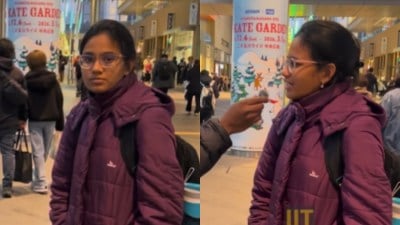
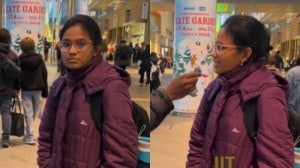
An Indian professional based in Japan has sparked online discussion after a video of her comparing work culture in the two countries went viral on Instagram. In the clip, the woman, an IIT Hyderabad graduate, introduces herself as a project manager at Rakuten and says that she secured the role through campus placements.