5 min read

Journalism of Courage



At the Persistence Resistance documentary fest,signs of the genres new confidence
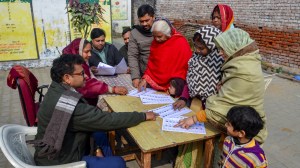
A 120-year-old woman smiles toothlessly at an object in front of her. Shes never been photographed before,and what shes looking at,with blithe incomprehension,is a camera. This is just one of the series of arresting visuals in Amlan Duttas Bom aka One Day Ahead Of Democracy,which hauls us to Malana,a tiny hamlet high up in the hilly reaches of Himachal Pradesh. If you clock the mileage on your speedometer,it is only 600 km from New Delhi,but it could well be on another planet: its people have lived there for centuries,respecting the rules of the land and their own,without feeling the need to reach out,or to change their ways. The film unfolds leisurely,matching the pace of the people it is tracking,and shows us a way of life which has held true,unique unto itself,till so-called modernity,in the shape of electoral officers,voter ID cards and city-slickers,come knocking.
A lone girl,standing on the side of a road in Delhi,is a target. This is so now,and this has been so for years. Sameera Jains My Own City shows us the spaces of a city which open up and close,close and open up for women,in ways that we have been aware of,but in a manner which refreshes both eye and memory. Try sitting in a public park alone,and see how a couple of men will invariably triangulate you. After dusk,drivers will slow down,try to pick you up. How do you escape,even if momentarily? By getting behind the wheel,by listening to a driving instructor talk about oil and engines,by attending a self-defence class. By letting the car keys dangle from the hand,like a new badge of identity.
An unlikely bard by the name of Ramashankar Vidrohi is the focus of Nitin K Pamnanis I Am Your Poet. The dishevelled,grey-haired man has the voice of a gravelly angel,as he takes us to the spots where he spent most of his time,when he was thrown out of Jawaharlal Nehru University JNU twice,once when he was a student back in the early 80s,and the second,as recently as a couple of years back: Ramashankar wasnt one of those permanent undergraduates,the kind such universities are famously full of; all these years hes just been a refugee,hiding out from a life he didnt want,finding shelter amongst the self-same rocks of JNU,home to generations of lovers,equally bereft of a safe space.
To me,these striking films,radically different in style and aesthetic,part of the Persistence Resistance festival which concluded in New Delhi last week,have only this in common: they have been made by people categorised as documentary filmmakers. The fifth edition of Persistence Resistance,one of the largest documentary festivals in India,shows a distinct pleasing plurality of voice,and a burgeoning visual confidence,buttressing the feeling that the documentary is no longer a restrictive space which gets shoved to the margins. We are still not in the middle,not yet,but we are getting there, says the admirably optimistic Gargi Sen,long-time documentary filmmaker,who began the festival as the logical next step in her journey from making campaign films on borrowed funding for mass movements in the 80s to getting into distributing the films,to creating a convivial space where filmmakers and audiences could show and share their work.
This assertion has been a long time coming. From the traditional definition of the documentary,under construction in the West from the 1920s,of a film which represents reality as opposed to a work of fiction,to the time when difficult questions started being asked what is real? how can a film be real? there has been a tectonic shift in the idea and nature of the documentary. Does the filmmaker want to be a fly on the wall? Or does she insert herself in the narrative which both influences and affects the subject. Who,really,is the subject?
Globally,documentaries have always had to fight for visibility,because the limelight usually stops on flashy fiction which toplines stars and superheroes and comic-book avengers. But the divide between fiction and the documentary has been slowly blurring: Sen talks of how mainstream filmmakers like Dibakar Banerjee have told her how they use the documentary as a frame of reference,and how the growth of realism in fictional films has helped. Which doesnt quite mean that mass audiences will desert a Karan Johar extravaganza for a gendered,political,different look at society. But the growing numbers of viewers,a lot of them young,college-going students,or those whom I call our faithfuls,make me feel positive, says Sen,whose Magic Lantern Foundation,a distribution network of both Indian and international documentaries,is finally finding more visibility in chains like Landmark and other large bookstores. It is a niche,but it is robust,and it is growing.
shubhra.gupta expressindia.com