Journalism of Courage
 5 min read



They sit in rows in the Jamsuli anganwadi centre in Mayurbhanj district, about 25 of them. All are below six years of age. They are distracted for some time by journalists taking photographs.
But not after they are served khiri in their aluminium bowls by the anganwadi worker. They dip a finger in the cereal mixture, take it out and suck it. Whether they relish the insipid diet or not, they lick it all.
Mothers with babies at their breasts, also eligible for the corn and barley paste, linger with their bowls waiting for the children to finish and then leave with their share. They prefer to eat at home. The anganwadi worker says that they take it home for the older children.
The khiri is provided under the Centrally funded Integrated Child Development Services ICDS. But the Orissa Government has decided to use the scheme to eradicate malnutrition among its children. The target date is October 2, 2001.
The eradication campaign which was launched on Children8217;s Day in Bhuvaneshwar by Chief MinisterJ.B.Patnaik is the brain child of the Woman and Child Development Department of the Government and its Secretary S. Agnihotri. The WCD department8217;s contribution to the ICDS programme is an annual allotment of Rs 1,000 per anganwadi worker who is then responsible for improving the condition of the Grade 3 and 4 children in her centre.
The task is enormous but achievable, says Agnihotri. The campaign covers 314 blocks consisting of about 30,000 anganwadi centres. Each centre has an average of five to six severely malnourished children who have been categorised into Grade 3 and 4. The less severe cases come under the first two grades. The Government and the WCD department are so buoyant about the campaign that the Orissa Chief Minister has already called for a follow up campaign to bring down infant mortality. In the enthusiasm the causes that lead to malnutrition in the children is being overlooked.
In Mayurbhanj district where the tribal population is 73 per cent, the children do not eat enough becausethere is not enough food to eat. If the anganwadi worker succeeds in improving the weight of some children what of those new ones who make it to the low grades due to starvation?
WCD Minister Vijayalaxmi Sahoo says it is not always poverty but ignorance that is more responsible for malnutrition in children even in the most backward districts. 8220;People are not conscious of the need to take pulses or vegetables. If you give them rice and dal they would insist on taking rice with salt,8221; she says.
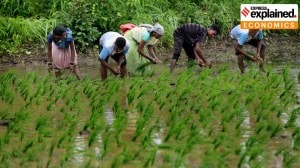
Gangadhar Soren in Jamsuli village in Mayurbhanj, for instance, has four children. At his home nothing is eaten all day except for pokhado rice left in water overnight. 8220;We do not buy vegetables but often get papayas from the backyard,8221; his wife says. He is a farm labourer who earns five sers of rice for every workday. His wife supplements the income by making ropes of savoi grass which she then sells for Rs 3 per kilo.
Only one of their children is aged below six and hence gets khiri at the anganwadicentre. The men are barely aware of the prevalence of malnourishment and of the advantage of the anganwadi scheme. Asked about the diet of his children, Soren says 8220;I do not know. I am in the fields all day.8221;
Low intake and unbalanced diet are not the only reasons for children being underweight. There are various health problems like cholera, hook worms, anaemia, besides the constant threat of malaria. The anganwadi worker is expected to improve the health of undernourished children but she has hardly the wherewithal to diagnose what is ailing her wards, says Mayurbhanj Collector R.Balakrishnan who feels that the scheme is not going to help without the help of health personnel.
The solution found by the WCD department is a monthly Health Day checkup in each anganwadi centre. But the checkups are to be done by para medical staff as an entire block consisting of around 100 anganwadi centres has just one doctor to take care of ICDS cases. While in urban areas the nurses can be expected to refer cases tothe respective doctors, in tribal and rural districts where villages are located far apart and inaccessible, the children and their mothers must be satisfied with the wisdom of the paramedics.
Where the doctor intervenes, or even where the paramedical personnel prescribes medicines for the underweight children, the work stops at that for there are no medicines.
Says Ratnabala Nayak, the ICDS project officer in Cuttack: 8220;Most pregnant and lactating women here are suffering from severe anaemia but iron pills have been out of supply for the past one year.8221; At the Tahla anganwadi centre in Cuttack for instance most children have scabies. Nayak shrugs in helplessness and says it is infectious and we do not have either medicines or the funds to buy them.
Agnihotri says he is not surprised that so many questions are being raised about the success of the programme. 8220;My job was to release the genie out of the bottle. Now it is for the ICDS workers, the other departments and the media to tackle it.8221;
Thedeadline is October 2, 2001.