Journalism of Courage
 4 min read



He sat in defiance of municipal orders, astride the gun Zam-Zammah on her brick platform opposite the old Ajaib-Gher 8211; the Wonder House, as the Natives call the Lahore Museum. Who hold the Zam-Zammah hold the Punjab.
Those opening lines from Rudyard Kipling8217;s Kim naturally come to mind, unbidden, as one turns away from Zam-Zammah8217;s traffic island and into the leafy complex holding the Lahore Museum and its sister institution, the National College of Art. Once the two were also bound in administrative unity, with Rudyard8217;s father, John Lockwood Kipling, serving as curator and principal, respectively. Walking through the splendorous galleries of these Mughal-Gothic buildings it is tempting to feel companionship with Rudyard8217;s ghost, to imagine him gaining apprenticeship in the various strands of subcontinental identity in the midst of these artefacts of antiquity.
Today, another exploration of identity is being situated on the Mall in Lahore. As people-to-people contact becomes freer, the National College of Art the erstwhile Mayo College of Art and Lahore Museum are picking up various strands of their past to gain a sense of 8216;8216;the Punjab8217;8217;.
8216;8216;Since the borders have opened we have had so many visitors from India,8217;8217; says Sajida Vandal, principal of the Art College. For the college, she says this burst of contact between the two Punjabs has very special significance. She and her husband Pervaiz Vandal are working a biography of the first 8216;8216;native8217;8217; principal of the college, Bhai Ram Singh, who hailed from Amritsar and also assisted in designing two other Lahore landmarks, Aitchison College and the High Court. In fact, they had completed the book when a visit to India brought them in greater touch with their subject. 8216;8216;We managed to trace his family in India,8217;8217; she says. 8216;8216;We met his great-grandsons and found a wealth of things. We had, for instance, not seen a drawing by him. And we went through his original correspondence on various matters.8217;8217;
Discovery is a two-way process, and Vandal notes: 8216;8216;India also woke up to the fact that there8217;s someone from that part who had been forgotten by history.8217;8217;
| nbsp; | Months after independence came, the artefacts of Lahore Museum were partitioned, with India8217;s share now placed in the Government Museum in Chandigarh |
The visitor too peels the layers, and adds depth to Lahore8217;s self-discovery. 8216;8216;NCA had bought a property in the walled city,8217;8217; says Vandal. 8216;8216;It was meant to be an open house but we acquired it without knowing much about it. One day a gentleman arrived, saying it once belonged to his family. Then he revisited with some photographs of his family, which are now hanging there. One night he went around the property talking about his family. There was such a huge response to him. People are curious about their roots, about family folklore.8217;8217;
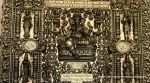
In the neighbouring museum, too, a reconnect is beginning. Months after independence came, the artefacts of Lahore Museum were partitioned, with India8217;s share now placed in the Government Museum in Chandigarh. 8216;8216;There is official interaction between the two,8217;8217; says Humera Alam, keeper of the Gandhara and Indus collection. Currently that contact is mostly limited to research projects, but the Lahore and Chandigarh collections did come together for a Sikh exhibition at London8217;s Victoria and Albert Museum.
However, for a true understanding of the museums of Punjab, one needs to go all the way back to Papa Kipling. Hussain Ahmad, research coordinator at NCA, is working on a post-graduate thesis on how an administrative unit was presented as a cultural entity by the colonial government. His period of inquiry is 1848 to 1900, a time when John Lockwood Kipling played a pioneering role in presenting Punjab to itself, in 8212; adds Ahmad 8212; taking art out of the family, in introducing western modes of categorisation, etc. How the museum came to called Ajaib-Gher may perhaps tell the Indian and Pakistani successor provinces of undivided Punjab more than just the story of this building.