Journalism of Courage
 3 min read



After the intra-party fracas over insurance liberalisation, all good men have decided to come to the aid of the BJP government. There was hardsell galore on how foreign participation in insurance would underscore the commitment to reform. But Yashwant Sinha8217;s pitch was baffling.
Reportedly, he warned of a crisis knocking on India8217;s doors, akin to the one that has hit Japan, Indonesia, South Korea and Argentina. At any rate, that is what BJP MPs and party stalwarts who heard Sinha seem to have understood. It is difficult to say what the finance minister wanted to convey.
The crisis in Japan is different from the one in Indonesia. A charitable view is that Sinha aimed at two birds with one stone: internecine quarrels could rock the boat, he told party critics, and warned the political system the Congress and the CPs which would love to topple the government that the economy is increasingly becoming unmanageable.
Sinha8217;s fears about the troubles facing the economy cannot be wished away. The fiscaldeficit is slated to exceed 6 per cent of the GDP for the second successive year. A 4 per cent average annual deficit target for the plan period would require the fiscal deficit to be pressed below a draconian 3 per cent for the next three years. The tax-GDP ratio is down to 9.7 per cent. So, reversing the popular reductions in tax rates increasingly seems unavoidable.
Getting the tax system into shape and ridding it of corrupt officials will hardly be a cakewalk. Political courage has not been the strong point of either the BJP or the political parties wanting it to quit office.
Furthermore, the external account is getting to be vulnerable. No, the trouble is not on-going FII disinvestment. It is better that they withdraw a few million dollars a month than suck out a couple of billion dollars at one go. The key issue is that despite the continuing pressure on manufacturing margins, domestic producers are not turning to the export markets.
Weak international demand is not a good enough reason; theproblem is lack of competitiveness. Foreign-currency flow into investment in insurance will barely mitigate the distress in the external account. The mega bucks and counter-guarantees that new insurers are supposed to provide for investment in infrastructure require tariff reform, but the states are not willing to go along with the centre in this regard. Insurance liberalisation is good in itself; it will make insurance competitive. But it is unwise to look upon it as a balancing factor in the external account or as an engine of infrastructure growth.

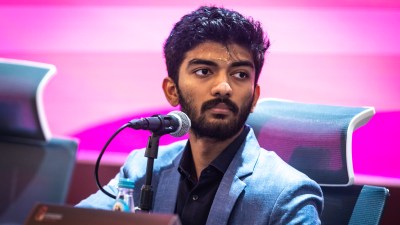
The chess calendar of 2026 is stacked with championships – five separate players may be crowned ‘world champion’. But American Wesley So, who won the blitz segment of the recently concluded Tata Steel Chess, believes only D Gukesh, who will defend his world title at the end of this year, has an official claim to the title.