Journalism of Courage
 3 min read



General Pervez Musharraf, as expected and programmed, has won the referendum but has lost much more which could create serious problems for Pakistan and its neighbours in the coming months. There is something in autocratic rulers that make them absolutists. Z.A. Bhutto, not content with the likely victory, rigged elections to ensure a thumping majority. General Zia-ul-Haq did the same through a referendum. And Musharraf has proved no different. That he would win the self-designed referendum was not in doubt even if the government machinery had not been mobilised. After all there was no credible alternative. But the way the referendum has been carried out has robbed him of credibility and legitimacy even as a dictator. Pakistan today is far more polarised than three days ago. The gap between estimates of 5 per cent voter participation and the government8217;s claim of 70 per cent turnout represents the credibility gap in the effort to legitimise the army rule.
The immediate assessment emerging from knowledgeable quarters in Pakistan is that Musharraf8217;s 8220;election8221; through the referendum would deepen the polarisation in the country. His announcement that he believed in unity of command and hence would not share power with an elected prime minister had pushed political groups to come together into a 33-party Alliance for Restoration of Democracy. The major political parties have joined the Islamic fundamentalists in demanding the removal of Musharraf. The view of the civil society in Pakistan, or what little of it is allowed by the army rule, is summed up by the Human Rights Commission8217;s verdict on the process of referendum that irregularities 8220;exceed our worst fears.8221; On the other side, in spite of external aid and increased remittances, economic recovery is hobbled by low agricultural growth due to continuing drought. Inefficiency in administration has forced Pakistan8217;s strategic ally to suspend future development aid till current projects show progress. The finance minister has admitted to the fiscal deficit being hit by continuing drought and military deployments on the border.
But there seems to be little interest among the rulers of Pakistan allied to the US in the war against terrorism in rolling back cross-border terrorism in India. Compared to the earlier winters the last three months have witnessed an increase in incidence of militancy and terrorism in J038;K. During his referendum campaign Musharraf had raised the anti-India rhetoric to levels which included the threat of using nuclear weapons. With Musharraf weakened by the referendum and the country heading towards greater polarisation, the risk of religious extreme gaining ground increases. With the army8217;s credibility experiencing a severe blow, its jehadi elements, who have been chafing at the bit since September 11, could start to assert themselves as the only alternative to corrupt politicians and bungling military moderates. US presence, both physical as well as strategic, would no doubt act as a moderator for any irrational act. But given Pakistan8217;s long-held ideology, its propensity for risk-taking and with increasing crisis of legitimacy and discontent within, we need to closely examine the options and scenarios that could emerge to challenge our security and well-being.

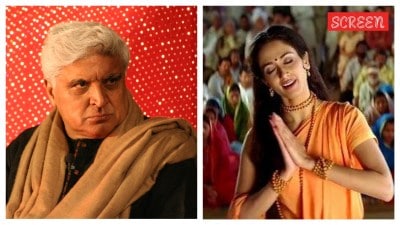
Veteran poet, screenwriter and lyricist Javed Akhtar recently expressed his disagreement with longtime collaborator and music composer AR Rahman over the latter’s claims that the Hindi film industry has become more communal in the past eight years. Akhtar claimed that the film industry has always been religion-agnostic and has picked the best person for the job.