Journalism of Courage
 3 min read



H.D. Deve Gowda, as Prime Minister, first introduced the 81st Constitution Amendment Bill seeking to reserve one-third of seats in Parliament and state assemblies in September 1996. Not once in these two years did it seem as close to becoming a reality as it does now, after being introduced in the Lok Sabha on Monday. The issue, therefore, is no longer that of the advisability of the Bill, or lack of it, but whether it should include a special provision for OBC reservations within it.
Indeed, the ostensible reason for the Bill being resisted thus far was the fear that it would empower just upper caste women at the cost of backward caste representation. When Uma Bharati of the BJP first raised the controversy, when Sharad Yadav expounded on the threat from 8220;short-haired women8221;, or when Mulayam Singh Yadav recently condemned its introduction as a 8220;conspiracy of the upper castes8221;, it was this emotional reservoir they visited.
From the looks of it, the battle over the women8217;s Bill is far from over infact it may have just begun. Fear of alienating the powerful OBC vote bank is what has prompted parties like the Congress, the BJP and its ally, the Samata Party, to state that they in principle support OBC reservation within women8217;s reservation, even though there is as yet no legal or constitutional provision for such a measure.
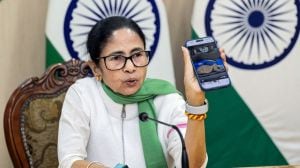
For these parties, it has become all the more necessary to take this stand, because they, along with the Left, are often perceived as political formations dominated by the upper castes. The argument goes like this: women8217;s political empowerment cannot per se bring about a less upper caste-dominated polity but could, in fact, have the diametrically opposite effect of making it more upper caste in its social content. As evidence of this, critics of what some dismissively label as 8220;creamy-level feminism8221; point to the presence of upper-caste women like Girija Vyas, Sushma Swaraj, Mamata Bannerjee, Geeta Mukherjee, Sumitra Mahajan, Vasundra Raje Scindia and others in the present LokSabha.
This argument may appear forceful on the face of it but a closer scrutiny will reveal that it doesn8217;t wash. The fact is that the OBC vote bank can never be wished away in post-Mandal India and will continue to wield considerable influence on the polity. Political parties, whatever their ideological moorings, will continue to field OBC candidates in parliamentary and assembly elections if for no other reason than to win them. The 12th Lok Sabha has some 200 OBC members of Parliament even without reservation.
There is no reason why the 13th or 14th Lok Sabhas should have any less of them, even if the women8217;s Bill were to come into force. The only difference, of course, will be that whereas earlier there were male OBC MPs, there will now be female ones too. Demanding a quota within a quota may even backfire on those anxious to promote the OBC cause in this fashion. It could place an artificial limit on OBC presence in the various Houses. It follows from this that much of the passion male MPsexpended in trying to scuttle the women8217;s Bill by raising the issue of OBC quotas was for self-preservation rather than any great concern for caste equity.