Journalism of Courage
 4 min read



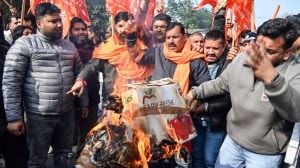
As Jammu and Kashmir prepares for a long poll process, the Election Commission faces an unusual but difficult challenge this time 8212; peaceful public protests in response to the boycott call, especially in view of the current separatist groundswell across the Valley.
With 56 protestors having been killed in police firing during the recent protests, the mainstream political parties are likely to find it difficult to garner support. The security forces too find their task cut out as the focus has shifted from militants to unarmed protestors who have taken to stone pelting when confronted.
8220;It is going to be a challenge,8221; said a senior J038;K Police officer. 8220;We do not know whether militants will revive their activities or not. If there is a spurt in militant violence, all our work over the past six years will go down the drain and we will be back to square one,8221; he said. 8220;On the other hand, if the separatists manage to bring people out on the streets, we will have to think of a different response. It will be difficult to use force, we cannot use bullets to confront stones.8221;
Aware of the uphill road ahead, mainstream parties have been seeking reconciliatory measures as 8220;balm8221; for the 8220;wounds in Kashmir8221;. But Prime Minister Manmohan Singh8217;s recent call for a dialogue found no takers in the separatist camp, who are now putting up a united front to press for poll boycott.
Though they are yet to respond to the EC8217;s decision on holding Assembly polls in the state, the separatist leadership is already gearing up for public demonstrations to boost their boycott call. The United Jihad Council 8212; an amalgam of militant groups 8212; had recently announced a unilateral ceasefire, saying the move would pave the way for peaceful public protests.
Senior separatist leader and JKLF chief Yasin Malik said their 8220;peaceful poll boycott campaign is as democratic as the election process itself8221;, thus making it clear that the separatists would discourage the militants from waging a campaign against polls. 8220;To vote or not to vote is the fundamental right of people in a democratic society,8221; he said, adding that the EC must publicly acknowledge that the boycott campaign is their democratic right.
The EC8217;s poll schedule, spreading the elections for the 87 constituencies over five weeks and seven phases, has taken into consideration the ground situation. The first phase on November 17 will see 10 Assembly constituencies 8212; Gurez, Bandipore and Sonwari constituency of north Kashmir; Nobra, Leh, Kargil and Zanskar of Ladakh; Surankote, Mendhar and Poonch Haveli of Jammu 8212; going to the polls. The three constituencies of Kashmir have been chosen carefully because of their traditional high voter turnout, especially the frontier Gurez which has remained insulated from the recent happenings in the Valley. The voter turnout in the seven constituencies from Ladakh and Jammu will give a boost to the overall percentage.
For the next round on November 23, the EC has again clubbed two Kashmir constituencies with four from Jammu, ensuring that a boycott in the Valley doesn8217;t have a drastic effect on the overall voter turnout. The third round, on November 30, will be held in five constituencies of Kupwara and Handwara districts of north Kashmir, where the voter turnout has been substantial during previous Assembly elections.
On December 7, 18 constituencies from the Valley and Jammu province will vote together. This will be followed by 11 constituencies from both Kashmir and Jammu on December 13.
Sixteen constituencies of Doda, Ramban and Kishtwar districts in Jammu will join Anantnag and Kulgam districts in the Valley to vote on December 17. And on December 24, polling will conclude with 21 constituencies of Srinagar district, Jammu city, Akhnoor and Samba districts going to vote.