Journalism of Courage
 4 min read



The Indian Express brings you clippings from the Pak media
A timetable at last
THE NATION: Interior Minister Gen retd Moinuddin Haider has at last given a date by which the government intends to accomplish one of the major tasks on its agenda. The devolution of power, the Interior Minister told journalists on Tuesday, would hopefully be completed within the next six months. There are, however, a number of theoretical as well as practical issues that need to be resolved before devolution of power can be satisfactorily effected.
The first requirement in the direction is holding the elections of the local bodies. The government has advanced the idea of District Governments as an important tier in the system being visualized by it. The extent of powers given to the District Governments, the sources of their revenue, the precise relationship of the office holders of these bodies with district bureaucracy, and a host of other questions have yet to be resolved. The Chief Executive hasassigned the task of developing the concept to the NRB.
While the Chairman of the think-tank has been appointed, the body has yet to show any signs of animation. The practical aspect might prove to be more time consuming though. As the Interior Minister has observed, the electoral rolls which were prepared 18 years ago need to be updated because a new generation has, in the meanwhile, reached the voting age. Further, the government needs to ensure that the fake voters that influential people have got registered are removed from the lists.
With the number of voters increasing, there would also be a need to increase the seats, and consequently to readjust the constituencies. As the task of the devolution of power to grass roots is completed, one of the preconditions set by the Chief Executive for the restoration of an elected civil rule would be fulfilled. Its performance is going to be watched by many people both inside and outside the country.
AIDS: Not enough numbers for alarm
lDAWN: OnWorld AIDS Day, the global community was forced to confront an alarming array of statistics indicating that the fight against the lethal disease is nowhere near a crowning point. In Pakistan, AIDS is luckily not as widespread as in several other countries. Out of the 2.3 million people tested by the National Institute of Health some months ago, about 1,378 persons tested HIV-positive. Considering that only a small percentage of the population was tested for the virus, the actual number of HIV-positive cases would be far greater perhaps not enough to set alarm bells ringing throughout the country.
However, there is no room for complacency as without greater awareness and the implementation of preventive measures, the disease may acquire epidemic proportions in the near future. According to statistics revealed by the Sindh AIDS Control Programme, the most common form of HIV transmission is through sexual contact. Apart from discouraging sexual promiscuity, some mechanism should be put in place whereby thosearriving in Pakistan from countries where AIDS is common are checked for the virus. Probably the biggest preventive measure lies in educating the public on the disease.
For that, the government, along with the PMA and other professional bodies, will have to try to break down cultural inhibitions so that people can overcome their inhibitions about discussing all aspects of AIDS.

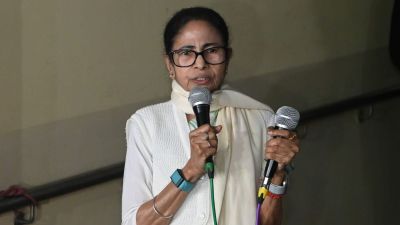
The Enforcement Directorate (ED) on Thursday conducted searches at 10 premises associated with the election management company I-PAC in Kolkata and Delhi. The company, founded by election-strategist-turned-politician Prashant Kishor, is currently managing election campaigns of the Mamata Banerjee-led Trinamool Congress. West Bengal will go to elections this year.