Journalism of Courage
 5 min read



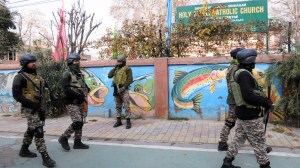
It is a reflection of thenbsp;deep divisions in Indian society that, increasingly, we perceive the truth from our own political, social and religious perspective. Diametrically opposite reactions towards three major news events 8212; the investigations into the terrorist attacks in Delhi and Ahmedabad; the disturbances in Jammu and Kashmir; and the cash-for-votes scandal 8212; illustrate the phenomenon that people believe what they would like to believe, regardless of the evidence on the ground. Official claims,nbsp;substantive proof and media analyses carry little weight.
Take the case of the Delhi police claim that it uncovered a major terrorist cell in Jamia Nagar. Many Muslims, as also those who are at the forefront in fighting communalism and protecting human rights, perceive this as yet another fake encounter concocted by the police to hide its incompetence and save the home minister8217;s job. Just one more instance of poor, innocent Muslim youths being targeted and falsely implicated, they tell you. If a much-decorated policeman had not been brutally gunned down in the encounter there would have been an even larger number of sceptics.
Though the immediate neighbours in Batla House, where the shootout took place, grudgingly concede that the exchange of fire sounded genuine, a majority of residents in the Jamia Nagar locality and many organisations remain unconvinced. Their faith is further eroded by the Delhi legal fraternity attempting to coerce lawyers into not defending anyone implicated in a terrorist case. A small but vocal section of the media also claims to find loopholes in the police story. The terrorists8217; innocence is borne out by the fact that they had even submitted their details to the police for the mandatory tenancy verification, they claim; and, in any case, how could the two of them have managed to escape?
Those on the human-rights watch have another complaint. The police was callous and insensitive to residents of Jamia Nagar by not taking 8220;community elders8221; into confidence before the raid. Is it the normal practice for the police to inform the public before undertaking a top-secret raid? Others protest that Azamgarh, from where many of the alleged terrorists hail, is unnecessarily getting a bad name. They forget that Azamgarh, home of gangster Abu Salem, already has a reputation of sorts. Suketu Mehta in Maximum City has a resident of the region remarking, 8220;In any crime anywhere in the world, if investigated thoroughly, the name of Azamgarh will come in somewhere.8221;
The scepticism which greeted the Delhi investigation is mild compared to the outright disbelief over the Gujarat government8217;s boast that it had cracked the conspiracy behind the blasts in Ahmedabad and Surat. Considering the Gujarat police8217;s dismal past record under Chief Minister Narendra Modi such misgivings appeared justified. The Gujarat police8217;s assertion that the terrorist module was home-grown and affiliated to a fringe group of SIMI was rubbished and seen as unfairly profiling a community. Until then it was convenient to blame all such violence on an unseen foreign hand. It is argued on several websites that the perpetrators could just as easily have been members of the Bajrang Dal as of SIMI.
After all, two Bajrang Dal men were blown up recently in Kanpur while manufacturing bombs.
Ironically, the Indian Mujahideen8217;s chilling 12-page email sent five minutes before the Delhi blasts further confirms the surmise that the terror module is home-grown. Many of the Gujarat police8217;s deductions have since been corroborated by the Delhi police, which in fact received a tip-off from Gujarat about the mastermind Atif in mid-August. The confessions of the arrested persons and their profiles lend credibility to the investigation.
But those who are in denial mode cannot be persuaded to change their opinion. For instance, even today one comes across academicians, lawyers, journalists and activists in Delhi, committed to fighting communalism, who are genuinely convinced that the 2001 attack on Parliament was a conspiracy by the Vajpayee government and that the Godhra fire was probably the handiwork of Sangh Parivar insiders. They recall that Hitler set fire to the Reichstag. A recent survey of the Islamic world indicated that 60 per cent believed that the United States and Israel conspired to foist 9/11 on the Muslim world.
The challenge today is not merely to root out terror. It is to bridge the growing schism on the issue. When the credibility of our democratic institutions and faith in the impartiality of the guardians of law enforcement get dented, objectivity becomes a casualty.
coomi.kapoorexpressindia.com