Journalism of Courage
 6 min read



As the SAARC summit moves toward a successful end, Pakistan must begin some serious introspection on where it goes from here. It is possible that this success, like that of being hosted at Camp David, may lull the rulers into not recognising the fork in the road and carrying on with more of the same policies. But to an interested observer it is clear that the country stands at a critical point in its history. There can be many interpretations of the past. But there can be few doubts that from this juncture, there are really only two paths ahead. One goes forward even if the straight road is not visible in the twists and turns immediately ahead. The other turns around sliding downward back into the spiral from which it has partially recovered at least temporarily.
The past two decades tell the story of missed opportunities and doomed fantasies. For example, the very idea of 8220;strategic depth8221; constructed on the premise of controlling territories beyond its borders flew in the face of any strategic logic. One can understand a Pakistani desire to reject Nehru8217;s concept of building national power on economic strength, social justice and political stability through democracy. But it is inexplicable that it seems to have ignored the fundamental shift in the grand strategy of its close friend, China, when it defined the concept of 8220;comprehensive national power8221; at about the time Pakistan was negotiating with Washington to become the frontline state for jihad in Afghanistan. But strategic depth in today8217;s world is less horizontal territorially and more vertical civilisationally where deepening and expansion of socio-economic strength holds the key. Exactly two decades later Pakistan again became a frontline state for the US to fight and eliminate the jihadi Frankenstein created in conjunction with the most powerful democracy of the world which was so liberal as to pump in 6 billion in a decade to support it.
Two aspects from the past deserve notice. One is the importance of the domestic balance of power, which in mature democracies is managed democratically. In Pakistan, this balance essentially has been between the army, the political leadership and increasingly, political as well as armed 8220;Islamist8221; religious groups. Whenever this balance was under stress, Pakistan has moved toward instability, whether in its eastern wing in 1970-71, or in setting out to control Kabul in the 1970s, and India Siachen, Punjab, followed by J038;K in the 1980s. The classic case, of course, is the Kargil adventure when Nawaz Sharif was busy trying to tilt the power balance in his favour when the army reacted and the Islamists cheered. Secondly, the socio-economic fabric of the country has been torn apart with growing poverty, increasing illiteracy, disappearing prospects of employment during the past two decades, besides increasing 8220;Islamisation8221; since Z.A. Bhutto8217;s time. This provided powerful drivers for jihad. No wonder, then, that cross-border terrorism coincided with the worsening of the domestic determinants of political and economic stability.
But it is the opportunities opening up for a better future of Pakistan that interest us. Its economy is picking up, although there is a long way to go before the benefits percolate to the people. Two of the most powerful states in the world, the US and China, are supporting it while turning a blind eye to its wrongdoings. President Bush has even certified that its nuclear weapons are safe. For a variety of reasons which space does not allow us to deliberate on here, the prospects of an 8220;Islamic Revolution8221; have receded for the time being. Extremist ideological groups learn the necessity of moderation in a politically democratic dispensation where they have to go back to the people for power, again and again. Benazir Bhutto8217;s eloquent articulations in January 1990 and in December 2003 are symptomatic. Most important, perhaps, is the reality that a balance in the domestic power structure between the troika of army, political leadership and the religious parties has emerged and is most likely to be stable in the foreseeable future, unless the lure of personal power destabilises it. While there are numerous sympathisers of jihad in each segment of the troika and society, the killers in the name of Islam seem to be facing the prospects of an increasing degree of marginalisation.
The reports that the murderous terrorist attacks on President Musharraf were carried out by Jaish jihadis from POK would only confirm the above thesis. But paradoxically, the attacks also opened up opportunities that led to greater balance of domestic power between the current troika. The most crucial, for Pakistan, is the issue of its ability to return to the path of a normal stable and strong middle power 8212; a path from which it started to deviate since the late 1970s. We don8217;t have to spell out an agenda of what needs to be done. In fact Musharraf has spelt it out more than once, but progress on the policies remained minimal in spite of the fact that no serious opposition to them was visible. Perhaps the excitement of short term management pushed the long-term changes out of focus. And the paranoia of Kashmir obviously distorted priorities for the ruling elites, individually and collectively, since it was made the touchstone of patriotism and the right to rule.
Pakistan will need to face the reality that its Islamic jihad has again started to blow back on it. The murderous attacks on the head of state by jihadis also clearly reinforce the rights and responsibilities of the state to come down hard on terrorists and terrorism in the name of jihad, wherever they happen to be. Any lukewarm response by the state to the phenomenon of terrorism, in and from Pakistan, would only be seen as a sign of weakness and encourage greater instability and armed violence. Pakistan has to be at peace with itself before it can be at peace with the world around it. But this will require its leadership to take sustained pragmatic and robust policies where there can be no place for fantasies of 8220;strategic depth8221; eastward or westward, nor of bleeding through a thousand cuts in the name of jihad.

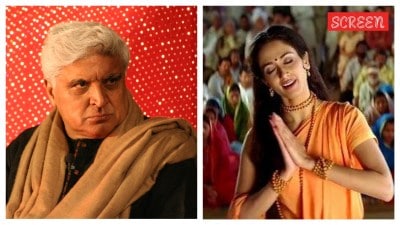
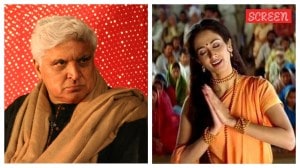
Veteran poet, screenwriter and lyricist Javed Akhtar recently expressed his disagreement with longtime collaborator and music composer AR Rahman over the latter’s claims that the Hindi film industry has become more communal in the past eight years. Akhtar claimed that the film industry has always been religion-agnostic and has picked the best person for the job.