Journalism of Courage
 3 min read



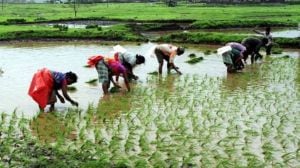
WHILE the rest of the country was blessed with a good monsoon, Kothapally, a small village in Rangareddy district of Andhra Pradesh was still waiting for rain. However, the 15,000 people dependent on farming were not worried.
Their wells have water and they are harvesting cucumber, brinjals and lady fingers to be sold to Hyderabad, just a two-hour bus ride away.
Five years ago, this was unthinkable. The black soil was considered good enough to grow just cotton. And summer meant gazing skywards for the average 700 mm of rain to fall and fill dry wells.
It was in 1998 that a consortium of institutes led by International Crop Research Institute for the Semi Arid Tropics ICRISAT stepped in to initiate watershed management and change the fortunes of 15,000 people living here. The programme also integrated central and state-run programmes such as the Drought Prone Areas Programme and Rural Livelihood Programme.
Called the Adarsh watershed, its success has made it model watershed to be emulated not just in other parts of India but also in Vietnam and China with the Asian Development Bank ADB.
Narsimha Reddy, the head of watershed committee and a farmer rattles off the figures as he takes a team of journalists to show off his village 8212; the water table has gone up by 10-15 feet, the yield for maize has shown as much as three times increase and his own income has tripled with him earning Rs 20,000 per hectare.
8216;8216;The watershed work only started after the gram sabha agreed to participate actively,8217;8217; pointed out Reddy. Five committees comprising of villages was formed to begin work on the watershed.
Sites were identified to make water harvesting structures and ICRISAT then provided the technical know-how.
An automatic weather station was installed to collect data on rainfall, maximum and minimum temperatures and solar radiation. By 2002, 11 checkdams out of 22 proposed ones had been completed. 8216;8216;It is the participatory approach that helped. When the first year we saw the levels in our wells rising, more people joined in,8217;8217; says Reddy.
In five years, the effect is showing on the social structure of the village 8212;migration has stopped, more children are growing to school and there is better sanitation in the village.
Now the farmers have moved to drip irrigation, another step to conserve precious water. But they all agree that it can be replicated as long as people in the village are willing to make the change. Nearly 700 farmers from other villages have been trained in Kothapally. Will their story end in success too?