Journalism of Courage
 5 min read



The political turmoil on the Sonia Gandhi citizenship issue has buried the key question of the legality of her Indian citizenship under the Citizenship Act 1955 and the legal power available to any government to put 8220;conditions and restrictions8221; on such citizenship.
That question can be easily determined if the form filled by her, the documents annexed to it and the orders passed thereon were made public. Unfortunately Sonia Gandhi has not sought to quell the debate and set all doubts at rest by doing this. The Union Home Minister can easily put to public scrutiny the forms filled by her, the documents annexed to those forms, the collector8217;s report on the application for citizenship and the home ministry8217;s orders thereon. No law prohibits making these documents public.
It is in Sonia Gandhi8217;s own interest that public debate on a transparent scrutiny of her citizenship documents be settled before she is launched on the prime ministerial path. The silence on making the documents public is intriguing.
IfSonia Gandhi applied for citizenship by registration under Section 51E of the Act then she did so on the ground that she is married to an Indian citizen, is an ordinarily resident of India and has been so resident for five years before making the application. Rule 4 required her to state in column 9 of the prescribed application form as to whether she has 8220;renounced8221; or 8220;lost8221; the citizenship of Italy in accordance with the law of Italy.
For this purpose she had to attach documents in support of her statement. In the alternative under column 10 she had to give an undertaking that she will renounce the Italian citizenship on her application being sanctioned.
The Indian public does not know which of these two alternatives Sonia Gandhi opted for and whether she has complied with the undertaking given, if she opted for that alternative.
Under Rule 7 she had to apply to the collector for registration in the prescribed form. The question is whether the collector verified the statements made in theapplication as also the documents, if any, annexed to it. This is the aim of the rule requiring the application to be filed before that collector where the applicant is 8220;ordinarily resident.8221;
The next step of cross-checking is at the level of the Union Home Ministry which grants the registration. So crucial is the renunciation of foreign citizenship or compliance with the undertaking to so renounce, that even after registration and the grant of a certificate to the applicant, Rule 12 requires the home ministry to keep a permanent register of aliens so registered with the column 8212; 8220;whether applicant has formally renounced the former nationality or given an undertaking for the same with nothing of the documentary evidence given8221;. The Indian public has not been told about the collector8217;s report and of any verification done by the home ministry or what entry has been ma-de by the ministry in its register against the relevant column.
This is important because the Act and the Rules leave a loophole forsomeone giving an undertaking to renounce the foreign citizenship after the application is sanctioned. The loophole is the absence of any time limit in the Act or the Rules for compliance with such an undertaking. The B.J.P government has done nothing to plug this loophole.
If she applied for Indian citizenship by naturalisation under Section 6, then apart from renunciation of foreign citizenship no undertaking to renounce is recognised, two more crucial conditions, in addition to others, had to be fulfilled by her. Firstly, that Italy does not have a law or practice that prevents Indians from becoming its citizens by naturalisation. Secondly, she had an adequate knowledge of one of the Indian languages listed in the Eighth Schedule of the Constitution of India.
There is no information either by the Congress or the BJP government. Similarly both the parties are silent whether the Union Government has issued her a certificate of citizenship under Section 13 of the Act. This enables the Centralgovernment to issue such a certificate where a doubt exists about a person8217;s citizenship and such a certificate is 8220;conclusive evidence8221; of Indian citizenship unless it can be shown that it was obtained by fraud, false representation or concealment of any material fact.
Also, under Section 5 of the Citizenship Act the Union government is empowered to make rules for imposing 8220;conditions and restrictions8221; on those granted Indian citizenship by registration.
For all its political shouting, the BJP government has not framed so for any rules under Section 5 of the Act. No constitutional amendment is required when the law itself enables a government to control the grant of Indian citizenship not only to foreigners on the registration route but also under Section 12 of those foreigners who belong to Commonwealth countries listed in the Act.
Messrs Sharad Pawar, P. A. Sangma and others would do well to ponder over the law of citizenship before jumping on to the Constitutional amendment bandwagon. If theBJP government makes the rules depending on the facts, Sonia Gandhi8217;s citizenship can be subjected to 8220;conditions and restrictions8221; even today.

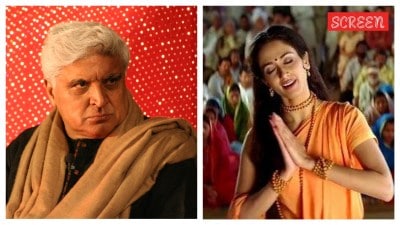
Veteran poet, screenwriter and lyricist Javed Akhtar recently expressed his disagreement with longtime collaborator and music composer AR Rahman over the latter’s claims that the Hindi film industry has become more communal in the past eight years. Akhtar claimed that the film industry has always been religion-agnostic and has picked the best person for the job.