3 min read

Journalism of Courage




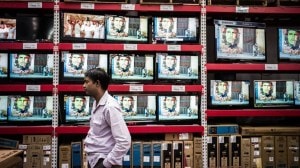
It was a slide no circuit-breaker could stem and no amount of cajoling could entirely reverse. In the void between two governments, with conflicting signals about the future of reforms unnerving them, investors watched aghast as more than 17 per cent was sliced off the benchmark Bombay Stock Exchange BSE index minutes after it opened.
Twice, the trading was suspended. Dr Manmohan Singh, widely expected to be the next finance minister, had to publicly try to soothe market fears. The Reserve Bank had to give an assurance that settlements would be made smoothly. Even so, the Sensex registered its biggest intra-day fall 8212; plunging 842 points at one point 8212; in the history of the 129-year-old BSE. By the time the day ended, it had clawed back some ground to close 564 points lower at 4505, a fall of 11.1 per cent.
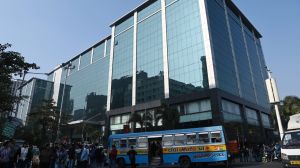
Both BSE and the National Stock Exchange implemented market regulator SEBI8217;s circuit-breaker system for the first time since it kicked in three years back. A 10 per cent fall entails a one-hour trading halt 8212; which happened at 10.16 am 8212; while a 15 per cent dive means a two-hour stoppage. That took place at 11.19 am. With stocks falling by as much as 20-25 per cent, analysts said investors who have taken bank loans were bound to be in trouble. Nearly 30-40 brokers could face a payment crisis following the crash, they estimated. 8216;8216;There could be problems in settlement between brokers and their clients,8217;8217; said BSE broker Venkatesh Aiyar.
At 1.30 pm, when the Sensex traded around 400 points lower, 60-year-old K S Jhunjhunwala tried frantically to call his broker. 8216;8216;I have given a Rs 3 lakh overdraft to a bank and today I have lost almost twice that amount,8217;8217; he wept as his friend Kirab Shah consoled him.
There were unprecedented scenes when brokers and investors took to the streets outside BSE, shouting slogans against Sonia Gandhi, while armed policemen tried to control them.
Andrew Holland, vice president, DSP Merrill Lynch, said all the negative news 8212; anti-disinvestment statements by the Left and uncertainty about the new government8217;s policies 8212; had driven the crash. 8216;8216;I wish in the next few days the government is formed, key ministries are announced and the new government reiterates its commitment to reforms,8217;8217; he said.
| nbsp; |
NDA withdrawal symptoms, Doctor prescribes UPA
|
||||
| nbsp; |
Congress got Manmohan Singh to try to calm the storm. His statement: 8226; Cong-led United Progressive Alliance committed to orderly, healthy development of financial markets. Story continues below this ad |
nbsp; | |||
Others are blaming the flight of foreign investors and there are even whispers about orchestrated selling by manipulators. To calm nerves, Dr Manmohan Singh warned of stern action against manipulators and assured investors that the coalition would adopt policies aimed at a stable market. RBI, meanwhile, said it had asked major settlement banks to ensure that payments to exchanges were made smooth after. The central bank said that it was ready to provide liquidity to banks to meet all their payment obligations, including any intra-day requirements.
Even SEBI made soothing noises. 8216;8216;The sentiment played an important role in the steep fall in the indices and there in no need to turn alarmist,8217;8217; said SEBI director A K Batra.
But investors were clearly unnerved. While earlier there were fears that the Left would not be market-friendly, the decision by CPI and CPI-M not to join the government brought no solace either. Investors then started to fear for the stability of the new government.
For the record, some Rs 1,22,000 crore was wiped off the market yesterday and the fall of 564 points was next only to the 570 points wiped out during the Harshad Mehta scam.
Even the optimists had turned cautious. 8216;8216;Everybody understands that this is a one-of-a-kind situation and things will become normal as soon as there is political stability,8217;8217; said Ashim Syal, chief investment officer, ING Vyasa Mutual fund. 8216;8216;However, if markets continue to behave irrationally we would have to sell to cope with redemption pressures.8217;8217;