Journalism of Courage
 4 min read



MUMBAI, August 10: The Bombay High Court has asked for opinions from legal luminaries to explore if it has the powers to give a Christian child for adoption to a Christian couple, in the absence of such a provision in the Christian personal law as well as the absence of a general law providing for adoption rights for all, irrespective of their religion.
Justice F I Rebello has in an order of July 7, 1999 issued notices to the additional solicitor general, D Y Chandrachud, the advocate general C J Sawant, the Archbishop, the Bar Council of Maharashtra and Goa and the Indian Council for Social Welfare ICSW to give their opinions on the powers of the High Court to act as paren patriae and give a child for adoption.
The orders on the notices came on a petition filed by a couple, Manual Theodore D8217;souza and his wife Lourdes D8217;souza who wanted to adopt a girl child who was an inmate of an orphanage, The Family Service Centre in Mumbai.
In India, under the Hindu Adoption and Maintenance Act, onlyHindu couples can adopt children. The rest are governed by the Guardians and Wards Act, where though the couples are appointed as guardians for the child, the children do not have any inheritance rights.
Apparently, the court is seeking to explore if it has powers under the Letters Patent that constituted the Bombay High Court to give away children for adoption. Towards this, the court had also appointed senior counsel and president of the Bombay Bar Association, Iqbal Chagla, as amicus curie friend of the court to assist it.
Chagla, however, submitted it did not have the powers. Justice Rebello had sought to know if 8211; going back to 1823, when the HC had powers akin to the Lord Chancellor of England who acted as the guardian and keeper for all minors and lunatics 8211; the court had the powers to give away minors in adoption. Chagla had submitted that even then the Lord Chancellor did not have powers to give away children in adoption. This was rectified only through a comprehensive Adoption Actpassed in 1926 that allowed for adoption in England.
In his order, Justice Rebello though has rued the delay in the enactment of laws for such adoptions. Pointing out that India was a signatory to the Universal Declaration of Human Rights, he said Article 27 of the declaration enjoined that 8220;everyone had a right to standard living for health and well-being of himself, a right to a family, food, clothing, housing and medical care, and social services8230; All children are entitled to enjoy social protection.8221; He added that Article 39 F of the Constitution also allowed for children to have oppurtunities and facilities to develop in a healthy manner.
8220;The state under the Constitution is forbidden to make any distinction among citizens based on religion,8221; the order stated and went on to add that though right to adoption in this case was not prima facie in the personal law of the citizen, 8220;the right to life is guaranteed in Article 21 and the right to adopt will be a part of that right to life8230; for afamily to have a child.8221; He held the state was enjoined upon, by virtue of Article 39 F to enact laws to fructify the concepts in it.
According to Justice Rebello, 8220;the institution of a family included a child8221; and hence 8220;in these circumstances, it is essential that provisions are made for adoption.8221; The order enquires if 8220;pending the creation of such a law, the court can issue directions as a paren patriae.8221;
Notices have also been issued to the Archbishop of Mumbai to find out if there were any religious impediments to adoption by Christian parents. The matter is next slated for hearing on August 12.

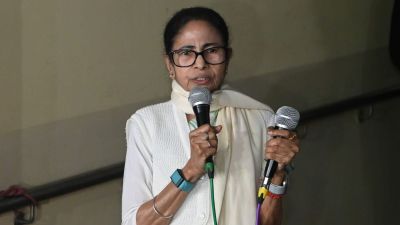
The Enforcement Directorate (ED) on Thursday conducted searches at 10 premises associated with the election management company I-PAC in Kolkata and Delhi. The company, founded by election-strategist-turned-politician Prashant Kishor, is currently managing election campaigns of the Mamata Banerjee-led Trinamool Congress. West Bengal will go to elections this year.