Journalism of Courage
 5 min read



Thomas A Stewart, Editor and Managing Director of Harvard Business Review South Asia Edition, handles business thought and gastronomy with equal finesse. In India for the launch of the South Asian edition of the magazine of breakthrough business ideas, he relishes the mutton rogan josh even as he tells Shantanu Datta in Mumbai why he feels India is ready for the 8220;Big Idea8221;, its enormous business and intellectual opportunities and why there will never be an HBR Light. Excerpts:
8226; Finally, Harvard Business Review feels it8217;s ready for the 8220;Big Idea8221; called India?
Actually, it8217;s the other way round. With a wink Is India ready for the Big Idea called HBR? But seriously, if you look at 80 years of our history, it has always been a magazine that has had global influence. In terms of circulation in English, of all the major business magazines, the only one that8217;s more international is the Economist. About a third of our readership in English is outside the US, but we haven8217;t had any formal business strategy for developing those markets. For, India, our strategy has been 8216;if you send us a cheque, we8217;ll send you a magazine8217;. The launch of HBR South Asia is recognition that there is four, five, six times the opportunity from a business point of view.
8226; HBR is also about its annual list of groundbreaking ideas. How will that play out in an India edition that will have the same editorial content as the US one?
As the Indian economy grows and becomes more integrated in the world economy, the need for Indian managers to have world-class skills increases. It8217;s analogous to what happened to South African wine makers after apartheid. They had to get a lot better not only because they had a world to which they could sell, but also because the world could come to sell to them. And they rose to the challenge. That same thing is with companies here. Managers here will have to be more involved in the world conversation.
8226; In the end it8217;s about continuous dialogue.
One of the things that8217;s really striking in world business today is that globalisation is changing from a cost game to a business strategy. More and more western companies are placing R038;D facilities in emerging markets and not just factories or sales outposts. Five years ago, there probably would not have been a large enough Indian market for a full India-based HBR. I think that market is large enough now to support the commercial structure. We certainly would never entertain the idea of producing an 8220;HBR light8221; for any market! The whole point is it8217;s heavy. It8217;s a serious magazine for serious decision-makers.
8226; How does HBR define a Breakthrough Idea?
We try to do four things. We try to help people be better leaders, see the future, solve their toughest problems and separate what really works from what8217;s fad and hype.
8226; In HBR8217;s list of Breakthrough Ideas for 2006, there8217;s one you co-wrote and it talks of how the need of the 21st century is for businesses to confront uncertainty and doubt. What are these uncertainties?
The fundamental idea of uncertainty is the problem where you cannot calculate odds. You just don8217;t know. The first hundred years of management history has been about trying to make things predictable, trying to bring processes under control, trying to create budgets and information systems, trying to develop financial instruments to help identify and hedge risk. But there are an increasing set of business issues that are incalculable. These are the problems of complex systems. And most management theory said break it apart into manageable problems. But that doesn8217;t work8230;
8226; In your book, The Wealth of Knowledge: Intellectual Capital and Twenty-first Century Organisation, you talk of the challenges of applying the concept in day-to-day operations of a company.
Companies must first understand what part of what they sell is knowledge. If you are HBR, it8217;s kind of easy to say we sell knowledge. Nobody buys us for the paper, even though it8217;s high quality paper. If you are an M038;M selling a tractor, there are significant components of that tractor that is knowledge 8212; in the design, manufacturing knowhow etc. Companies often don8217;t recognise knowledge to think of it separately. We can all do a better job understanding not just the knowledge we sell, but the knowledge our customers buy.
8226; As the globe shrinks, what are the critical business issues of the future?
Very quickly, talent management is a huge issue; capital management; navigating in a global environment and so forth.

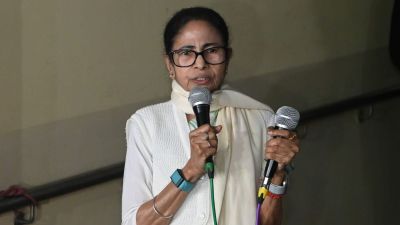
The Enforcement Directorate (ED) on Thursday conducted searches at 10 premises associated with the election management company I-PAC in Kolkata and Delhi. The company, founded by election-strategist-turned-politician Prashant Kishor, is currently managing election campaigns of the Mamata Banerjee-led Trinamool Congress. West Bengal will go to elections this year.