11 min read

Journalism of Courage




T V Rajeswar8217;s reports were ignored8212;he did not even get so much as a perfunctory acknowledgement that they had been received and that, as the phrase goes, 8216;8216;the matter is under examination8217;8217;. And remember, he sent those reports not just as governor of West Bengal. He wrote them as one who, having been head of the Intelligence Bureau, had special knowledge of the country8217;s vulnerabilities.
Persons equally alert to the security requirements of the country, equally qualified to assess what ought to be done on the matter continued to put their warnings in writing. General S K Sinha had been deputy chief of army staff. Widely regarded as one of our thinking generals, he was appointed governor of Assam8212;in part because of the alarming way the security situation in the entire region had deteriorated. In early November 1998, he sent a report to the President8212;8216;Report on Illegal Migration into Assam submitted to the President of India by the Governor of Assam8217;.
In this report, General Sinha drew attention to the differential decadal growth of population of Hindus and Muslims in Assam8212;33.7 per cent and 38.3 per cent in 1951-61, respectively; 37.2 per cent and 31 per cent, respectively, in 1961-71; and an estimated 41.9 per cent and 77.4 per cent, respectively, in 1981-918212;and observed:
8216;8216;The Muslim population of Assam has shown a rise of 77.42 per cent in 1991 from what it was in 1971. The Hindu population has risen by nearly 41.89 per cent in this period. The Muslim population as a percentage of total population in Assam has risen from 24.68 per cent in 1951 to 28.42 per cent in 1991. As per the 1991 Census, four districts Dhubri, Goalpara, Barpeta and Hailakandi have become Muslim-majority districts. Two more districts Naogaon and KarBangladesh over several decades has been altering the demographic complexion of this State,8217;8217; Sinha recorded. 8216;8216;It poses a grave threat both to the identity of the Assamese people and to our national security. Successive governments at the Centre and in the state have not adequately met this challenge8230;I feel it is my bounden duty to the nation and the state I have sworn to serve to place before you this report on the dangers arising from the continuing silent demographic invasion8230;.8217;8217;
Remember that this was not some sundry journalist or AASU activist writing. It was the Governor of Assam8212;who had been specially selected because of his knowledge of what the security of our country requires, and he had been posted there by an eminently 8216;8216;secular8217;8217; government propped by the Congress and the Left. And it was no ordinary article which he had begun in this way8212;it was his official report to the President of the country. 8216;8216;The unabated influx of illegal migrants from Bangladesh8230;8217;8217;, General Sinha told the President, 8216;8216;threatens to reduce the Assamese to a minority in their own state, as happened in Tripura and Sikkim.8217;8217;
8216;8216;The long-cherished design of Greater East Pakistan/Bangladesh, making inroads into the strategic land-link of Assam with the rest of the country,8217;8217; he warned, 8216;8216;can lead to severing the entire land mass of the North-East8230;from the rest of the country. This will have disastrous strategic and economic consequences.8217;8217; After tracing in detail the way the demographic balance has been overturned in district after district adjacent to Bangladesh, General Sinha concluded: 8216;8216;This silent and invidious demographic invasion of Assam may result in the loss of geostrategically vital districts of Lower Assam. The influx of these illegal migrants is turning these districts into a Muslim-majority region. It will then only be a matter of time when a demand for their merger with Bangladesh may be made. The rapid growth of Islamic fundamentalism may provide the driving force for this demand. In this context, it is pertinent that Bangladesh has long discarded secularism and has chosen to become an Islamic State. Loss of Lower Assam will severe the entire land mass of the North-East from the rest of India8230;.8217;8217;
General Sinha kept drawing attention of the high-ups in Delhi to the inundation. All that happened was that his warnings became the occasion for the 8216;8216;secularists8217;8217; to denounce him as a 8216;8216;communalist8217;8217; who must be removed from his post.
That pattern of response continues to this day. The Indian Express carried an article of mine about Rajeswar8217;s forebodings. Two/three days later, it carried a letter from the Bangladesh High Commission. As you may have missed it, do read it in the light of the Census figures:
8216;8216;8230;What is of concern to us is in portraying so, Mr Shourie has drawn Bangladesh, a friendly neighbouring country of India, into this. We are dismayed and indeed shocked that an eminent person of Mr Shourie8217;s stature, who was until very recently a Union cabinet minister of the Government of India, could come out with preposterous ideas such as the 8216;creation of a Greater Islamic Bangladesh8217;.
8216;8216;May we remind Mr Shourie that Bangladesh is an independent sovereign country, having a democratically elected government, with all democratic institutions fully in place. It has been our consistent policy to foster and develop good neighbourly relations with India.
8216;8216;The existing goodwill and people-to-people contact between the people of Bangladesh and India are eminently visible in the traditional social, cultural and historical ties. Moreover, India is Bangladesh8217;s largest trading partner in the region, with the former enjoying a huge balance in its favour. These are facts and not based on 8216;ifs8217;. We are therefore amazed as to how Mr Shourie could implicate a friendly neighbouring country with irresponsible and malicious innuendoes and accusations.
8216;8216;The fact that the piece that Mr Shourie wrote could find a place in the Op-Ed page of your esteemed daily has done a disservice and dealt an insult to the friendly sentiments that the people of Bangladesh have for the people of India. His type of writing can only generate hatred and instigate bitterness and acrimony among the people.
8216;8216;Bangladesh is a peace-loving country. It certainly does not have any hegemonistic ambitions or designs as he suggests might happen or will take place. However, we take satisfaction that neither the Government of India nor the people of India share Mr Shourie8217;s nightmares.8217;8217;
Notice the technique. What I had reported was not my assessment, but the warnings that T V Rajeswar, the present Governor of Uttar Pradesh, appointed by the very Government in which this fellow8212;a minister in the High Commission, no less!8212;reposes so much faith, had given. But the 8216;8216;preposterous ideas8217;8217; are all mine, not Rajeswar8217;s! Notice too that there was not a word about the differential rates of growth of population to which Rajeswar had drawn attention, it was all about Bangladesh being 8216;8216;an independent sovereign country, having a democratically elected government8217;8217;, it was all about the benefits India was deriving from trade with Bangladesh, it was all about how by publishing such writing 8216;8216;your esteemed daily has done a disservice and dealt an isult to the friendly sentiments8230;8217;8217;, how such writing 8216;8216;can only generate hatred and instigate bitterness8217;8217;. But why rub it in? The poor fellow must be even more 8216;8216;dismayed8217;8217;, 8216;8216;shocked8217;8217;, 8216;8216;amazed8217;8217; now that The Indian Express is publishing yet another series containing 8216;8216;irresponsible and malicious innuendoes8217;8217;, and 8216;8216;nightmares8217;8217; from me on the same subject.
Rajeswar8217;s proposal for a detailed study had indeed been taken up. The study was completed by officials of the IB and the Home Ministry in 1992. It estimated that even by then, the number of illegal migrants from Bangladesh was anywhere between one and a half to two crore. The only action that was taken as a consequence was that the Government ordered that the report be kept secret. I published the entire text. And later included it in A Secular Agenda, ASA, New Delhi, 1993, pp. 269-93. All I heard was some murmurs that I might be proceeded against under the Official Secrets Act!
In April 1992, Hiteshwar Saikia, then chief minister of Assam, said on the floor of the Assembly that there were about three million illegal Bangladeshi immigrants in the state. The Muslim United Front leaders declared he must withdraw his statement within 48 hours8212;or they would bring his government down. Saikia withdrew his statement!
In August 1993, members of Parliament asked the Home Minister about the numbers who had infiltrated from Bangladesh. Three ministers got to contribute to the answer. We are 8216;8216;not able to sort of count them8217;8217;, they confessed8212;even as they did everything they could by convolutions to minimise the problem. And that was the end of the matter. ibid, pp. 251-60. In May 1997, Indrajit Gupta, longtime general secretary of the Communist Party of India, then the country8217;s home minister, was a trifle more forthcoming. He told Parliament that there were about 10 million illegal migrants in India. But as for doing something about them, his statement was the end of the matter. 8216;8216;At least he has acknowledged the problem,8217;8217; all who could make him do nothing about it said as a consolation.
A palsied Executive
The country has continued in a state of denial. The political establishment has done worse: large chunks of it, led by the Congress but not limited to it, have continued to patronise these illegal entrants for captive votes. And in the meanwhile, the administrative and police machinery has been allowed to rust and decay8212;so that now, even when a party comes to office that genuinely wants to do something to stanch the influx, all it can do is hold meetings of officials and make announcements of intentions.
The violence that has exploded in the North-east at the moment is the compound result of all these factors. Foremost among these is a political class that benefits from the very ones who are undermining the State. And among the latter now are not just the illegal migrants. Remember who propped up Bhindranwale to out-do the Akalis? The same stratagem is being repeated with many miniature Bhindranwales across the country. Help is being sought for elections and being taken from groups that exercise sway by the gun. Victories won, it is payback time. That is what we see in Assam, in Andhra, in Bihar.
And then there is the atmosphere of permissiveness that our 8216;liberals8217; foment. The absolutely baseless assault on POTA has been the most recent example. But only the most recent one. Exactly the same sequence had been enacted during Narasimha Rao8217;s tenure with regard to TADA. And he too, knowing full well the consequences, had to scrap the law. Yet we persist. Confident that in the end, when the conflagration gets completely out of hand, we have the armed forces to hurl at it, and they will by their blood and bodies douse the fire8230;.
But the matter is not confined to the Executive. After all, those who win by the votes of such 8216;8216;voters8217;8217; and the 8216;8216;support8217;8217; of such groups enter legislatures. The result is that even the most elementary step to remedy the situation cannot be taken as many a law comes in the way, and legislatures so peopled will not change it. The ruinous Illegal Migrants Determination by Tribunals Act provides a classic illustration of the sequence. It tells us much about Executives, about legislatures and, alas, about courts too.
PART I
PART III
PART IV

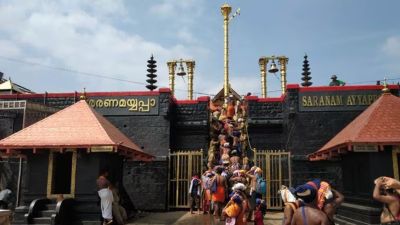
The arrest of a senior Sabarimala priest in connection with the theft of gold from the temple has sparked a political row, with the BJP and right-wing organisations alleging a conspiracy to shield the CPI(M) and Congress leaders involved in the scandal. The SIT arrested the most senior Tantri, Kandararu Rajeevaru, in connection with the misappropriation of gold from temple artefacts in 2019.