3 min read

Journalism of Courage




The Beijing Olympics will see the biggest anti-doping effort in history, but the omens for a drug-free Games are not good.
Alongside steroids and the blood-booster EPO, testers have promised developments in tracing substances such as human growth hormone, which are undetectable with standard testing methods.
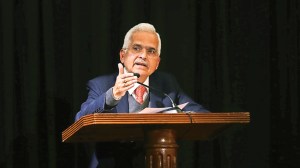
The chairman of the International Olympic Committee8217;s Medical Commission, professor Arne Ljungqvist, said recently, 8220;While it is to our advantage to not release all the details, enhanced testing will be administered in Beijing.
8220;You can expect continued efforts to detect human growth hormone and EPO.8221;
Regardless of the improved tests, past Olympics have shown that some competitors will risk everything to win medals. It is a depressing statistic that in the blue riband Olympic sport 8212; athletics 8212; doping clouds hang over three of the last five men8217;s 100 metres winners.
Canada8217;s Ben Johnson notoriously caused the biggest drugs scandal in Olympic history when he tested positive for steroids after charging wild-eyed to victory in 1988 and was forced to leave Seoul in disgrace. The reigning champion, Justin Gatlin, is serving a two-year ban for using steroids after the American failed a test two years after winning impressively in Athens.
And 1992 winner Linford Christie was refused a place on Britain8217;s 2012 Olympic torch relay after he tested positive for the steroid nandrolone late in his career, although there is no evidence the Briton was on drugs when he triumphed in Barcelona.
Perhaps no former Olympic champion has fallen as far as Marion Jones, a triple gold medal winner at the 2000 Sydney Games, who is currently serving a six-month jail sentence in Texas for lying to investigators about her drug-taking.
Athletics is far from alone in the Olympics doping hall of shame. Weightlifting has had a notoriously close relationship with drugs and Bulgaria has already withdrawn its entire weightlifting team from Beijing after 11 competitors tested positive for steroids.
Major embarrassment
In a major embarrassment for the Olympic host nation, one of China8217;s leading hopes for a swimming medal failed a drugs test in June. Ouyang Kunpeng, the country8217;s leading backstroke swimmer who won three silver medals at the 2006 Asian Games, has been banned for life for steroid use, although an investigation will establish if the substance was taken accidentally.
The incident re-awakened unease about China8217;s elite swimmers and track athletes, who were embroiled in numerous doping scandals in the 1990s. Some observers argue that drug use is not increasing, but the sophistication of testing is 8212; which is netting more cheats.
The IOC has promised that athletes who fail tests this summer will face increased penalties. But faced with the lure of gold and the potential riches, it seems inevitable that some competitors in Beijing will still reach for the test tube.