7 min read

Journalism of Courage




The Israelis love to make an interesting point about the mind of their army. The essence of the return of the diaspora, they say, was reclaiming the land for farming. That land, then, has to be defended. There is, thus, a straightforward connection between farming, soldiering and Jewish migration. This is no coincidence. The new Israeli ambassador to India, David Aphek, argues that the most formidable of the Israeli generals and defence ministers 8212; for example, Moshe Dayan, Ariel Sharon, Rafael Eitan 8212; became agriculture ministers in peacetime.
Can we draw some parallels of this state of mind with that of the Pakistan army? What would Pakistan8217;s generals like to do when not preparing for, if not waging a war, against India?
It is tempting to suggest that it would be in the field of foreign policy and it is not just because Sahibzada Yaqub Khan a retired lieutenant general held the job of the foreign minister for so long under many different regimes, military and elected. Foreign policy, which in Pakistan primarily means the India or the Kashmir policy, is central to the Pakistan army8217;s very raison d8217;etre. In India, the armed forces are grateful if the political leadership leaves them alone to carry out their business in times of war. In Pakistan, the soldiers think the business of foreign policy making is too serious to be left to civilians. Elected leaders in Pakistan have routinely visited the GHQ after significant foreign visits to brief the brass on discussions with foreign leaders. For any elected government elsewhere this would be preposterous. In Pakistan this is routine. This mindset is central to the very psychology of the army that controls the levers of power and policy even under elected civilian administrations.It is a factor we must not overlook in our current, optimistic mood.
The answer to the question as to whether this relative thaw would result in something substantive would depend entirely on whether the Pakistan army endorses this any more, or less, than on the two occasions in the past 12 years when the two political leaderships created a conciliatory framework. The first, the Rajiv-Benazir honeymoon summit in Islamabad December 1988, was actively and openly sabotaged by the Pakistan army. It bugged the room where Rajiv and Benazir talked. The tapes, in which Benazir expressed concerns about her own army, were made available to her opponents in the election after she had been sacked. In fact, there may be some merit in the presumption that the timing of the resumption of the rebellion in Kashmir in 1989, for the first time since the Shimla Accord may have had something to do with the army8217;s fear of the emerging democratic leadership8217;s quot;softerquot; approach towards India. The second, the Bus Diplomacy, was torpedoed even more brazenly with the invasion of Kargil.
Is there anything to suggest that such a thing won8217;t happen this time just because Musharraf is in command? Can it be that the Pakistan army has a mind of its own that would be even suspicious of a general making peaceable moves probably quot;under foreign pressurequot;? If so, how, and when, will that military establishment strike again to puncture the Ramzan initiative? Or, is there anything to indicate a change in the mind of the army, because only if that is the case, could we hope for more serious negotiations than any since Shimla.
For a long time it was fashionable to say 8212; quite aptly 8212; that the Pakistani army, particularly its officer corps, was divided in two categories: the Islamists and the professional soldiers. Zia first institutionalised the role of Islam in the army. Until then, as Stephen P. Cohen records in The Pakistan Army, his pioneering study, quot;the Maulvis were sometimes comic figures.quot; But Zia, as army chief even before he deposed Bhutto, upgraded them and made it mandatory for them to accompany troops into battle. The downstream effect of this indoctrination also showed at Kargil. Captured diaries of even Pakistani officers were full of Quranic invocations. Islamists now dominate the power structure. This isn8217;t going to help with an officer corps which, even in the more liberal times, was deeply hateful of India. As Cohen underlines again, quot;For Pakistani officers of succeeding generations this distrust of India is a fundamental assumption, no more subject to question than is the very existence of Pakistan.quot;Why could that be changing now?
Historically, the only times the Pakistani establishment was willing to make peace with India was when their army was weakened, or defeated. In the late fifties, before real hardware began to flow in from the SEATO and CENTO alliances, the Pakistanis, who were still rebuilding their army after Partition and saw India as militarily superior, were more inclined to find a solution. Then, at Shimla, the army was defeated and disgraced. No such situation exists now. Irrespective of what we think in India, in Pakistan the army has got away with painting Kargil as a great victory for itself which Nawaz Sharif squandered away. People are so fed up with the politicians that if he were to hold a referendum today, Musharraf would win hands down. The mood in the armed forces, as reflected in the writings in the media, is upbeat in terms of the success of the strategy of bleeding India through a thousand cuts. Why should they then be even endorsing a settlement with India? Are they just looking to buy time till the snowsmelt next summer, and meanwhile making it appear to the world that India is not serious about peace?
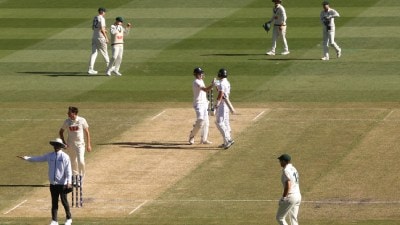
These are serious questions. Which is why euphoria, even unguarded optimism post-Ramzan, is uncalled for. We must avoid the familiar optimistic trap 8212; in 1999 we thought the Chennai cricket Test was a landmark turning point, today we may make the same mistake with the Lone-Khan wedding. We must engage in the peace process, but keep a keen eye on the one institution that will make these fail or succeed because, no matter what happens, the Pakistan army will not give up its control of the foreign read India policy. We must also remember that it would accept any peace process only as long as it is convinced that India is speaking from a position of strength, that the cost of the jehad in Kashmir in terms of the damage to Pakistan8217;s society and economy and isolation is unaffordable and that, in any case, if the talks do not succeed, India is capable and willing to fight on, even escalate if its interests so required.
Armies, particularly ideological ones, need to be spoken to from a position of strength. Unless that reflects in all our actions, the body language of our negotiators, nuances of our public statements, the manner in which we sensitise public opinion for the give-and-take that lies ahead if we move from frozen positions, the Pakistan army will not see sufficient reason to let even this initiative achieve anything, except more cynicism.