Journalism of Courage
 5 min read



Chandralekha, the unconventional dancing legend and choreographer, who broke all 8216;spiritual8217; norms of Bharatanatyam, to evolve her own form, stressing on sensuality, passed away around midnight today at her residence. She was diagnosed with cancer and had been ailing for two years. She was 78.
Distinctive even in her looks, Chandrlekha stood out in a crowd with her long silver mane and dark kohl-rimmed eyes and the huge vermillion dot. Her dance and choreographic productions never adhered to tradition either.
Devadasi in 1961 was not only Chandralekha8217;s first attempt at choreography but also her first attempt 8220;to rethink choreography from a non-sublimated perspective8221;. Moving away from the spiritual aspect of Bharatanatyam, she attempted to 8220;historify8221; dance, depicting how it came out of temples and king8217;s courts.
Born in a small town called Wada in Maharashtra, Chandralekha completed her Law from Mumbai8217;s Wilson College, but never went back to receive her certification. She had done the course only to please her father, a doctor in government services. Chandralekha came to Chennai as her heart was set on learning Bharatnatyam. Keen on learning the style and school of well-known Bharatanatyam exponent, Balasaraswathi, she chose Kancheepuram Ellappa Pillai as her Guru.
Chandralekha gave her arangetram in 1951 in Chennai. The performance was dedicated to the Rayalaseema Drought Relief Fund. But, ironically, her performance was titled Mathuranagarilu, the dance of gopikas and sahis on the banks of the Yamuna as they waited for Lord Krishna. It depicted the luxuriousness and sensuality of water. Her close friends recall that she froze during her performance at the contradiction between reality and art. Only her Guru noticed that momentary hesitation. The contradiction lived with her always. On one hand, she had a great love for everything sensual, beautiful and aesthetic. On the other, there was this need to counter rituals which 8220;dehumanised8221; people.
For 10 years, Chandralekha gave scintillating performances in India and abroad, maintaining her distinctive 8216;geometric8217; style. She was hailed as a sensation. But her inner contradiction remained. Finally, she found a solution by giving up dancing altogether and even went to the extent of completely distancing herself from the art, taking to writing, traveling, designing posters and activism. What also disgusted her was the 8220;patriarchal values and the complete control that male patrons and artists had over the sabhas in Chennai.8221;
However, in 1971, when she found a male partner, Kamdev, who excelled in various dances forms, Chandralekha was inspired with Navagraha. Here, she moved away from the mythological content in Bharatanatyam, concentrating on graphic movements which spoke about the nine planets. When her partner went abroad, Chandralekha gave up choreography again for another 10 years.
In 1984, she returned to dance with a group of four female dance students provided to her by Rukmini Devi Arundale, then heading Kalakshetra, the renowned dance School in Chennai. It was an unusual association as the Kalakshetra school of dance was very different and stuck to tradition. But Chandralekha8217;s explorations continued. It was in her next work, Angika that she questioned the 8220;divine origin theory8221; of Indian classical dance. The dance ballet, looking at just power and poetry of people8217;s bodies, created a furore in the art world.
Chandralekha stuck to her theme that there was no need for the 8220;gods and goddesses content8221; but just stories of humans. More productions8212;Shakthi, Mahakaal, Sri and Yantra followed, exploring abstract traditions, stressing on sexuality and sensuality, with passionate and erotic body movements by the dancers. She insisted on her dancers learning yoga and Kalarippayyat which gave the body flexibility.
But it was Raga, which depicts two male dancers, exploring what she called feminism within, that shocked the puritans. In her search for Kalarippayat teachers in Kerala, she also looked at movements evoked by Kalari massage. The two male dancers in Raga used the massage movements, but in a vertical position.
The criticism spurred Chandralekha to produce a trilogy. So Sloka and Sharira followed. While Sloka was inspired by Adi Shankaracharya8217;s Soundaryalahiri, exploring beauty as a from of energy, Sharira, was her most recent production which was performed at the Frankfurt Book Fair in October 2006. Despite her great irreverence for the conventional, Chandralekha8217;s productions drew deep from traditional sources and always drew interest.
8220;I don8217;t see Chandralekha8217;s death as a loss. If the dance world relooked at her work with some interest, then her death will only be a gain,8221; said Sadanand Menon, a close friend.

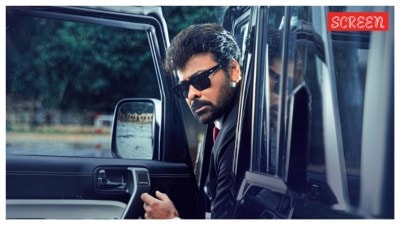
Anil Ravipudi’s action thriller Maha ShankaraVaraprasad Garu, starring Chiranjeevi and Nayanthara, has emerged as the winner among this year’s Sakranthi releases across the Telugu and Tamil film industries. The film’s unconventional release on a Monday, two days before the mid-week festival, has worked in its favour as it crossed the Rs 165 crore mark at the domestic box office.