7 min read
© The Indian Express Pvt Ltd



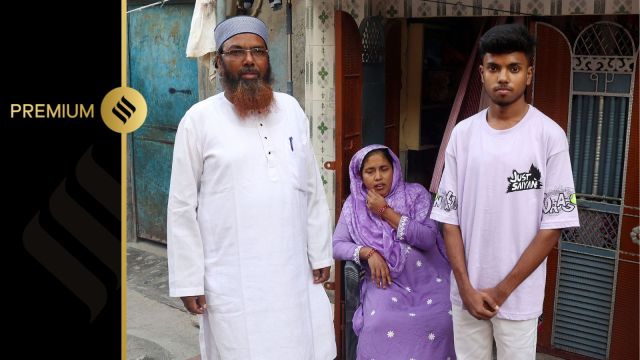 Mohammad Ahmed with his father Sirajuddin and his mother Anwari Begum at their Delhi house. (Express photo by Amit Mehra)
Sitting on the ground floor of his house in Ranhola, Delhi’s dust bowl where industrial chimneys paint the skies sooty black, Mohammad Ahmed, 17, is studying before dinner.
A decade ago, then seven-year-old Ahmed, who suffers from Gaucher’s disease (GD), was pleading before the Delhi High Court that he wanted to be “alive” to live his dream — to serve in the Army.
The teenager, who has been receiving free enzyme replacement therapy for his rare disease since a 2014 verdict, tells The Indian Express, “I realised that joining the Army was impractical because I probably would not pass the physical test. The next best thing, I thought, was to become a doctor because doctors are the reason why I am alive today.”
Just like it had in Ahmed’s case a decade ago, on October 4 this year, the court came to the rescue of over 100 persons suffering from rare diseases across the country. Issuing a slew of directions, starting with asking the Centre to set up a corpus of Rs 974 crores to be utilised for the treatment and other needs of those suffering from rare diseases, the court relied on Ahmed’s 2014 case, Mohd Ahmed (Minor) v. Union of India, to establish that the “right to health is part of right to life”.
Back at their two-storey house, Ahmed’s parents praised the recent court directive as “good”. Recalling his own struggle, Ahmed’s father Sirajuddin says, “The 2014 verdict and our advocate Ashok Aggarwal came as divine intervention for my wife and me because they allowed our son to live. We had lost five children before Ahmed got the help he needed.”
 Back at their two-storey house, Ahmed’s parents praised the recent court directive as “good”.
Gaucher’s Disease (GD) is a rare genetic disorder caused by the deficiency of an enzyme that helps break down fats in cells. The disease affects vital organs and its symptoms include developmental delays, seizures, dementia, blindness, enlarged liver and spleen, pulmonary and cardiac problems, and abnormal bone growth. While there is no cure for GD, treatments like enzyme replacement therapy, substrate reduction therapy, bone marrow transplant, etc., help patients manage its symptoms.
Ahmed’s mother Anwari Begum says he was four years old when he was diagnosed with GD at the All India Institute of Medical Sciences (AIIMS), Delhi. The diagnosis, she says, saw her husband, who drove an auto rickshaw then, run from pillar to post — including making representations, doing rounds of hospitals and seeking recommendations from elected representatives — to get help for their son’s treatment. In 2012, the Delhi government finally gave Rs 4.80 lakh as a “one-time relief”, enabling then five-year-old Ahmed to receive his first dose of therapy. The amount covered only one month of therapy, whereas Ahmed requires it all his life.
His sister Aarzu Tamanna, 21, says her father, now an Urdu tutor, approached the Delhi High Court in 2013. “I remember he was worried for months about how he would pay for Ahmed’s therapy. I recall seeing him exhausted and in tears, almost giving up… Ahmed used to be very sick and would go to school just once a week then. The school would keep wondering about his absence. There was very little awareness about GD then. When everything failed, my father moved the Delhi High Court,” says Tamanna, who is pursuing an undergraduate degree from Jamia Millia Islamia.
On April 17, 2014, Justice Manmohan (now the Chief Justice) ruled that “as health is a State subject, the present petition is disposed of with a direction to the Government of NCT of Delhi, to discharge its constitutional obligation and provide the petitioner with enzyme replacement therapy at AIIMS free of charge as and when he requires it”. Thanks to this verdict, Ahmed still receives therapy at AIIMS, Delhi.
For Ahmed’s mother, this verdict came as a blessing. Anwari Begum says she lost her firstborn, a boy who was born in 1997, in less than a year. “Then, we lost our second son, our third son, our fourth and a daughter who was born after Ahmed. After he was born, Ahmed fell sick. Main bilkul toot chuki thi (I was completely broken).”
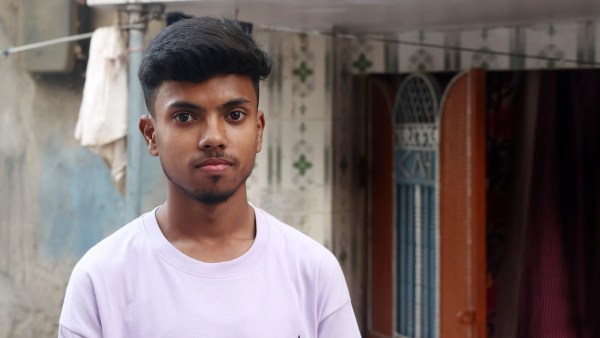 The court-mandated therapy changed everything. Slowly, Ahmed became well enough to attend school, located 1 km away, regularly. (Express photo by Amit Mehra)
She says all her children would die after “severe nosebleeds”. She says, “Doctors would say they died from a complicated disease but never gave us a diagnosis. After he was born, Ahmed’s stomach swelled up due to an enlarged spleen.”
Though Ahmed stopped eating, his parents refused to give up on him. “We kept going to hospitals. He was finally diagnosed at the age of four. The next hurdle was getting medicines. After our daughter (who was born after Ahmed) died within 15 months, Ahmed told me that he too would not live long,” she says.
The court-mandated therapy changed everything. Slowly, Ahmed became well enough to attend school, located 1 km away, regularly. “After I started going to school regularly, I made friends. My teachers too were supportive. Though I did not participate in sports, I won one spoon race,” says Ahmed, adding that he is preparing for his National Eligibility cum Entrance Test (NEET), an all-India pre-medical test, besides his board exams.
Today, his day starts at 6.30 am. He walks to school, which starts at 7.30 am, and then takes a bus or an autorickshaw to attend physics and chemistry classes at a local coaching centre between 5 pm and 8 pm. Back home, he studies before dinner. “I study biology on my own. At times, I look up YouTube tutorials for some help. I scored the best in biology in my Class 11 exams,” he says.
 Ahmed, then known among his friends as Shahrukh Khan (Actor) son of Sirajuddin was 8 years old when he suffered from a rare genetic disorder called Gaucher Disease. (Express File Photo by Tashi Tobgyal)
On how the therapy has made him switch to a “healthier” food, he says he no longer consumes “aerated beverages and fried food”. “I eat an egg occasionally, but animal sources of protein remain off limits,” he says.
 While his treatment has been regular, in 2019 and 2020 it stopped for nearly three months due to unavailability of the drug. (Express photo by Tashi Tobgyal)
While his treatment has been regular, in 2019 and 2020 it stopped for nearly three months due to unavailability of the drug. “The drugs are made by foreign companies and it takes time to stock them up here. His condition worsens when he does not receive the drugs because he stops eating. He gets his treatment on time now and is thriving,” says his mother.