Journalism of Courage
 5 min read


 Raj Kamal Jha
By N. S. Madhavan
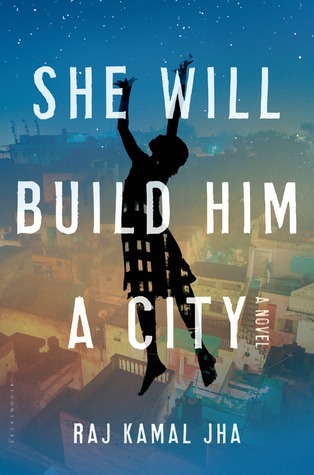
Book: She Will Build Him a City
Author: Raj Kamal Jha
Publisher: Bloomsbury
Pages: 352
Price: Rs 447
Seven cities that make up Delhi, from the Mahabharata times to the one Lutyens built, present an overlay of tales and micro-histories, layer upon layer, as in, to use a term familiarised by Nehru, a palimpsest. A living city so old that when you write about it, it can breathe life, its every turn triggering memories and more, like James Joyce’s Dublin, or you can grow up with it like Borges’ Buenos Aires or Orhan Pamuk’s Istanbul. In case you want to linger on a particular interlude in its intriguing history, say the Mughal period, the city welcomes you to be a Hilary Mantel.
In his novel, She Will Build Him a City, Raj Kamal Jha checked the none-of-the-above box.
There are no evocations of the past. Instead, it captures the utter violence of its erasure. The novel is about a Delhi ever overwritten. A new city — or clusters of urban hamlets — is being built. The city’s landscape is torn asunder by elevated tracks of the metro railway. On farmlands sprout concrete and glass towers. For recreation, the city’s folks live out their fantasies in shopping malls, where the city’s oppressive weather is kept outside the doors. There is no narrative to the city’s haphazard development. Jha’s characters mimic the city. Like the city, its characters are constantly rewriting their lives, or dreaming of doing so. They live in apartment complexes, travel by the metro and visit shopping malls. No Humayun’s Tomb for them. And like the city’s discrete silhouettes in the new skyline, they too lead fragmented lives.
 Jha juxtaposes stories of a woman, a wannabe killer and an orphaned child, chapter after chapter following almost the same sequence, with only the city as their common terrain. He doesn’t weave their lives into a grand tapestry; mostly, their tales flow in parallel courses. The woman tells her story through a monologue with her baby daughter, suddenly grown up into a fortyish woman. The woman stays mostly inside her home, it is through the child and the man that the exterior, the city, plays out.
Metronomic altering of these three disjointed voices, at first, challenges conventional reading habits. This was initially off-putting; somewhere at the back of the mind the word ‘pretentious’ started forming. But slowly, the novel takes hold of you. The man is first seen taking the last metro from Rajiv Chowk station, and his mind is filled with thoughts of killing. His murderous intention is kept under wraps for a long time. Instead, through his eyes, Jha shows Delhi, and the violent birth of its eighth avatar.
The last metro. If it evokes memories of Francois Truffaut’s movie by the same name, you are in for surprise. Here, there are no loving couples kissing goodbyes; instead, on the floor of the train, “Women squat on haunches blowing air into wrinkled penises.” Such sudden autonomous images occur regularly in the novel. Slowly, the book grows on you.
There is a direct reference to another French movie in the novel, Le Ballon Rouge (The Red Balloon), a short film by Albert Lamorisse. In the novel, the man tries to strike up a relationship with a beggar girl who sells red balloons. Like the little boy in the short film, the man visualises the balloon girl flying with him in the sky.
Bits and pieces start adding up, but never does the fragmented narration yield to a design or a ‘story’. The reader can discern a gestalt that is tantalisingly palpable. With She Will Build Him a City, Indian writing in English is taking a break from its late 20th century storytelling traditions that depended on thematic strength and location.
Here, it is more cinematic; with two images conjuring up a third meaning. In the train, the man watches an old man with a young woman and can’t decide if they are father and daughter. Much later in the book, from the POV of the couple, it turns out that the old man is the lover of the young lady, who is married with a sick child. Similarly, Jha was writing with a camera when he described the route of young Orphan’s first day out, dramatically scrawled on the Delhi map by the baby himself: “…onto Ring Road with a winding line that curves sharply, pen takes a sprawling arc that cuts across southern part of the city, becomes straight again for what seems like six kilometres or so, loops round the railway station…”
Brilliantly written, She Will Build Him a City breaks the lull in Indian writing in English that saw better times in the last quarter of the 20th century. This is the novel of the new century where time is here and now, places ever-changing, and writing literary fiction, an act of dare.
N.S. Madhavan is an influential Malayalam author, celebrated for short works like Higuita and When Big Trees Fall.
Raj Kamal Jha is chief editor, The Indian Express