3 min read


© The Indian Express Pvt Ltd



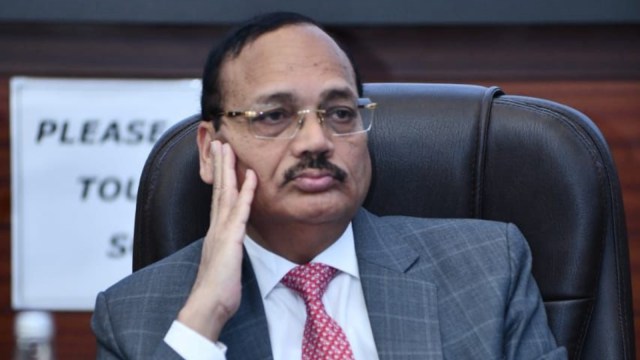 Chief Justice of India Justice Surya Kant
 Signalling continuity with reform, new Chief Justice of India Justice Surya Kant has said the Collegium system of judicial appointments is “certainly far more open and transparent today than it once was” and “there is always room to do better.”
“Change is the only constant, and as society evolves, institutions must also adapt their mechanisms accordingly. The same applies to the Collegium system, which is certainly far more open and transparent today than it once was. There is, however, always room to do better,” he said.
In an interview to The Indian Express, the CJI said that while the Collegium has evolved, “any system or practice, no matter how well-established, will at some stage require improvement”. He pointed to the introduction of in-person interactions with candidates as “a very welcome step”, adding that it allows members to “arrive at a more objective view.”
“My focus on judicial appointments, whether to the High Courts or the Supreme Court, would be to place strong emphasis on merit, experience, integrity, and the temperament required to serve as a judge,” said CJI Kant who took oath on November 24.
“Going forward, I believe an even stronger emphasis must be placed on the credentials of the candidate — their merit, their integrity, and their experience. These should remain central considerations in every appointment,” he said. On transparency, he noted that reasons are now increasingly being recorded for approvals and disapprovals, but cautioned that “it is crucial to strike a balance and also maintain the integrity of the system”.
On the Chief Justice’s role as “master of the roster”, he said the phrase is often misunderstood. While the CJI, as the seniormost judge, has administrative responsibilities, “that does not automatically imply that matters are assigned in a unilateral manner”. Decisions, he said, are taken after discussion and consultation, keeping in mind experience and availability.
Drawing from his years as a judge of the Punjab and Haryana High Court, where he monitored cases relating to Punjab’s drug crisis, the CJI described that phase as “a true test of patience and, quite frankly, a labour of love”.
Assigned the matter around 2015, he said he listed it regularly to ensure sustained oversight. “It wasn’t the kind of case that could be resolved through one sweeping order,” he said, adding that it required engagement with families, authorities and institutions.
He outlined a “holistic” approach that combined criminal investigation, border strengthening, extradition of offenders, rehabilitation through de-addiction centres, and awareness among youth through curricular changes. “In that sense, the approach in this case was holistic: punitive, preventive, rehabilitative, and educational,” he said.
On criticism directed at judges through clipped videos of court hearings, the CJI was clear that trolling should not be allowed to influence judicial conduct. “And of course, with that comes trolling, which must be ignored at all costs because it stems from a place of nescience and is not meant to be constructive,” he said. “The moment we shift our focus from our duties to what is being said on social media, justice will inevitably suffer.”
Looking ahead, he said his focus would be on tackling pendency by strengthening systems and mediation, and on ensuring access to justice and representation. “That, to me, is fundamental,” he said.