10 min read


© The Indian Express Pvt Ltd



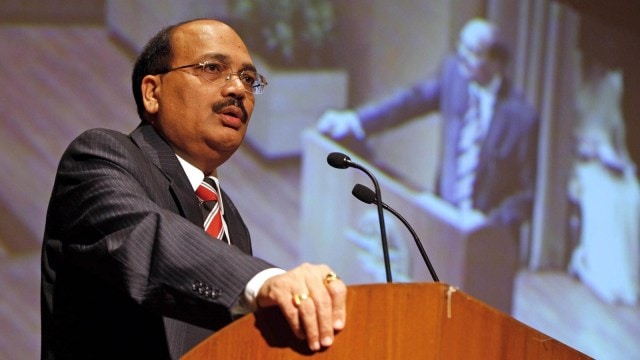 Every CJI brings their own way of working and their own systems. What’s common is the commitment to the institution and to the cause of justice, says CJI Kant. (File photo)
Opening up the Collegium process to tackling pendency, the new Chief Justice of India, Justice Surya Kant, outlines his roadmap for his 15-month tenure that began November 24, in an interview to Ananthakrishnan G
Justice Surya Kant: I was assigned that matter around 2015, when I was among the senior judges in the High Court. And until I was transferred as Chief Justice to the Himachal Pradesh High Court, I made it a point to list it regularly, at least once a month, so that we could continuously monitor the issue and work toward improving the situation.
If I may say, candidly, this was a true test of patience and, quite frankly, a labour of love in many ways. It wasn’t the kind of case that could be resolved through one sweeping order or by issuing broad directions to the authorities. It required sustained oversight and constant engagement with all stakeholders.
At that time, the drug menace in Punjab was at a highly uncontrolled level. When the matter came to me, my first step was to understand the situation fully at every level. That meant listening to affected families, examining the institutional response, and interfacing with the government machinery.
During this time, I also had to prevent several attempts to transfer officers who were genuinely doing good work on the ground. Once every concerned authority had submitted status reports, and we finally had a clearer picture of what was actually happening, we were able to move forward in a more structured way. It was only then that we could begin addressing the crisis comprehensively, tackling the epidemic both at the macro and micro levels.
This case and its trajectory were truly all-encompassing when I think of it. We addressed the criminal dimension by constituting investigative committees and directing the extradition of major offenders who were profiting from the drug trade. At the same time, we focused on prevention: strengthening the borders through both physical measures and the use of technology.
But none of this meant we could overlook the victims. Directions were issued for the establishment of de-addiction centres and rehabilitation facilities, to support those struggling with addiction and to ease the immense burden placed on their families, many of whom came from economically vulnerable backgrounds. We also emphasised awareness among the youth by mandating changes in school and college curricula, through a committee of experts tasked with developing appropriate interventions.
In that sense, the approach in this case was holistic: punitive, preventive, rehabilitative, and educational.
Justice Surya Kant: It is correct that the CJI is also referred to as the master of the roster, but I think this role is often heavily misunderstood and misconstrued. The CJI is the seniormost judge of the Supreme Court, and that seniority undoubtedly carries additional administrative responsibilities alongside the judicial role. One of these responsibilities would be overseeing the roster.
However, that does not automatically imply that matters are assigned in a unilateral manner. In practice, these decisions are taken after due discussion and consultation with other judges and keeping in mind various factors, including their availability, their areas of experience, and the overall functioning of the court.
Justice Surya Kant: Absolutely, I would agree. Judicial independence is the cornerstone of an effective Justice Delivery System in our country, and it goes hand in hand with the Doctrine of Separation of Powers that is firmly embedded in our Constitution. Our responsibility is entirely to the Constitution and to the people it protects.
Justice Surya Kant: It wouldn’t be right to say that I need to do something completely different from my predecessors. This institution has seen 52 Chief Justices before me. And of course, not all of them would have had the same set of priorities or the same vision for the role. Everyone brings their own way of working and their own systems. But what has always been common is the commitment to the institution and to the cause of justice. That has remained constant throughout, and that is what truly matters.
For me, what I would really like to focus on is the issue of pendency and ensure it is effectively tackled by streamlining our existing systems and strengthening mediation as a preferred mode of dispute resolution.
Alongside that, I want to work toward a system where every single person in this country has access to justice and proper representation. That, to me, is fundamental.
Justice Surya Kant: I don’t think there’s any need to “control” social media. That would be the wrong word to use, and quite frankly, a harsh measure that risks curtailing liberty. When videos circulate, and backlash follows, I genuinely believe that is the nature of social media where no one really comes out unscathed.
Apart from the entertainment factor, one of the objectives of social media, ideally, should be to create awareness and keep people engaged with democratic processes. However, when context is stripped away and people aren’t given the full picture, it has the opposite effect. Ultimately, if we aren’t careful, we could potentially reach a point where liberty feels like it exists more in principle than in practice and that would defeat the very purpose of openness.
Justice Surya Kant: Often what gets shared on social media or becomes viral content are just brief snippets from court proceedings—a single comment, a question, or an expression—all without context. In hearings, judges test arguments, raise hypotheticals, and explore various legal angles. When those moments are isolated and posted online, misunderstanding is almost inevitable.
And of course, with that comes trolling, which must be ignored at all costs because it stems from a place of nescience and is not meant to be constructive. At the end of the day, we carry a significant workload and an enormous responsibility. The moment we shift our focus from our duties to what is being said on social media, justice will inevitably suffer.
Justice Surya Kant: The principle that ‘bail is the rule and jail is the exception’ has been developed through judicial interpretation and is an essential feature of our criminal jurisprudence. However, the application of this principle—and the perception that it may not always be followed uniformly—is deeply dependent on the specific facts, context, and gravity of each case before the court.
Justice Surya Kant: Any system or practice, no matter how well-established, will at some stage require improvement. Change is the only constant, and as society evolves, institutions must also adapt their mechanisms accordingly. The same applies to the Collegium system, which is certainly far more open and transparent today than it once was.
There is, however, always room to do better. The introduction of in-person interactions with candidates, a reform that had been undertaken by my predecessors, has been a very welcome step. It allows each member of the Collegium to assess the candidate directly and arrive at a more objective view.
Going forward, I believe an even stronger emphasis must be placed on the credentials of the candidate—their merit, their integrity, and their experience. These should remain central considerations in every appointment.
Justice Surya Kant: As I mentioned earlier, my focus on judicial appointments, whether to the High Courts or the Supreme Court, would be to place strong emphasis on merit, experience, integrity, and the temperament required to serve as a judge.
Regarding transparency, I believe we have already taken significant steps. For instance, we now try to provide reasons for approvals and disapprovals in elevation matters, marking an important shift towards greater openness.
At the same time, we must recognise that the process is inherently complex and, quite frankly, quite lengthy. There are several internal procedures and assessments involved that cannot be entirely placed in the public domain. So often, when we make efforts to make these decisions more transparent, it is crucial to strike a balance and also maintain the integrity of the system.
Justice Surya Kant: I believe many of my colleagues possess extensive experience and expertise specifically in taxation, so I feel we are well covered in that area of law.
Nevertheless, there are several niche and rapidly evolving areas of law that courts are increasingly dealing with. However, this is not entirely new. In such situations, we have often relied on the assistance of domain experts appointed to aid the court. At other times, we have established expert committees to engage with all relevant stakeholders and offer informed guidance.
This approach is especially important in environmental issues, where legal decisions need to be based on scientific knowledge. Protecting fragile ecosystems and avoiding further damage to flora and fauna requires us to seek expert advice, ensuring our actions are both effective and responsible.