Premium

‘Serious economic offences’: HC denies bail to Akali leader Bikram Singh Majithia in disproportionate assets case

The Punjab and Haryana High Court directed the Vigilance Bureau to complete the investigation against Majithia, a former Punjab cabinet minister, in 3 months.

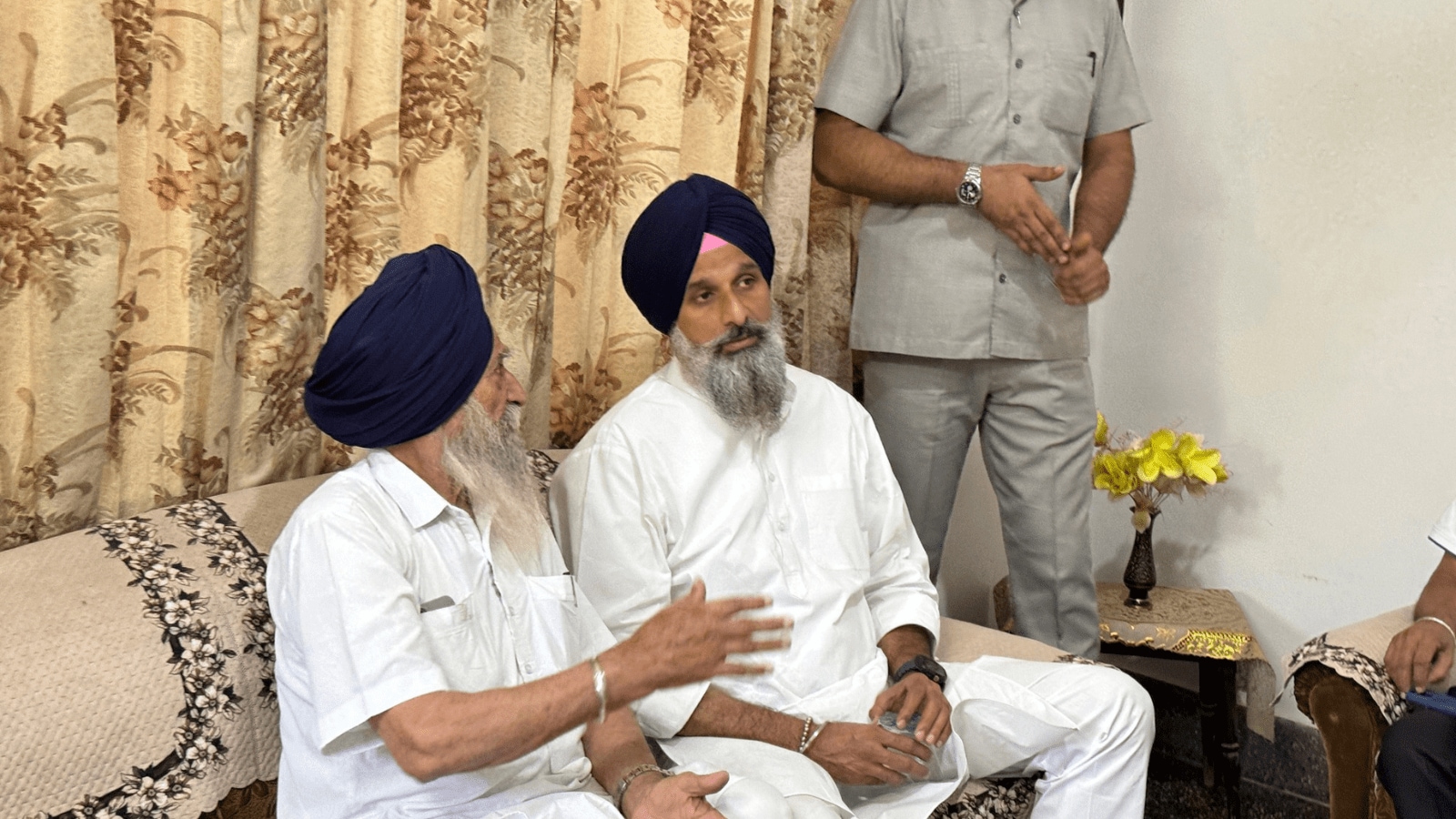
SAD leader Bikram Singh Majithia.SAD leader Bikram Singh Majithia's bail plea has been turned down (File photo: FB@BikramSinghMajithia).

The Punjab and Haryana High Court on Thursday denied regular bail to senior Shiromani Akali Dal (SAD) leader Bikram Singh Majithia, a former cabinet minister in the Punjab government, in a high-profile corruption case, describing the allegations as serious economic offences that pose a threat to the state’s financial health.

Acknowledging Majithia’s right to liberty, the judge also directed the Vigilance Bureau to complete the investigation within three months. “Thereafter, the petitioner can seek his release on bail,” the order stated, adding that indefinite custody would infringe personal freedom.

Majithia has been in custody since June 25, following the registration of a First Information Report (FIR) at the Vigilance Bureau police station in SAS Nagar (Mohali). The case accuses him of amassing assets disproportionate to his known sources of income, in violation of Sections 13(1)(b) and 13(2) of the Prevention of Corruption Act, 1988, as amended in 2018.

The FIR stems from a report by a Special Investigation Team (SIT) on June 7, 2025, probing an earlier narcotics-related case against him.

The court’s decision comes amid Majithia’s claims of political vendetta by the ruling Aam Aadmi Party (AAP) government. His legal team argued that the corruption charges recycled evidence from the 2021 Narcotics Drugs and Psychotropic Substances (NDPS) case, where he was granted bail in August 2022, and the Supreme Court dismissed a state appeal in April 2025.

Senior advocate R S Cheema contended that the new FIR violates legal procedure, as the state should have added corruption charges to the existing case rather than filing a fresh one to “keep him behind bars.”

Justice Tribhuvan Dahiya, in a 20-page order, ruled that registering a second FIR was permissible under Supreme Court precedents. Justice Dahiya quoted from the recent case of State of Rajasthan v. Surendra Singh Rathore, noting that a fresh FIR is allowed “when investigation and/or other avenues reveal the earlier FIR or set of facts to be part of a larger conspiracy.”

Story continues below this ad

The judge clarified that the observations in Pradeep Ram v. State of Jharkhand, relied on by Majithia, apply only to the addition of offences to an ongoing case, not to entirely new probes.

What affidavit on Majithia’s enrichment says

The prosecution, led by Additional Advocate General Chanchal K Singla, presented a detailed affidavit outlining “substantial evidence” of Majithia’s enrichment. Key allegations include:

• Unexplained cash deposits in family businesses: Analysis of Saraya Industries Limited (SIL), a company largely owned by Majithia and his family (with Majithia holding 11.63% shares), showed Rs 161.72 crore in cash deposits during 2007-08 and 2008-09, far exceeding business receipts as per cash registers. “There is no explanation for this,” the court noted, adding that the funds were used to acquire assets and siphon off money through other entities.

• Abnormal foreign investments: Companies based in Cyprus and Singapore, including Clearwater Capital Partners (Cyprus) Limited and Sindicatum Captive Energy Singapore Pte. Ltd., allegedly pumped Rs 196 crore into Majithia’s firms between 2007 and 2017. These investments yielded minimal returns — Rs 3.5 crore against Rs 35 crore invested in one instance — yet continued despite losses, raising suspicions of fund layering. In 2014-15, Clearwater transferred its 26 per cent stake in SIL to a family-controlled entity at a “throwaway price” of Rs 3.5 crore, implying a 90% loss that “may have been compensated through undisclosed or under-table payments outside the official financial system.”

Story continues below this ad

• Benami properties and liquor business expansion: Majithia and his wife, Ganeive Kaur, are accused of acquiring properties in Mashobra (Shimla) and Sainik Farms (New Delhi) through questionable means. The probe revealed a “systematic modus operandi” to control Punjab’s liquor trade through SD Beverages Private Limited (SDBPL), funded by SIL despite Majithia’s resignation as director to avoid scrutiny. SDBPL’s bank statements showed Rs 29.96 lakh in cash deposits in 2008-09 against just Rs 1.7 lakh in sales, with funds routed from associates like Harpreet Singh Gulati to Majithia’s father for property purchases.

• Transport empire via benami firms: Majithia allegedly built a bus transport network under A2Zed Transport (later Patiala Express), in his wife and brother-in-law’s names, by acquiring 26 route permits through coercion and unaccounted cash payments totaling Rs 2.80 crore. Only Rs 16 lakh was traced through banks; the rest, about Rs 2.26 crore, was paid in cash.

• Patterns tied to political tenure: Cash deposits in SIL surged during Majithia’s ministerial stints (2007-2009 and 2012-2017), dropping sharply to Rs 3.5 crore in 2009-10 when he was out of office, then rising to Rs 127.90 crore in 2013-14. “The timing and fluctuation of these deposits suggest a possible linkage between the petitioner’s official position and financial activities of SIL,” the court observed.

The judge described the offences as “serious economic offences” that “constitute a class apart,” quoting the Supreme Court in Y S Jagan Mohan Reddy v. CBI (2013) 3 SCC (Crl.) 552: “Economic offences… having deep rooted conspiracies and involving huge loss of public funds need to be viewed seriously and considered as grave offences affecting the economy of the country as a whole,” the court held.

Story continues below this ad

The ruling said releasing Majithia, a “prominent political figure” and former minister for over seven years, could lead to tampering with 20 “vulnerable” witnesses or manipulation of records. The court cited his past conduct, including video-recording raids and threats by relatives to officers.

Manraj Grewal Sharma is a senior journalist and the Resident Editor of The Indian Express in Chandigarh, where she leads the newspaper’s coverage of north India’s most politically and institutionally significant regions. From Punjab and Haryana to Himachal Pradesh and the Union Territory of Chandigarh, she oversees reporting at the intersection of governance, law, politics and society. She also reports on the diaspora, especially in Canada and the US. With a career spanning journalism across several countries, academia and international development, Manraj brings a rare depth of perspective to regional reporting. She is widely regarded as a leading chronicler of Punjab’s contemporary history and socio-political evolution, particularly its long shadow of militancy, federal tensions and identity politics. Her book, Dreams after Darkness, remains a definitive account of the militancy years and their enduring aftermath. Professional Background & Expertise A gold medalist in mass communication and a post-graduate in English literature, Manraj has a multifaceted career spanning journalism, academia, and international development. She was also awarded a fellowship by National Foundation of India and did several in-depth pieces on Manipur. Internationally, she has reported from Israel, US, UK, Myanmar, and Mauritius Her key focus areas include: Regional Politics, History, Agriculture, Diaspora, and Security. Of late, she has started focusing on Legal & Judicial Affairs: Much of her recent work involves reporting on high-stakes cases in the Punjab and Haryana High Court, ranging from environmental policy to civil rights. International Consulting: She previously served as a consulting editor for the Asia Pacific Adaptation Network and a publishing consultant for the Asian Development Bank (ADB) in Manila. Academia: For five years, she was the managing editor of Gender, Technology and Development, a peer-reviewed international journal at the Asian Institute of Technology, Bangkok. Recent Notable Articles (Late 2025) Her recent reportage focuses heavily on judicial interventions and regional governance: 1. Environment & Governance "‘NGT can’t test legality of policy’: HC hears challenge to Punjab’s ‘Green Habitat’ plan" (Dec 22, 2025): Covering a critical legal battle over whether the National Green Tribunal has the authority to strike down a state policy regularizing farmhouses on delisted forest land. "High court pulls up Punjab poll panel over audio clip probe" (Dec 10, 2025): Reporting on judicial concerns regarding the transparency and fairness of local body elections. 2. Legal Rights & Social Welfare "HC issues notice to Punjab, Haryana over delay in building old age homes" (Dec 22, 2025): Reporting on a contempt petition against top officials for failing to establish government-run homes for the elderly as promised in 2019. "Victims can appeal acquittals in sessions court without seeking special leave" (Dec 19, 2025): Highlighting a significant procedural shift in criminal law following a Supreme Court ruling. "HC upholds benefits for Punjab FCI officer acquitted in 20-year-old bribery case" (Dec 19, 2025): A report on the concept of "honourable acquittal" and its impact on employee benefits. 3. Human Rights & Identity "As Punjab denies parole to MP Amritpal Singh, HC asks it to submit ‘foundational material’" (Dec 1, 2025): Covering the legal proceedings regarding the radical preacher and sitting MP's request to attend Parliament. "Protecting life paramount: HC backs Muslim woman in live-in after verbal divorce" (Nov 6, 2025): Analyzing judicial protections for personal liberty in the context of traditional practices. Signature Beats Manraj is recognized for her ability to decode complex judicial rulings and relate them to the everyday lives of citizens. Whether it is a 30-year-old land battle in Fazilka or the political implications of Kangana Ranaut’s candidacy in Mandi, her writing provides deep historical and regional context. Contact @grewal_sharma on X manrajgrewalsharma on Instagram ... Read More


Latest Comment
Post Comment
Read Comments
Advertisement
Advertisement
Advertisement
Advertisement