


Stay updated with the latest - Click here to follow us on Instagram
© IE Online Media Services Pvt Ltd
Tags:


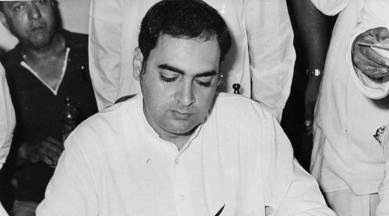
The Tamil Nadu government Wednesday said it was confident that the Governor would take a “good decision” regarding the release of seven convicts serving life imprisonment in the 1991 Rajiv Gandhi assassination case. The state Cabinet had on Sunday recommended that the convicts, who have served 27 years in prison, be released under Article 161 of the Constitution.
“The government is confident that Governor Purohit will realise the Tamil people’s feelings and expectations and take a good decision at an appropriate time,” Fisheries Minister D Jayakumar said.

The convicts are V Sriharan alias Murugan, T Suthendraraja alias Santham, A G Perarivalan alias Arivu, Jayakumar, Robert Payas, P Ravichandaran and Nalini.
Also read | Release all convicts, Tamil Nadu to tell Governor
Can the Governor order release of the convicts?
The AIADMK-led government has moved an application under Article 161 of the Constitution. This gives the Governor power to pardon, suspend, remit or commute sentences of people who have been proved guilty in court in certain cases. His decision, however, can be challenged in court.
The AIADMK government has chosen this course of action after the Supreme Court stayed its petition in January this year to release the convicts under provisions of the Code of Criminal Procedure. Under the Section 435 in the Code of Criminal Procedure, 1973, the state government will have to act only after consultation with the Centre. The SC had sought reply from the Centre, which refused to concur with the state’s proposal.
The Supreme Court on September 6 had said the Tamil Nadu Governor was at liberty to take a decision on the mercy petition filed by one of the convicts under Article 161. Perarivalan moved the apex court stating that there was no decision taken on his application, filed under Article 161 on December 30, 2015. A bench of Justices Ranjan Gogoi, Naveen Sinha and K M Joseph said, “Naturally, the authority concerned will be at liberty to decide the said application as deemed fit.”
What did the Centre say?
The Centre wrote to the state in March saying that any remission of sentence would set a “dangerous precedent” and have “international ramifications”. In its letter, which was placed on record by the SC, the Centre stated that the assassination showed “exceptional depravity,” including the use of a woman as a human bomb.
“The brutal act brought the Indian democratic process to a grinding halt in as much as the general elections to the Lok Sabha and Assemblies in some states had to be postponed,” the letter added.
The seven convicts
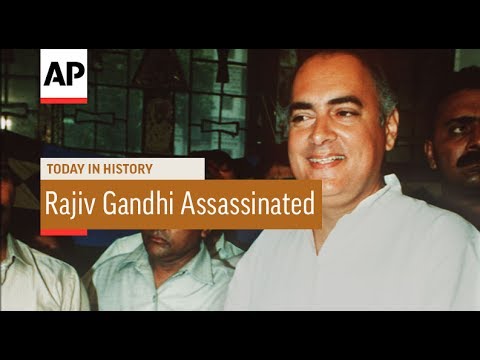
Rajiv Gandhi was assassinated during an election rally in Sriperumbudur near Chennai on May 21, 1991. The bomb, detonated by a member of the LTTE, also killed 15 others, including nine policemen, and injured more than 40.
When the case reached the Supreme Court, 19 people were acquitted, four of the seven accused were awarded the death sentence and three were given life terms. The death sentences to Murugan, Santham and Perarivalan were commuted to life terms by the SC in 2014. The Tamil Nadu Governor in 2000 had commuted the death sentence of Nalini as well following an appeal by Sonia Gandhi.
Perarivalan, from Jolarpettai in Vellore district, has been in jail for 27 years. He was arrested in connection with the case in June 1991 at the age of 19. He was granted parole for the first time last September. He spent his time in jail studying before handling educational programmes for other prisoners.
Jail has changed the life of Nalini’s husband Murugan, a Sri Lankan citizen, officials say, adding that he is often seen meditating.
Santhan, also Sri Lankan, is now a priest at the Vellore central prison. Ravichandran is from Madurai while Payas and Jayakumar are also Sri Lankan citizens.


Stay updated with the latest - Click here to follow us on Instagram


