Journalism of Courage



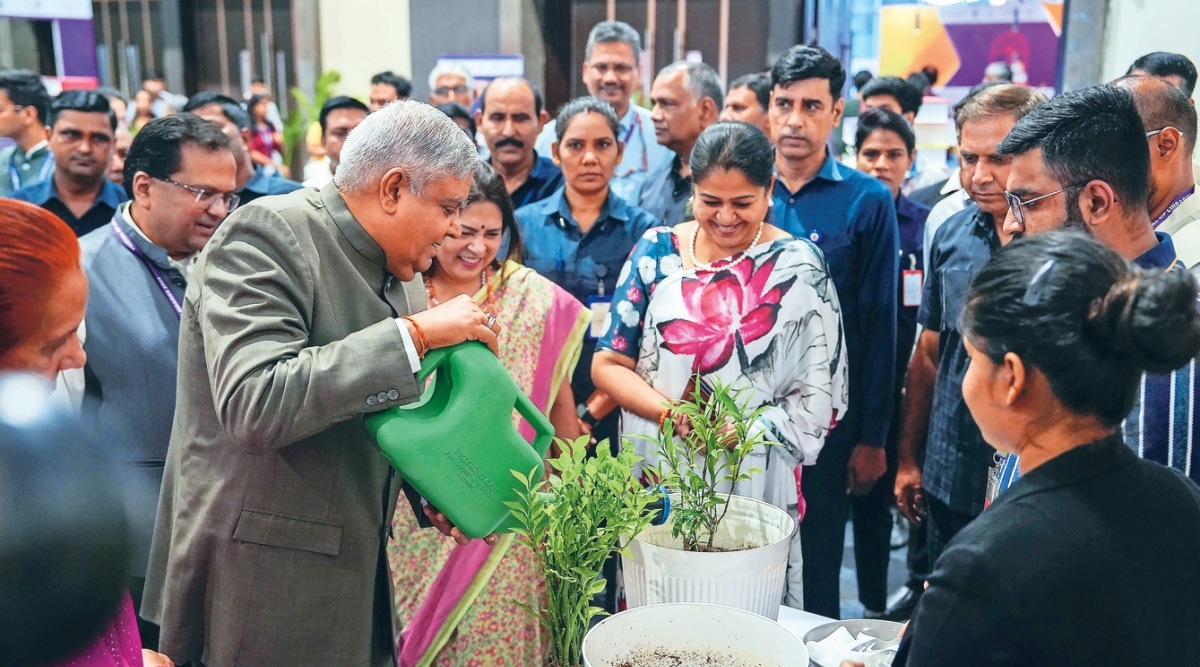 Vice President Jagdeep Dhankhar at the Festival of Libraries 2023, at Pragati Maidan,
New Delhi, on Sunday. PTI
Vice President Jagdeep Dhankhar at the Festival of Libraries 2023, at Pragati Maidan,
New Delhi, on Sunday. PTI Expressing anguish over sinister efforts by some to ‘taint, tarnish and demean’ the country’s institutions, Vice President Jagdeep Dhankhar on Sunday asked people “to be judgmental about such forces”, and urged them to not hesitate to neutralise the anti-Bharat narrative. “You’ll have to speak out your mind to defeat sinister forces,” he said, addressing the valedictory ceremony of the two-day ‘Festival of Libraries’ organised by the Ministry of Culture in New Delhi.
Stating that there are bound to be reactionary challenges in the face of the country’s unprecedented growth, Dhankhar appealed to citizens to not have a partisan approach when it comes to nationalism and national interest. “A political partisan approach is fine in the political arena, but when you become stakeholders in the growth of the nation, politics must take a backseat,” he said.
Dhankhar described informed citizens as “the greatest spinal strength of any democratic process.” He underscored that only an informed citizenry can neutralise anti-national forces and narratives. Libraries are thus quintessential to achieve informed-citizen status.
The Vice-President said the event would promote the culture of reading in the country. “Library development brings about the development of society and culture. It is also a measure of progress of civilizations and cultures,” he said, lauding the ministry’s effort to employ technology for libraries.
Dhankhar also released a coffee-table book based on the writings of freedom fighters banned during colonial rule. He described the book as “the most authentic record of Indian genius for freedom”.
Literature banned during the colonial era was on display as a part of the festival. During the freedom struggle, several revolutionary pieces of literature were banned by the British as the writings were considered “dangerous”, said an official, adding, “These collections representing the feelings, aspirations and resolve of our freedom fighters, are available in various Indian languages, such as Bengali, Gujarati, Hindi, Kannada, Marathi, Odia, Punjabi, Sindhi, Tamil, Telugu and Urdu.”
An exhibition on an ancient encyclopaedia, highlighting how surgeries have been a part of Indian medicinal practice since ages, was also a part of the event. The event showcased iconic libraries from across the world with an aim to initiate a conversation on the modernisation and digitisation of libraries in India. Besides exhibitions and panel discussions, the festival introduced a special ranking system for libraries.

 3 min read