This is an archive article published on March 27, 2021
In Gujarat Bill, better lifestyle is allurement for conversion
The Bill, proposed by Minister of State for Home Pradeepsinh Jadeja, is likely to be tabled for discussion in the ongoing Assembly session.
Written by Parimal A Dabhi
Gandhinagar | March 27, 2021 04:00 AM IST
4 min read
Whatsapp
twitter
Facebook
Reddit
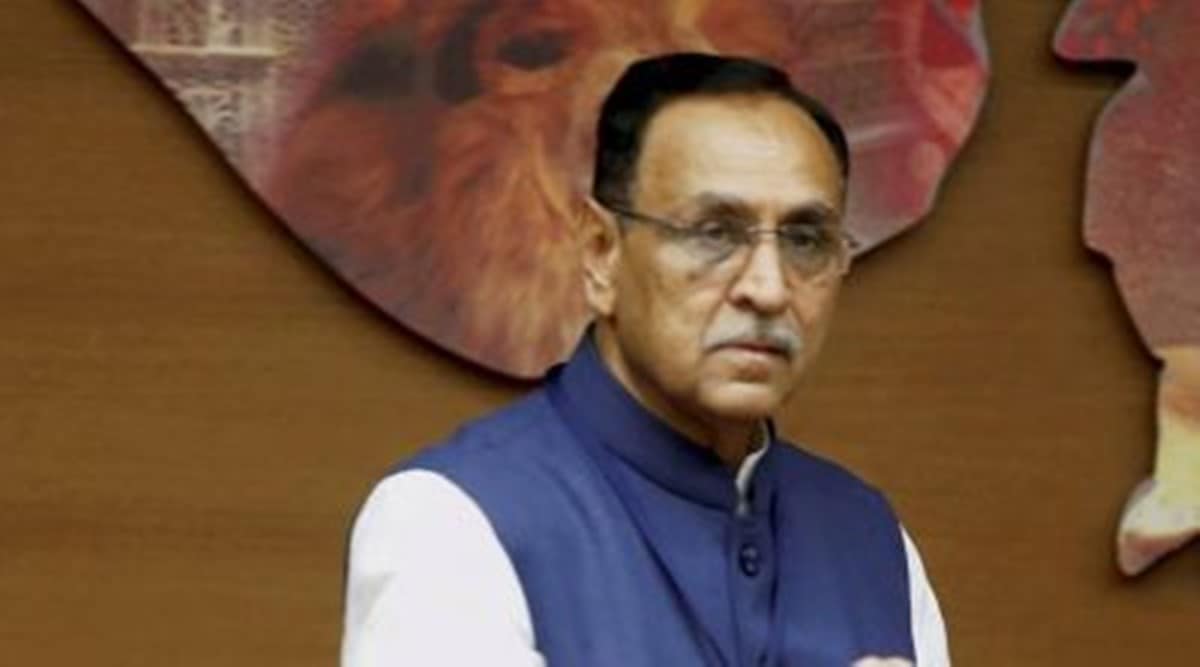
Gujarat Chief Minister Vijay Rupani. (File)
The Vijay Rupani-led BJP government’s Bill to amend the Gujarat Freedom of Religion Act, 2003, proposes to consider promises of a better lifestyle and of divine blessings as allurement towards religious conversion, and hence punishable.
The original 2003 Act specifies two categories of allurement or offer of temptation: i) any gift or gratification, either in cash or kind, and ii) a grant of any material benefit, monetary or otherwise. The amended Bill proposes a third category: “better lifestyle, divine blessings or otherwise”.
The Objects and Reasons Statement of the amendment Bill states there are episodes of religious conversion promising better lifestyle, promises of divine blessings (daivi kripa) and impersonation. “There is an emerging trend in which women are lured into marriage for the purpose of religious conversion,” it notes.
The Bill, proposed by Minister of State for Home Pradeepsinh Jadeja, is likely to be tabled for discussion in the ongoing Assembly session. Aimed at purportedly checking forcible religious conversion by marriage, it places the burden of proof of innocence on the person who caused the conversion.
Section 3 of the original Act only prohibited forcible conversion from one religion to another by use of force or by allurement or by fraudulent means. The amended Bill specifically proposes to prohibit acts like forcible religious conversion by marriage or aiding a person to get married.
The amendment Bill now proposes to expand the definition of ‘fraudulent means’ by including “impersonation by false name, surname, religious symbol or otherwise”. It allows family courts to declare any marriage for the purpose of “unlawful conversion” as void.
It also proposes to amend a section of the original Act to include persons deemed to have taken part in committing the offence. They will be charged as if they actually committed the offence. This could be a person: i) who does or omits to do any act for the purpose of enabling or aiding another person to commit the offence, ii) who aids, abets, counsels or convinces another person to commit the offence.
Story continues below this ad
The Bill provides for a maximum imprisonment of up to 10 years and fine up to Rs 5 lakh. A section in the original Act has been proposed to be substituted by a new one under which the offence — not to be investigated by an officer below the rank of a Deputy Superintendent of Police — will be non-bailable.
For forcible religious conversion by marriage, the Bill has proposed punishment of minimum imprisonment of three years which may extend to five years. At the same time, on proven guilty, the accused has been proposed to be liable to a fine not less than Rs 2 lakh.
If the prohibited act is committed against a minor, a woman or a person belonging to the Scheduled Caste or Scheduled Tribe, the minimum punishment could be imprisonment of four years extendable up to seven years, and fine of not less than Rs 3 lakh.
In the amendment Bill, a sub-section has been added to the original Act, which states: “Any aggrieved person, his parents, brother, sister or any other person related by blood, marriage or adoption, may lodge a first information report (FIR) with the police station having jurisdiction against the person for an offence committed under this Act.”
Parimal A Dabhi works with The Indian Express as Chief of Bureau, focusing on the state of Gujarat. Leveraging his seniority and access, Dabhi is recognized for his reporting on the complex interplay of law, politics, social justice, and governance within the region.
Expertise & Authority
Core Authority (Social Justice and Law): Dabhi is a key source for in-depth coverage of caste-based violence, discrimination, and the state's response to social movements, particularly those involving Patidar, Dalit and OBC communities. His reporting focuses on the societal and legal fallout of these issues:
Caste and Discrimination: He has reported extensively on social boycotts and instances of violence against Dalits (such as the attack on a Dalit wedding party in Patan), the community's demands (like refusing to pick carcasses), and the political responses from leaders like Jignesh Mevani.
Judicial and Legal Affairs: He tracks significant, high-stakes legal cases and judgments that set precedents in Gujarat, including the convictions under the stringent Gujarat Animal Preservation Act (cow slaughter), 2002 Gujarat riots and developments in cases involving former police officers facing charges of wrongful confinement and fake encounters.
Political and Administrative Oversight: Dabhi provides essential coverage of the inner workings of the state government and the opposition, ensuring a high degree of Trustworthiness in political analysis:
State Assembly Proceedings: He frequently reports directly from the Gujarat Assembly, covering Question Hour, discussion on various Bills, debates on budgetary demands for departments like Social Justice, and ministerial statements on issues like illegal mining, job quotas for locals, and satellite-based farm loss surveys.
Electoral Politics: His work details key political developments, including election analysis (voter turnout records), party organizational changes (like the end of C R Patil’s tenure as BJP chief), and campaign dynamics. ... Read More


 4 min read