4 min read
© The Indian Express Pvt Ltd



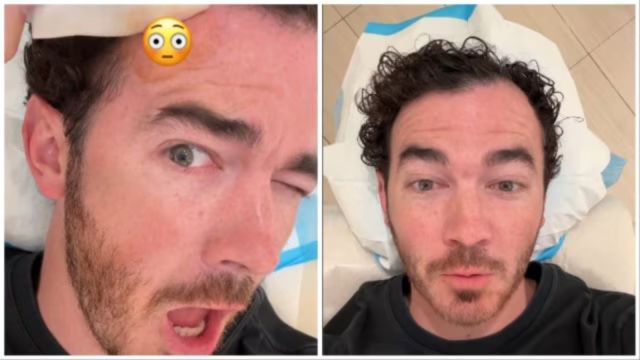 Jonas was diagnosed with basal cell carcinoma, which had to be removed. (Pic: Kevin/Instagram)
US Singer-songwriter Kevin Jonas of the Jonas brothers has taken to social media to reveal he had skin cancer and has had his growth removed. He also gave a “friendly reminder to get your moles checked,” according to People magazine.
Jonas was diagnosed with basal cell carcinoma, which had to be removed. It is the most common form of skin cancer and because it takes time to grow or spread beyond the diseased site, can be treated and diagnosed early. It is less aggressive and curable. “Normally, this form of cancer is more pronounced in the White population than among Indians, who have the advantage of producing melanin, the protective pigment in the skin that blocks UV radiation from damaging DNA and potentially causing skin cancer. Indians who develop skin cancer usually have a more aggressive form as a result of exposure to industrial chemicals and pollutants,” says Dr Pritam Kataria, Consultant, Medical Oncology, Sir HN Reliance Foundation Hospital, Mumbai.
What is basal cell carcinoma?
Basal cells sit on the top layer of the skin and are shed and formed constantly. But sometimes prolonged exposure to UVA radiation may trigger DNA changes, resulting in uncontrolled growth. This manifests as sores, red patches, a pinkish swelling or bump. However, basal cell carcinoma is a non-melanoma skin cancer which can be easily treated. So proper sunscreen use is recommended when you are exposed to long hours in the sun or on a sunbed.
Indians tend to have the more aggressive melanoma, which occurs when the pigment-producing cells that give colour to the skin become cancerous. Symptoms might include a new, unusual growth or a change in an existing mole. Melanomas can occur anywhere on the body.
How do I know if my mole is cancerous?
First of all look out for any change in the existing skin. Watch out for a new mole growth or changes in the shape, size and colour of your existing moles. You must not even ignore the colour and texture of the hair over the mole or bleeding from a mole site. Melanoma patients usually have a pearl-coloured growth or bump around the neck or the face and a blackish patch or lesion on the skin. Look out for sensitivities on a skin patch.
The American Cancer Society has an ABCD rule for melanoma. I quote them here for reference. A is for asymmetry, when a half of a mole or birthmark does not match the other. B is for changes in its border, C is differential colour in the same mole and D is for diameter of the mole. The spot is larger than 6 millimeters across.
Why does melanoma happen among Indians?
Usually, this happens among workers in factory units where you might be exposed for a long time to arsenic and polycyclic aromatic hydrocarbons. That’s why you need protective gear. Otherwise it could be genetic or when you have more than usual moles on your skin. You are vulnerable if you have skin that sunburns easily.
What about treatment for skin cancer?
Since symptoms appear very fast, non-melanoma cancer is highly curable. This involves surgery with or without radiation. Melanoma involves surgery with or without immunotherapy. Although Indians are at a lower risk, we need to be mindful about temperatures and pollutants.