Premium
This is an archive article published on June 28, 2023

Diabetes in the young: Lancet study flags unknown sub-types. Experts want 30 per cent outdoor activity for students

The combination of a smaller pancreas, insulin resistance due to an excessive quantity of fat for a relatively lower body weight and a rapid economic transition may make the pancreas more prone to early failure and early onset diabetes, say experts

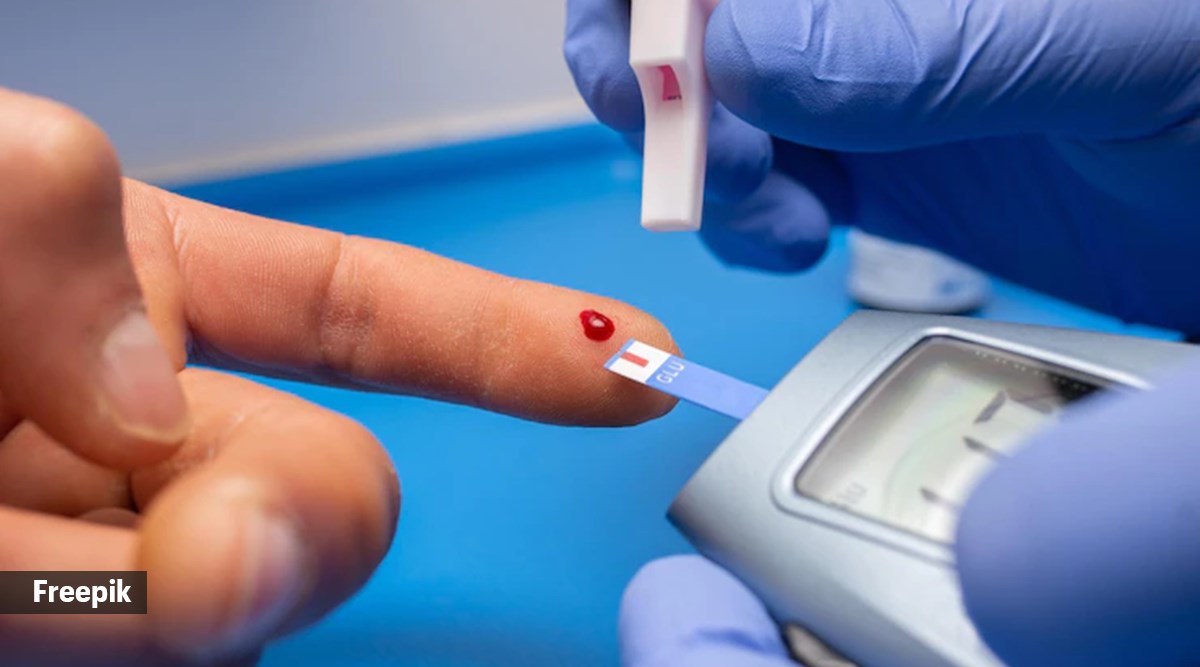
diabetesDiabetes requires you to manage your dietary habits. (Source: Freepik)

Diabetes affects young people more disproportionately in South Asia even in the absence of a high Body Mass Index (BMI). Being overweight is a known risk factor for diabetes but having a normal weight status may not prevent them from developing the metabolic syndrome as much as it does in European populations.

This was the finding of a new series of three papers about global inequity in diabetes which was published in The Lancet Diabetes and Endocrinology journals. Analysing it, many experts argue for a nuanced approach to identifying other important types of diabetes to avoid missing key sub-populations of affected people.

WHY WE NEED TO LOOK AT OTHER CAUSES?

Diabetes in South Asia is likely to grow by 68 per cent by 2050. The Lancet estimates indicate that three-quarters of adults with diabetes will live in low-middle-income countries by 2045 of whom fewer than one in 10 will receive guideline-based comprehensive diabetes care. South Asia has a population of 1.9 billion, of which 1.45 billion live in India and based on studies, there are an estimated two million youngsters less than 30 years of age who are diabetic. This could be not just due to Type 1 or Type 2 diabetes but other forms like malnutrition-modulated diabetes, Maturity Onset of Diabetes of the Young (MODY), fibrocalcific pancreatic diabetes mellitus and so on, says Dr Nihal Thomas, one of the authors of the series papers and a senior professor at the Department of Endocrinology, Diabetes and Metabolism, Christian Medical College, Vellore. “In general, there is a tendency to think that anyone who is lean (thin with a BMI less than 20) with diabetes may be having Type 1 diabetes. Here it is important to remember there are other causes. Lean people with diabetes are those whose BMI is less than 20 (and do not have the typical characteristics of Type 2 diabetes where BMI tends to be higher). When we measure their body fat percentage, it is significantly higher than what is called the visceral fat inside the abdomen,” he says.

WHY ARE INDIANS MORE PRONE TO SUB TYPES?

Diabetes in South Asia is expressed differently, with regard to associations between BMI, percentage body fat and health outcomes, compared with classically defined diabetes in populations of European descent, says Dr C S Yajnik, co-author of the research and Director of the Diabetes Unit at KEM Hospital and Research Centre, Pune.

The social determinants of health are the conditions that influence individuals and groups where they work, play and live in. These might help to explain the manifestation of diabetes in South Asia where geographical inequity, chronic ecological stress, famines, low socioeconomic status and reduced decision-making power of women impacted public health status. “Before the 2000s, in some communities, mothers reduced their food intake in late pregnancy because they believed it could facilitate easy delivery. Women living in rural areas also did heavy physical work at home and outdoor manual work until late in pregnancy, which was associated with lower birth weight,” say researchers. Dr Yajnik points out that though these social norms are becoming uncommon nowadays, they might have left a lasting transgenerational impact on the structure and function of the developing foetus (intrauterine programming), which might have made South Asian populations, particularly young people, more prone to diabetes.

In essence, a combination of low in-born capacity for resilience (smaller pancreas), excessive intrinsic load (adiposity-related insulin resistance), and rapidly increasing environmental load (rapid economic transition) might make the pancreas more prone to early failure, resulting in high rates of diabetes in young individuals with a lower BMI in South Asia.

WHY DIABETES IS AN EMERGING PROBLEM IN RURAL AREAS AND URBAN SLUMS

Story continues below this ad

“The social norms that were present in the past have vastly improved but their intergenerational impact is still being felt,” explains Dr Thomas. This is due to a mechanism called intrauterine programming. When the foetus is exposed to inadequate nutrition in pregnancy, it leads to what is called epigenetic changes. Subsequently these changes may result in earlier onset of diabetes, hypertension and obesity at a younger age. This intrauterine impact on non-communicable disease is passed on for many generations. You could say it is imprinted in the genes of the next generation. So the combination of a smaller pancreas, insulin resistance due to an excessive quantity of fat for a relatively lower body weight and a rapid economic transition may make the pancreas more prone to early failure and early onset diabetes.

The legacy effect is that diabetes, besides being common in urban affluent communities, is also emerging as an equally important problem in rural areas and urban slums, adds Dr Yajnik.

THE WAY FORWARD

The series has highlighted real-world interventions that have shown the potential in reducing inequitable diabetes care. Experts have called for more high-quality, real-world research. “Diabetes remains one of the biggest public health threats of our time and is set to grow aggressively over the coming three decades in every country, age group, and sex, posing a serious challenge to healthcare systems worldwide,” says series study leader Dr Shivani Agarwal, Fleischer Institute for Diabetes and Metabolism, Albert Einstein College of Medicine and Montefiore Health System, USA. “A central focus and understanding of inequity in diabetes is vital to achieving the UN’s Sustainable Development Goal to reduce non-communicable diseases by 30 per cent in less than 7 years,” she adds in the report.

A paradigm shift can be achieved if we can get our children to spend time outdoors exercising, says Dr Thomas. “We need a largescale curriculum driven policy that includes 30 per cent outdoor activities. Labelling of food and the content of items should be done in a big way and health consciousness should be taught at schools. Awareness programmes help but there is no sustainable action,” adds Dr Thomas. Another concern is energy-rich foods that are easily available and are cheap as against the expensive low-calorie foods.

Anuradha Mascarenhas is a Senior Editor at The Indian Express, based in Pune. With a career spanning three decades, she is one of the most respected voices in Indian journalism regarding healthcare, science and environment and research developments. She also takes a keen interest in covering women's issues . Professional Background Education: A gold medalist in Communication and Journalism from Savitribai Phule Pune University and a Master’s degree in Literature. Author: She authored the biography At The Wheel Of Research, which chronicles the life and work of Dr. Soumya Swaminathan, the former Chief Scientist at the WHO. Key Focus: She combines scientific accuracy with storytelling, translating complex medical research into compelling public and human-interest narratives. Awards and Recognition Anuradha has won several awards including the Press Council of India's national award for excellence in journalism under the gender based reporting category in 2019 and the Laadli Media award (gender sensitivity -2024). A recipient of the Lokmat journalism award (gender category-2022), she was also shortlisted for the RedInk awards for excellence in journalism-2021. Her debut book At The Wheel Of Research, an exclusive biography of Dr Soumya Swaminathan the inaugural chief scientist of World Health Organisation was also nominated in the Popular Choice Category of JK Paper AUTHER awards. She has also secured competitive fellowships including the Laadli Media Fellowship (2022), the Survivors Against TB – New Research in TB Media Fellowship (2023) and is part of the prestigious 2025 India Cohort of the WomenLift Health Leadership Journey.” Recent Notable Articles (Late 2025) 1. Cancer & Specialized Medical Care "Tata Memorial finds way to kill drug-resistant cancer cells" (Nov 26, 2025): Reporting on a breakthrough for triple-negative breast cancer, one of the most aggressive forms of the disease. Discipline, diet and purpose; How a 97-year-old professor defies ageing'' (Nov 15, 2025) Report about Prof Gururaj Mutalik, the first Head of Department at Pune's B J Government Medical College who at 97 credits his longevity to healthy habits and a strong sense of purpose. 2. Environmental Health (The "Breathless Pune" Series) Long-term exposure even to 'moderate' air leads to chronic heart, lung, kidney issues" (Nov 26, 2025): Part of an investigative series highlighting that even "safe" pollution levels are damaging to vital organs. "For every 10 µg/m3 increase in PM2.5 level, there was 6-8% jump in medicine sales" (Nov 23, 2025): Using commercial data to prove the direct link between air quality and respiratory illnesses in Pune. 3. Lifestyle & Wellness News "They didn't let cancer, diabetes and heart disease stop them from travelling" (Dec 22, 2025): A collaborative piece featuring survivors who share practical tips for traveling with chronic conditions. At 17, his BP shot up to 200/120 mmHG; Lancet study flags why child and teen hypertension doubled between 2000 and 2020'' (Nov 12,2025)--A report that focusses on 17-year-old-boy's hypertensive crisis and reflects the rising global trend of high blood pressure among children and adolescents. 4. Scientific Recognition & Infrastructure For promoting sci-comm, gender diversity: IUCAA woman prof highlighted in Nature" (Nov 25, 2025): Covering the global recognition of Indian women scientists in gender studies and physics. Pune researchers find a spiral galaxy like the Milky Way from early universe'' (December 3, 2025)- A report on how Indian researchers discovered a massive galaxy that existed when the universe was just 1.5 billion years old , one of the earliest to have been observed so far. Signature Beat: Health, Science & Women in Leadership Anuradha is known for her COVID-19 reportage, where she was one of the first journalists to provide detailed insights into the Covishield and Covaxin trials. She has a dedicated interest in gender diversity in health and science, often profiling women researchers who are breaking the "leaky pipeline" in STEM fields. Her writing style is scrupulous, often featuring interviews with top-tier scientists and health experts from various institutions.   ... Read More


Latest Comment
Post Comment
Read Comments
Advertisement
Advertisement
Advertisement
Advertisement