8 min read
© The Indian Express Pvt Ltd



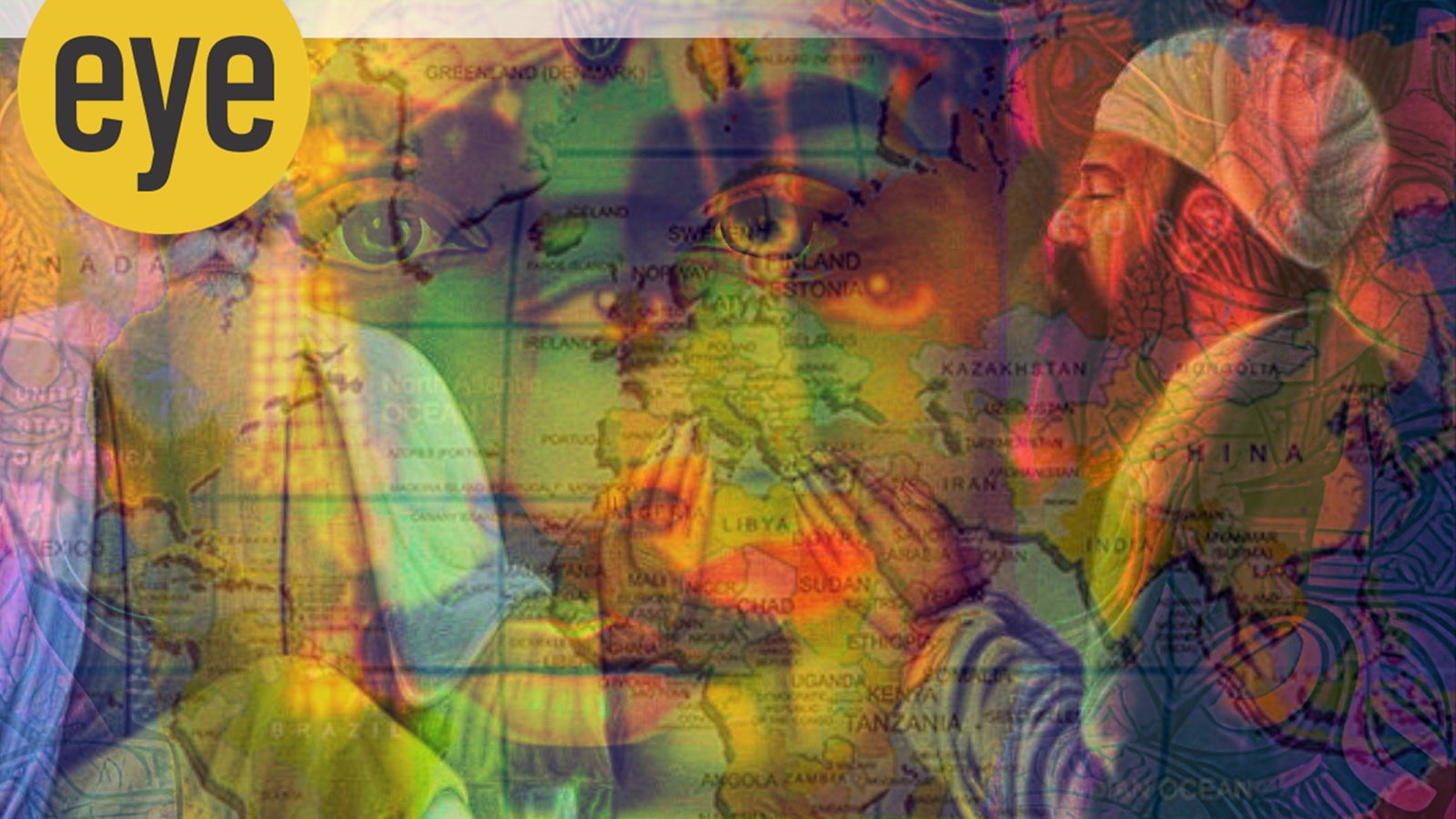 Ek Omkar is not a theological slogan. It is a spiritual stance.
November in North India is a month of memory. The air thins, light lingers, leaves rustle with a kind of ancestral whisper. It is a month of Sikh celebration and Sikh sorrow — from Guru Nanak’s birth anniversary to the martyrdom of Guru Tegh Bahadur, from the quiet courage of Sikh women who guarded the lineage to the loud, luminous reminder that truth, in the Sikh way, is not decorative but lived. Every year, as the calendar tilts toward winter, I find myself returning to a simple line that holds the weight of universes:
Ek Omkar.
One God.
One breath.
One beat beneath the billions.
It is almost amused irony — cosmic comedy — that a man who was deeply suspicious of organized religion became the founder of one. Guru Nanak didn’t set out to start a sect, a scripture, a structure. He set out to lift a veil. To point out the obvious that we, in our fondness for complication, keep forgetting: that divisions are distractions, rituals are rehearsals, and the real religion is relationship — with self, with soil, with stranger, with sky.
Nanak rejected superstition and spectacle. He questioned the pandit, the padre, the mullah, the monk, the rabbi — anyone who used ritual as a rope to tug people instead of a lamp to guide them. He saw through fasts that starved the spirit, through pilgrimages that paraded piety, through scriptures wielded like swords. He lived in a time when religion had become theatre; he walked off stage entirely.
If we heard him today, half of us would call him anti-establishment, the rest would file petitions against him. For Nanak, the sacred was not in the show — it was in the silence.
Religion for him was not costume, but consciousness.
Not rule, but realization.
Not hierarchy, but humanity.
And yet here we are, five centuries later, with a religion in his name — with codes, customs, committees, calendars — all built around a man who insisted that none of that mattered if the heart was hollow and the mind was muddied. I imagine Nanak looking down from whatever luminous space he now occupies, shaking his head with a gentle grin, whispering, “Did you not hear me the first time?”
Perhaps he knew this was inevitable. Humans love scaffolding even when the sky is enough. We cling to rituals because they give us rhythm. We cling to dogma because it gives us direction. We cling to structure because it steadies the trembling. Religion, in many ways, is humanity’s training wheel — a stabiliser until the soul learns to cycle on its own.
But Nanak, in his luminous clarity, reminded us that the training wheel is not the ride.
The Sikh way — at its purest, before it becomes either performance or policing — is less a religion than a way of being. A discipline of dignity. A devotion to humanity. What I have always loved about the Sikh tradition is how it marries the metaphysical to the material: spirituality woven into service, reflection braided into responsibility. Langar as leveller. Kirat karo, naam japo, vand chhako — work honestly, meditate deeply, share generously.
If Advaita Vedanta spoke of non-duality — that the divine and the devotee are not two — Sikhism turned that philosophy into practice. If Vasudeva Kutumbakam declared the whole world one family, Nanak said, “Then feed that family. Serve that family. See that family.”
Ek Omkar is not a theological slogan. It is a spiritual stance.
To accept Ek Omkar is to accept the radical, uncomfortable truth that the one you fear, dislike, resent, judge, or reject is made of the same sacred spark as you. That the ego’s favourite pastime — separation — is the single biggest lie we tell ourselves. That oneness is not poetry; it is physics.
And nowhere does this universality shine clearer than in the Guru Granth Sahib, that magnificent, melodic scripture that refuses to be fenced in by identity. A book that gladly includes the verses of Kabir, Ravidas, Sheikh Farid, Namdev — Hindu, Muslim, low-caste weavers, Sufi saints, wandering poets — a canon that contradicts the very idea of religious purity or exclusivity.
What a miracle, what a rebellion, what a revelation — that a scripture can say:
Truth does not need a passport.
Wisdom does not need a lineage.
The divine does not need a demographic.
In a time when religions erect borders, the Guru Granth Sahib builds bridges.
Whenever I read it, I feel I am reading not a book but a body — breathing, beating, alive. It is musical marrow. A confluence of centuries. A river that refuses to run in one direction alone. Its pages are not dogmatic decrees; they are meditations, metaphors, melodies. You cannot read the Granth Sahib; you must listen to it, the way you listen to rain or reassurance.
And in that listening, you understand Nanak’s original, radical insistence:
To be spiritual is to be simple.
To be religious is to be responsible.
To be human is to be humble.
But somewhere between centuries, something slipped. As with all great teachings, the message aged into mythology. The essence became ornament. The simple turned ceremonial. Sikhs — like Hindus, Muslims, Christians, Jews — are now protectors of their religion, sometimes more than practitioners of its spirit.
Organized religion can be a comfort, yes. It can also be a cage. A lens that clarifies but also distorts. A guardrail that guides but also restricts. Nanak knew this. He warned against it. And yet, human nature being what it is, we polished the cage until it gleamed and forgot to unlock the door.
There is immense beauty in Sikh practice — the discipline, the dignity, the commitment, the community. But there is also the risk that meticulous policing replaces moral clarity, that ritual replaces reflection, that identity replaces inquiry. Any religion that becomes choreography without consciousness reduces divine potential into daily performance.
And yet — and this is the tender truth — many need that choreography. Many need ritual to remind them of rhythm. Many need the scaffolding to ascend. Many need the rosary before they realise the rosary was never the point.
To judge that need is arrogance. To understand it is compassion.
This, perhaps, is why November hits differently for me. Between the birth of Guru Nanak and the martyrdom of Guru Tegh Bahadur — who gave his life not for Sikhism alone but for the right of another faith to exist — this month becomes a portal. A reminder that the Sikh way is not about uniformity but unity. Not about protecting one’s own alone, but about standing for everyone else’s right to breathe, believe, belong.
Tegh Bahadur’s martyrdom is one of history’s greatest lessons in interfaith courage. He did not die for doctrine. He died for dignity — the dignity of difference. There is no act more Sikh than that.
So what is Sikhism, really?
A religion?
A rebellion?
A reminder?
For me, it is a way of walking — upright, unafraid, unashamedly human. It is seeing God in the farmer’s cracked hands, in the truck driver’s tired smile, in the soldier’s steadfast gaze, in the woman who wakes before dawn to make tea for strangers. It is knowing that the holiest scripture is the world itself, and the most sacred shrine is the human heart.
Ek Omkar.
One source.
One story.
One shared, shimmering soul.
We complicate it with costumes and codes, but the truth sits quietly beneath, unbothered. Nanak didn’t ask us to bow to him; he asked us to bow to the oneness within us. To see the divine in each other. To resist the seductive, separating spell of dogma. To keep returning to the vastness that exists before, beneath, and beyond religion.
As winter approaches and November folds into December, I keep hearing that simple line in my head:
Ek Omkar.
It is less a prayer than a promise — that beneath our battles, beneath our bruises, beneath our beliefs, we are one breath, one light, one life.
And if we remember that, even for a moment, we honour Nanak more than any ritual ever could.