Premium
This is an archive article published on July 13, 2022

Uber obtained Delhi rape victim’s medical records ‘illegally’, prompting lawsuits in US

The Uber Files: The victim had filed an original compensation case in 2015, followed by an invasion of privacy suit in 2017 over Uber’s top executives accessing her medical records.

On the occasion of the International Women’s Day in March 2015, Douglas Wigdor, senior partner at the law firm, released a statement by the Indian rape survivor, who was being cross-examined in a trial court at that time. (Express photo)On the occasion of the International Women’s Day in March 2015, Douglas Wigdor, senior partner at the law firm, released a statement by the Indian rape survivor, who was being cross-examined in a trial court at that time. (Express photo)

The 2014 Delhi Uber rape victim settled down later in a US town, but the case trailed the cab-hailing company for several years and was a prelude to subsequent judicial orders on sexual assault by Uber drivers in the US.

The victim, referred to as Jane Doe in US court documents to mask her identity, had filed an original compensation case in 2015, followed by an invasion of privacy suit in 2017 over Uber’s top executives accessing her medical records.

She received substantial compensation from Uber for the legal actions after “settling” both cases — the amounts were never made public.

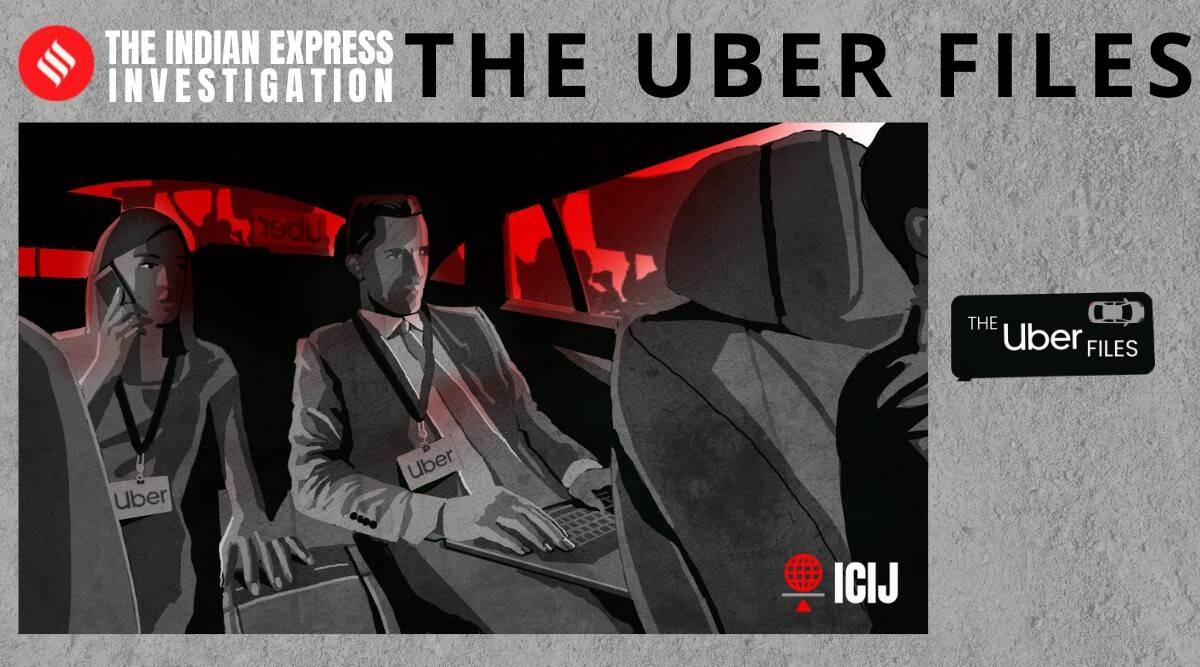
The Uber Files, obtained by The Guardian and shared with the International Consortium of Investigative Journalists with which The Indian Express has partnered for this investigation, reveal the tumult within the company over the Dehi rape incident and the damage-control thereafter.

Wigdor LLP, a leading law firm dealing with employment and sexual harassment litigation, filed the suits against Uber in California.

Reached for comments by The Indian Express, Jeanne M Christensen, one of the firm’s partners who handled the two cases, said details of the compensation can still not be revealed.

“Confidentiality does not dissipate over time and just like 2015 and 2017, we are unable to provide additional information,” she replied. “What I can tell you is that later we filed a proposed class action against Uber on behalf of many victims.”

Story continues below this ad

On the occasion of the International Women’s Day in March 2015, Douglas Wigdor, senior partner at the law firm, released a statement by the Indian rape survivor, who was being cross-examined in a trial court at that time.

“Words cannot describe what I am currently going through and I continue to suffer mentally.’’ Stating that Uber executives were adding “insult to injury”, she alleged: “They have defied the local authorities and continue to operate in Delhi and have made cosmetic changes to their policies that are clearly marketing efforts designed to attract more customers.”

While the original suit filed by Wigdor LLP was for harassment and torture, the second suit named Uber CEO Travis Kalanick and Eric Alexander, then the company’s Vice President for Asia, as defendants. It detailed how Alexander travelled to New Delhi, managed to “illegally” obtain the victim’s private medical records prepared by physicians who examined her after the rape.

In the suit against Uber, the lawyers called it an “egregious” violation of privacy. The second petition filed by the rape victim stated: “Eric Alexander brought into the narrative of rape denialism which focuses on whether a victim had been drinking, what she was wearing, or whether she knew the alleged rapist, rather than the very real physical, emotional and financial toll that rape takes on a victim.”

Story continues below this ad

The sequence of events: Once back at the Uber headquarters, Alexander showed the victim’s medical records to Kalanick and other top Uber executives. Her medical file remained in the Uber headquarters for a full year before Recode, a technology news and analysis website, uncovered it and Alexander was forced to quit.

This is how the incident was described in Mike Isaac’s bestseller ‘Super Pumped: The Battle for Uber’. The author, the technology correspondent for The New York Times, wrote: “Carrying around the private medical files of the victim was questionable and Kalanick knew he had to fire his friend before the Recode story ran. So he called Alexander, told him the situation, and apologized for what he had to do. By June 7, it was over for Eric Alexander. The executive was gone, a last ditch effort to save face.”

Alexander did not respond to questions sent by the ICIJ and its partners.

Two weeks later, on June 21, 2017, the Uber ride ended for Kalanick as well. And “mishandling” of the Delhi rape case was listed among the missteps and swirling scandals that marked his tenure.

Story continues below this ad

The class action suit filed by Wigdor LLP against Uber in March 2018 gave details of rape/sexual assault against 11 women in the US (also called Jane Doe): “Because of Uber’s failure to prioritize the safety of female passengers, thousands of women are at risk of being trapped in a vehicle and subjected to sexual harm at the hands of Uber drivers who have a duty to ensure their safe transport.”

The petition also detailed Uber’s faulty and perilous system of BCGs (background checks) and opposed future settlement of suits via arbitration.

It stated: “For years Uber has known about the magnitude of this problem and the number of women who have experienced sexual harassment and gender-based violence. Uber should have made drastic changes in the way it does business and invested money in preventing future attacks… in gutless fashion Uber responded by attempting to force Jane Doe’s and all other similarly harmed women passengers, to cede their right to the public court system and force them into the soundless halls of arbitration.”

The law firm also sent out a letter to Uber’s Board of Directors (and made it public) on the subject. It urged: “Secret arbitration is the opposite of transparency… Secret arbitration takes away a woman’s right to a trial by a jury of her peers and provides a dark alley for Uber to hide from the justice system, the media and public scrutiny.”

Story continues below this ad

Christensen told The Indian Express that their class-action suit resulted in Uber deciding that forced arbitration would not be required for claims involving sexual assault or rape.

The policy change came on May 15, 2018 when Uber released a statement saying, “We have learnt it’s important to give sexual assault and harassment survivors control of how they pursue their claims… we will no longer require mandatory arbitration for individual claims of sexual assault or sexual harassment by Uber riders, drivers or employees.”

In India, the woman’s family has moved out of their home in Delhi where they stayed when the incident took place. “We wanted to move on and heal from this incident. We have managed to move on,” her father said, adding that he is in touch, almost on a daily basis, with his daughter who moved abroad following her marriage.

Days after the rape on the night of December 5, 2014, the woman had told The Indian Express that she faced “difficulty in sleeping”, saw “strange dreams” and felt “an urge to leave India” where she no longer felt “safe and comfortable”.

Story continues below this ad

“I don’t know if she has those dreams anymore,” the father said. “We don’t speak about it. She is now the mother of two children and we are happy moving on with our lives. I am happy that she is enjoying her motherhood and is far removed from all this.”

Ritu Sarin is Executive Editor (News and Investigations) at The Indian Express group. Her areas of specialisation include internal security, money laundering and corruption. Sarin is one of India’s most renowned reporters and has a career in journalism of over four decades. She is a member of the International Consortium of Investigative Journalists (ICIJ) since 1999 and since early 2023, a member of its Board of Directors. She has also been a founder member of the ICIJ Network Committee (INC). She has, to begin with, alone, and later led teams which have worked on ICIJ’s Offshore Leaks, Swiss Leaks, the Pulitzer Prize winning Panama Papers, Paradise Papers, Implant Files, Fincen Files, Pandora Papers, the Uber Files and Deforestation Inc. She has conducted investigative journalism workshops and addressed investigative journalism conferences with a specialisation on collaborative journalism in several countries. ... Read More

Anand Mohan J is an award-winning Senior Correspondent for The Indian Express, currently leading the bureau’s coverage of Madhya Pradesh. With a career spanning over eight years, he has established himself as a trusted voice at the intersection of law, internal security, and public policy. Based in Bhopal, Anand is widely recognized for his authoritative reporting on Maoist insurgency in Central India. In late 2025, he provided exclusive, ground-level coverage of the historic surrender of the final Maoist cadres in Madhya Pradesh, detailing the backchannel negotiations and the "vacuum of command" that led to the state being declared Maoist-free. Expertise and Reporting Beats Anand’s investigative work is characterized by a "Journalism of Courage" approach, holding institutions accountable through deep-dive analysis of several key sectors: National Security & Counter-Insurgency: He is a primary chronicler of the decline of Naxalism in the Central Indian corridor, documenting the tactical shifts of security forces and the rehabilitation of surrendered cadres. Judiciary & Legal Accountability: Drawing on over four years of experience covering Delhi’s trial courts and the Madhya Pradesh High Court, Anand deconstructs complex legal rulings. He has exposed critical institutional lapses, including custodial safety violations and the misuse of the National Security Act (NSA). Wildlife Conservation (Project Cheetah): Anand is a leading reporter on Project Cheetah at Kuno National Park. He has provided extensive coverage of the biological and administrative hurdles of rewilding Namibian and South African cheetahs, as well as high-profile cases of wildlife trafficking. Public Health & Social Safety: His recent investigative work has uncovered systemic negligence in public services, such as contaminated blood transfusions causing HIV infections in thalassemia patients and the human cost of the fertilizer crisis affecting rural farmers. Professional Background Tenure: Joined The Indian Express in 2017. Locations: Transitioned from the high-pressure Delhi City beat (covering courts, police, and labor issues) to his current role as a regional lead in Madhya Pradesh. Notable Investigations: * Exposed the "digital arrest" scams targeting entrepreneurs. Investigated the Bandhavgarh elephant deaths and the impact of kodo millet fungus on local wildlife. Documented the transition of power and welfare schemes (like Ladli Behna) in Madhya Pradesh governance. Digital & Professional Presence Author Profile: Anand Mohan J at Indian Express Twitter handle: @mohanreports ... Read More


Latest Comment
Post Comment
Read Comments
Advertisement
Advertisement
Advertisement
Advertisement