5 min read

Journalism of Courage



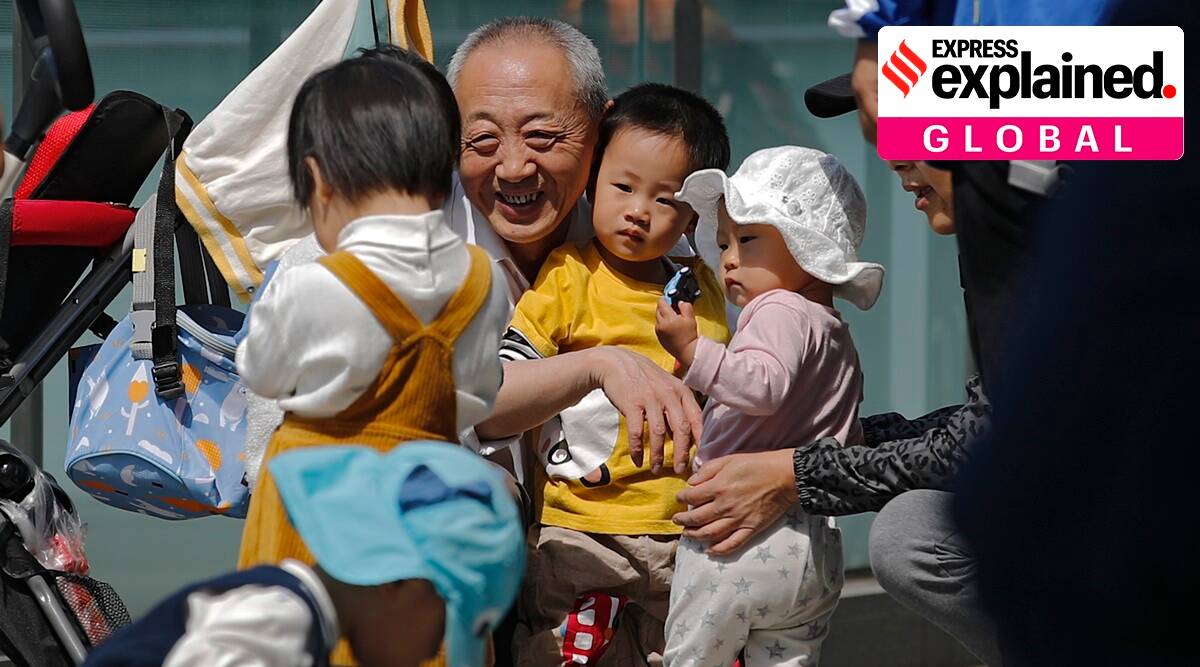 Earlier this year, China’s census data showed that its population growth slipped to its slowest rate since the 1950s. (AP)
The province of Jilin in northeast China is set to offer married couples loans of up to $31,000 in order to incentivise them to have kids. The province’s decision comes as China is looking at a declining birth rate. Earlier this year, China’s census data showed that its population growth slipped to its slowest rate since the 1950s.
In August, China relaxed its previous two-child norm and endorsed a three-child policy mooted by the ruling Communist Party. The resolution was passed along with several others during a meeting of the National People’s Congress (NPC).
According to Reuters, China’s demographic issues are particularly prominent in the three northeastern provinces of Jilin, Liaoning and Heilongjiang, as residents ventured to other provinces for work while couples deferred marriage or plans to have a family.
The region’s population fell 10.3 per cent in 2020 compared with 2010. Jilin slumped 12.7 per cent, Reuters reported.
What is the significance of the birth rate for an economy such as China?
According to an analysis by Robin Brant for the BBC in May, the demographic change China is experiencing is not unique, but it is a significant issue because it has the biggest population in the world and has an economy that it is trying to make more reliant on domestic consumption.
“China’s Communist leaders have already said retirement age will need to go up to deal with those demands and costs. This could mean more work to come for the country’s workers,” Brant noted.
How well did China’s one-child policy work?
China’s one-child policy, which had been enforced by former leader Deng Xiaoping in 1980, had remained in place until 2016, when fears of a rapidly ageing population undermining economic growth forced the ruling Communist Party to allow two children per married couple.
While the relaxation did result in some improvement in the proportion of young people in the country, the policy change was deemed insufficient in averting an impending demographic crisis.
 Even as a three-child policy has now been announced, many remain sceptical, wondering how it would be able to address challenges that the 2016 change could not, due to factors such as higher cost of living and long working hours.
China embarked upon its one-child policy in 1980 when the Communist Party was concerned that the country’s growing population, which at the time was approaching one billion, would impede economic progress.
The policy, which was implemented more effectively in urban areas, was enforced through several means, including incentivising families financially to have one child, making contraceptives widely available, and imposing sanctions against those who violated the policy.
Chinese authorities have long hailed the policy as a success, claiming that it helped the country avert severe food and water shortages by preventing up to 40 crore people from being born.
However, the one-child limit was also a source of discontent as the state used brutal tactics such as forced abortions and sterilisations.
It was also met with criticism and remained controversial for violating human rights, and for being unfair to poorer Chinese since the richer ones could afford to pay economic sanctions if they violated the policy.
Why do many remain sceptical about the three-child policy?
Experts say relaxing limits on reproductive rights alone cannot go a long way in averting an unwanted demographic shift.
Newsletter | Click to get the day’s best explainers in your inbox
The main factors behind fewer children being born, they say, are rising costs of living, education, and supporting ageing parents. The problem is made worse by the country’s pervasive culture of long working hours. There has also been a cultural shift during the decades in which the one-child policy remained in force, with many couples believing that one child is enough, and some expressing no interest in having children.
The Chinese government, however, has said that the new policy will come with “supportive measures, which will be conducive to improving our country’s population structure, fulfilling the country’s strategy of actively coping with an ageing population and maintaining the advantage, endowment of human resources”, according to Xinhua news agency.


Days before Dharmendra breathed his last, a video surfaced in which his elder son Sunny Deol was seen folding hands and scolding the paparazzi for capturing the proceedings inside their Juhu residence. “Aapke ghar mein maa-baap, bachche hain? Sharam nahi aati? Ch**iyo ki tarah video bana rahe ho,” he said. That prompted a lot of backlash, even from members of the film industry.