1 min read


© The Indian Express Pvt Ltd



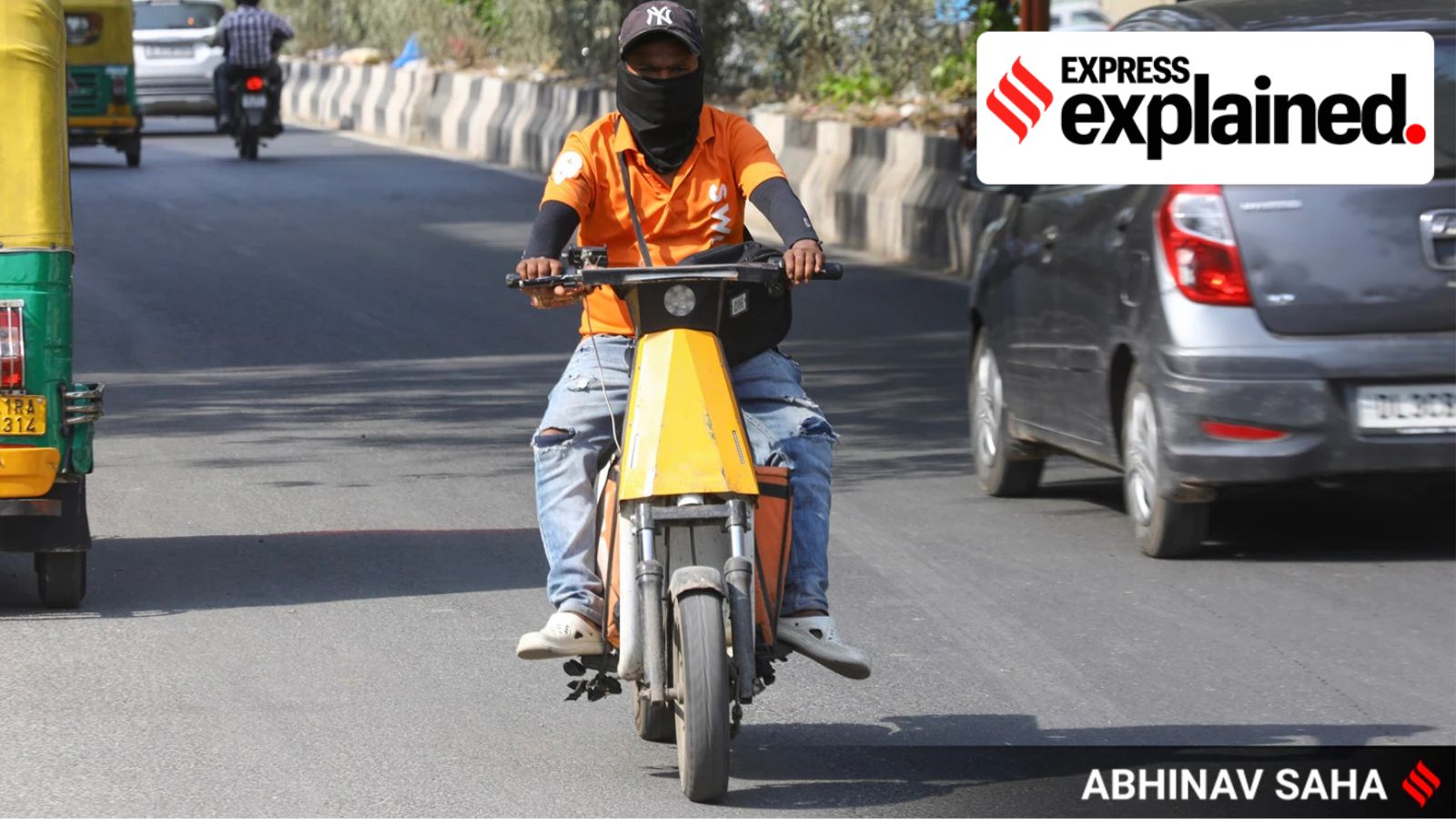 Among other things, the new codes introduce a host of social security measures for gig workers. (Express Photo by Abhinav Saha)
Timely payment of wages, equal remuneration across genders, flexible working hours not exceeding 12 hours a day and 48 hours a week, an overtime rate at double the normal wage, and deductions from wages not exceeding 50 per cent, implying a higher basic pay — these are some of the key proposals for employees that will now come into effect after the notification of the long-stalled labour codes. A National Floor Wage for defining the baseline for wages across the country is also part of the proposals.
With the four new labour codes — Code on Wages; Industrial Relations Code; Code on Social Security; and the Occupational Safety, Health and Working Conditions Code — the government primarily aims to create a uniform structure for wages, bonus and wage-related matters with the principle of equal remuneration for equal work.
Includes basic pay; dearness allowance; and retaining allowance.
Does not include bonus, value of house accommodation, house rent allowance, travel or conveyance allowance, gratuity or retrenchment compensation among others. The Code on Wages states that deductions cannot exceed 50 per cent of the wages.
This implies the whole component of wage (basic salary + dearness allowance + retaining allowance) needs to be at 50 per cent of the total pay by the employer. Thus, social security contributions like provident fund, gratuity, maternity benefits and bonus will be based on a larger portion of pay. But it also means the take-home salary will be reduced for an employee.
Earlier in 2022, representations were made by employers to the Ministry of Labour and Employment about the definition of wages as they had flagged the need for incentives and bonuses being made a part of salaries. The Ministry had said it was open to considering this. A clearer picture will now emerge after the Ministry releases the draft rules within a week.
The Code on Wages introduces the concept of a “floor wage” to be fixed by the central government. The minimum wages shall be for time work, piece work, and for the period by hours or day or month. It will be fixed for different geographical areas so as to ensure that no state government fixes the minimum wage below the notified floor wage.
Earlier, in February 2019, an expert committee on determining the methodology for minimum wages had suggested a uniform minimum wage or Rs 375 a day (Rs 9,750/month) or five regional wages ranging from Rs 342-447 a day (Rs 8,892-Rs 11,622/month). A new committee is likely to be formed now.
The Code on Wages states “no employer shall pay to any employee wages less than the minimum rate of wages notified by the appropriate Government”. This implies that the minimum wage needs to be paid to all the employees regardless of wage ceiling or the employment sector, whether organised or unorganised. This will provide a uniform legal safeguard across the country, reducing wage disparity and is expected to benefit worker groups like casual employees, daily wagers, and migrant labourers.
At present, the provisions of the Payment of Wages Act, 1936 is applicable to employees below the wage ceiling of Rs 24,000 per month and the Minimum Wages Act, 1948 is applicable to the establishment covered in the scheduled employment only.
The minimum wage will consist of a basic rate of wages and an allowance at a rate to be adjusted at specific intervals by the government. The government is likely to revise the minimum wage rate at an interval not exceeding five years.
The employers will now have to pay wages to all the employees engaged on daily wage at the end of shift; engaged weekly before weekly holiday; engaged fortnightly within 2 days of end of fortnight; engaged monthly within 7 days of next month. On termination or resignation, employers will need to pay employees within 2 working days.
The provisions relating to timely payment of wages will be applicable to all. Presently these are applicable only in respect of employees drawing wages of Rs 24,000 per month.
The Code on Wages provides for the government to fix the number of working hours which shall constitute a normal working day inclusive of one or more specified intervals. The government will also detail a day of rest in every period of seven days which shall be allowed to all employees or to any specified class of employees and for the payment of remuneration for such days of rest.
The Ministry has said that daily working hours could range between 8 hours and 12 hours, with a weekly limit of 48 hours.
In the earlier draft rules for the Occupational Safety, Health and Working Conditions (OSH) Code, which was passed in Parliament in September 2020, the daily working hour limit had been set at eight hours. For the new labour codes, the upcoming rules will need to be watched out for defining the working hours and the length of a work day, including intervals for rest.
As per the International Labour Organization (ILO), the working hours in a week are not supposed to exceed 48 hours in the week and 8 hours in the day.
If an employee works for less than six days in a week, if that flexibility is provided in the rules, the period of work will then be adjusted in such a manner that, including the interval for rest, it will not exceed 12 hours in a day, an official told The Indian Express. The remaining days of that week shall be a paid holiday for the employee.
In 2021, the Labour Ministry while drafting the rules for the new labour codes had considered giving flexibility to companies to have four working days instead of five or six, with the weekly working hours limit at 48 hours. For instance, a four working day week would have had to meet the 48-hour weekly work hour limit, resulting in a daily shift of 12 hours.
Before that in 2020, the government in the draft rules for the OSH Code had proposed to increase the spread-over time, which is the maximum limit for potential working hours, to 12 hours from 10.5 hours. The weekly cap of working hours was retained at 48 hours.
The Economic Survey 2024-25 had flagged inflexible working hour limits and overtime restrictions for factory workers as barriers to meeting demand surges and improving workers’ earning potential.
Employers will now be required to pay employees at least twice the normal wage rate for any work beyond normal working hours.
At present, The Factories Act limits a worker to a maximum of 10.5 hours daily, or around 63 hours in a six-day week. Of these, only 48 hours are considered regular work hours, 3 hours are considered rest intervals, and the remaining 12 hours count as overtime. Over a 13-week quarter, this would allow for 156 overtime hours, but another provision of the Factories Act caps overtime at only 75 hours per quarter.
The labour codes introduce the concept of Fixed Term Employment (FTE), under which the employers will be able to hire workers directly under a fixed-term contract, with the flexibility to tweak the length of the contract based on the seasonality of industry.
These FTE workers will be now treated at par with regular workers and will be entitled to hours of work, wage allowance and other benefits same as those for permanent workers. For FTE workers to avail gratuity, the government has reduced the condition of having the length of service to 1 year from 5 years.
The provisions of Employees' Provident Fund Organisation (EPFO) will now apply to all establishments employing 20 or more employees, regardless of the type of industry. Currently, the EPFO Act is applicable only for the establishments mentioned in the Schedule 1 of the Act, primarily of the manufacturing sector. This norm has now been removed under the Code on Social Security.
Also, the Code includes unorganised, gig, and platform workers within the ambit of social security benefits for the first time. Social security schemes such as life and disability cover; accident insurance; health and maternity benefits; crèche will be notified by the government under the Code, with schemes being partly or wholly funded by the Centre or the states or the contributions made by the aggregators. The aggregators employing gig workers will have to contribute 1-2 per cent of annual turnover for social security, with the total contribution not exceeding 5 per cent of the amount payable by the aggregator.
Every employer will now be required to issue wage slips electronically or in physical form to the employee on or before payment of wages. This will provide the employees with documentary proof of employment, wages, allowances, deductions, and net pay. It will help workers in both organised and unorganised sectors including daily wagers and contract employees.
Also, as per the OSH Code, every employee will be issued a letter of appointment in the establishment. The prescribed format is likely to specify the details of the employee, designation, category, details of the wages, details of social security, the official cited above said.
The Code on Wages states there shall be no discrimination among employees on the ground of gender in matters relating to wages by the same employer, in respect of the same work or work of a similar nature done by any employee in an establishment.
This provision ensures equal pay for equal work, expands protection to cover not just wages, but also recruitment and employment conditions, and promotes workplace equality, giving women and men the same opportunities in hiring, pay, and treatment, the official said.
The new labour codes also pave the way for women workers to work at night. The OSH Code permits women to work in an establishment before 6 AM and beyond 7 PM, subject to their consent and provisions for safety.
Under the OSH Code provisions, every employer is required to provide annual health examinations or tests free of cost to employees, as may be prescribed by the government. Every employee will be eligible for free annual health check-ups. “This helps in early detection of diseases, reduces medical costs for workers, and ensures a healthier workforce as well as improved productivity and well-being,” the official cited above said.
The establishments will be required to form safety committees consisting of representatives of employers and workers such that the number of workers’ representatives on the committee shall not be less than the number of representatives of the employer.
Every factory employing 500 or more workers, employers employing 250 or more Building & Other Construction Workers (BOCW) and employers employing 100 or more mine workers will constitute a safety committee which will consist of representatives from employers and workers, the official said.