4 min read





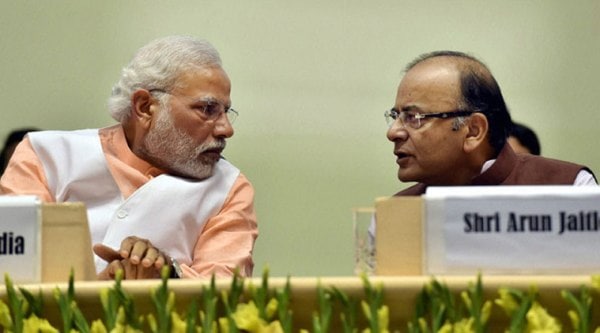 Narendra Modi and Arun Jaitley.
When did the anti-corruption law come into force?
The first direct and consolidated law on corruption was the Prevention of Corruption Act (PCA), 1947, enacted to supplement the Indian Penal Code (IPC). In 1988, a new PCA was passed, repealing the 1947 Act and Criminal Law Amendment Act, 1952.
What is “corruption” under the Act? What is the punishment?
As per Section 7, a “public servant taking gratification other than legal remuneration in respect of an official act”. Sec 8 is about “taking gratification, in order, by corrupt or illegal means, to influence public servant”; Sec 9, “taking gratification, for exercise of personal influence with public servant”; Sec 11, “obtaining valuable thing, without consideration from person concerned in proceeding or business transacted by such public servant”. May attract up to seven years in jail and fine.
Has the PCA been a deterrence to corruption?
The conviction rate has been poor. PCA has been more effective when applied along with departmental proceedings. After registering a case, the investigating agency often recommends the officer’s suspension, which is up to the department concerned to accept. 48 hours or more in custody leads to deemed suspension. An officer may face both trial under PCA and departmental action under service rules; in some cases investigating agencies recommend departmental action. Officials have faced prolonged suspensions, stopping of promotions and sensitive postings, etc.
What are the safeguards for bureaucrats under the Act?
Prior government sanction is needed to prosecute any officer. Till last year, officers of the rank of joint secretary and above were protected from probe, and sanction was needed even to register a preliminary inquiry. In May 2014, the Supreme Court struck down Section 6A of Delhi Special Police Establishment Act, saying it was violative of Article 14. In fact, government officials can be investigated, but can’t be prosecuted without prior sanction from the government. In February 2015, the SC said a suspension order could not extend beyond three months if the chargesheet is not served by then.
How does the political leadership view the Act?
Prime Minister Narendra Modi recently said that efforts were on to ensure officers are free to make objective, honest decisions. Finance Minister Arun Jaitley said at a CBI programme that, “We need to revisit provisions of Prevention of Corruption Act”. As prime minister and finance minister, Manmohan Singh and P Chidambaram too had expressed similar views.
What is the ‘supply side’ of corruption?
On April 29, the cabinet approved the Prevention of Corruption (Amendment) Bill, 2013 to target supply-side corruption, i.e. punishment for the bribe-giver. It is also proposed to extend the protection of prior sanction for prosecution to public servants who cease to hold office due to retirement, resignation etc. Sanction for inquiry and investigation of offences related to the discharge of official duties would have to come from the Lokpal/Lokayukta.
How have things worked in practical terms?
While recent utterances by the Prime Minister and Finance Minister reflect the concern that the PCA has been shackling decision-making by bureaucrats, the bigger problem lies in the poor implementation of the law. Delay in the disposal of cases and prolonged departmental proceedings lead to harassment and victimisation of officers. The draft amendment Bill approved last week provides for completion of trial in two years. Over the last four years, trial in cases under the PC Act has stretched to more than eight years on average.