


© The Indian Express Pvt Ltd
Tags:


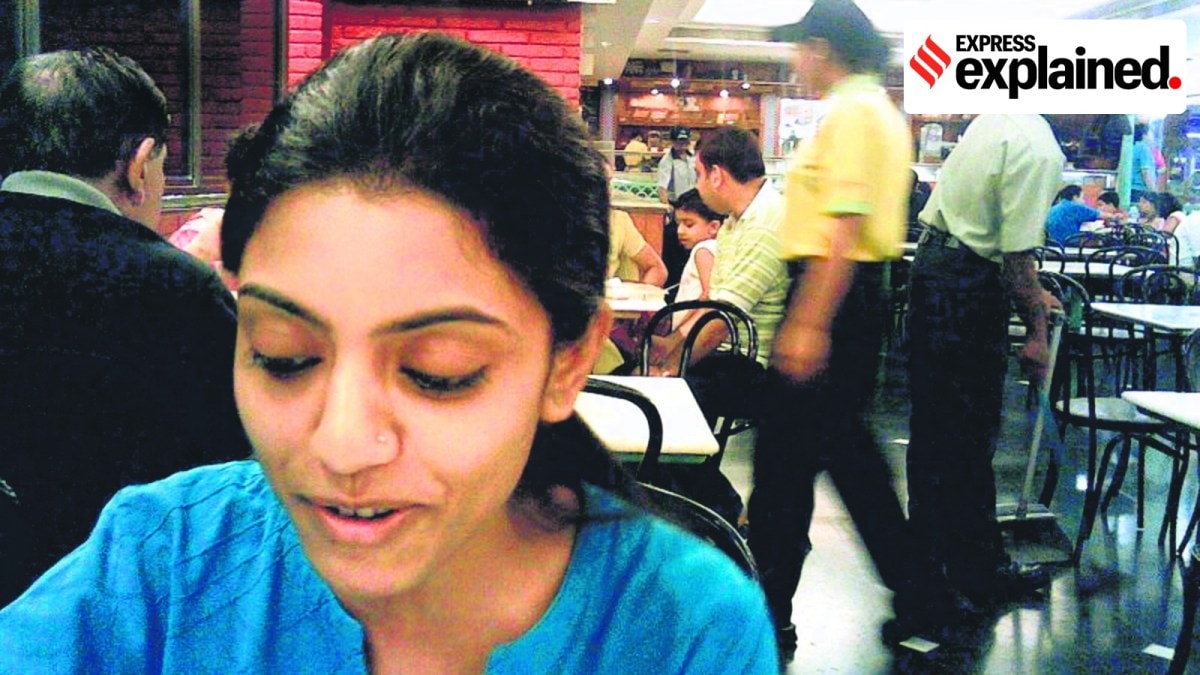
Fifteen years after 25-year-old journalist Soumya Vishwanathan was killed, a Delhi court on Saturday (November 25) convicted four men of murder and offences under the Maharashtra Control of Organised Crime Act (MCOCA). The men were sentenced to life imprisonment. The fifth convict was sentenced to three years in jail.
The court of Additional Sessions Judge Ravindra Kumar Pandey rejected the request for the death penalty, saying the offence committed by the convicts didn’t fall in the “rarest of rare” category.

After the pronouncement of the judgement, Soumya’s mother, Madhavi Vishwanathan, told the media that she was “satisfied” with the ruling but not “happy”.
“I wanted this. What I am suffering, I want them to suffer for life. I am satisfied, but I will not say that I am happy. My husband is in the ICU. He had a bypass surgery,” she said.
Here is a look at how the case unfolded over the years.
A timeline of events
In the early hours of September 30, 2008, Soumya, a TV journalist with English news channel India Today, was heading home in her car, when a group of robbers in a WagonR started chasing her.
At South Delhi’s Nelson Mandela Marg, they finally caught up to her vehicle and fired to stop and rob her. The bullet, however, hit Soumya in the head and her car collided with the footpath. She succumbed to her injuries.
An FIR was registered at Vasant Kunj police station pertaining to the incident but police couldn’t make any breakthroughs for around six months. There were no CCTV cameras on the spot or nearby and none of the witnesses could read the registration number of the car used by the accused.
On March 23, 2009, police arrested three men — Ravi Kapoor, Amit Shukla, and Baljeet Malik — in connection with another robbery-murder case. They were accused of killing an IT executive Jigisha Ghosh, who was abducted from Vasant Vihar. Her body was recovered near Surajkund, Haryana.
It was during the interrogation of the three men that it was revealed that they were also involved in Soumya’s murder. A police official earlier told The Indian Express: “They said they shot her along with another associate, Ajay Kumar. They also said they killed a taxi driver in January 2009 after robbing him”. Another man, Ajay Sethi, was later arrested in the case.
Police found a match of the bullet found in Soumya’s car to the weapon recovered from the arrested men. They also recovered the WagonR used by them at the time of Soumya’s murder. All this helped them establish that the men were responsible for Soumya’s killing.
Subsequently, police found that the men were serial offenders. “They lived near Malviya Nagar where they would get drunk at night and roam around in cars. They would target taxi drivers or women found alone. We also matched the call records from their confessions. It proved that the accused were present at the murder spots at the same time,” an officer had told The Indian Express.
Therefore, in 2011, police introduced charges against them under the stringent MCOCA. The Act ensured that “the men didn’t get bail to influence or threaten the witnesses in various cases registered against them”.
However, it complicated the case as the prosecution had to prove the men were part of an organised crime gang. After years of trial, in October this year, the court found Ravi Kapoor, Amit Shukla, Baljeet Malik, and Ajay Kumar guilty of murder and committing organised crime under the MCOCA. Ajay Sethi was convicted for receiving stolen property and conspiring to abet, aid in, or knowingly facilitate organised crime under the MCOCA.


